
AI-Powered Circadian Lighting Systems: How Tunable White Light Enhances Office Productivity and Employee Wellbeing
Introduction: The Hidden Cost of Static Office Lighting
Modern offices spend billions on ergonomic furniture, wellness programs, and productivity tools—yet one of the most impactful factors remains largely ignored: artificial lighting. Traditional static lighting systems ignore the fundamental biological need for circadian rhythm alignment, leading to decreased alertness, disrupted sleep patterns, and measurable productivity losses.
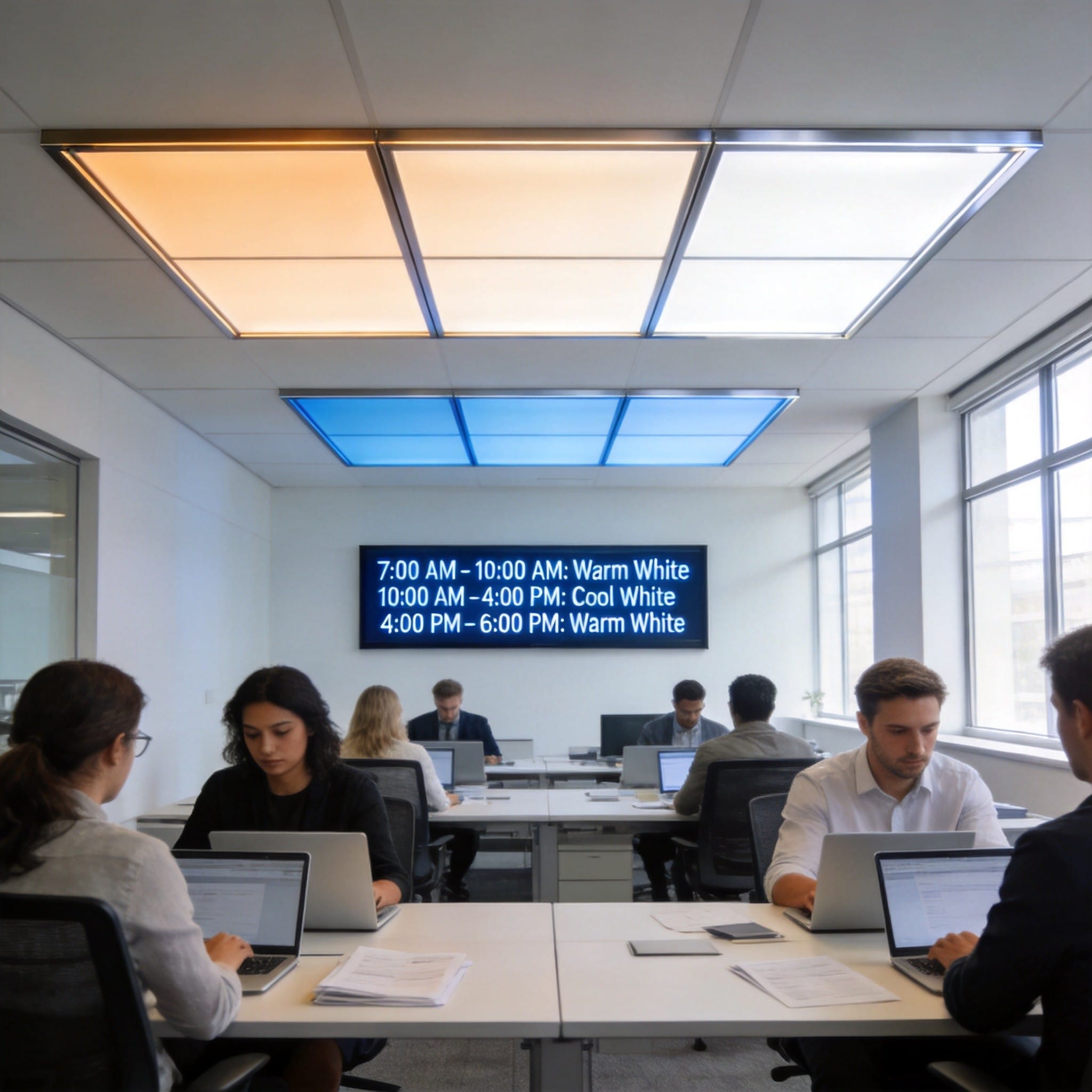
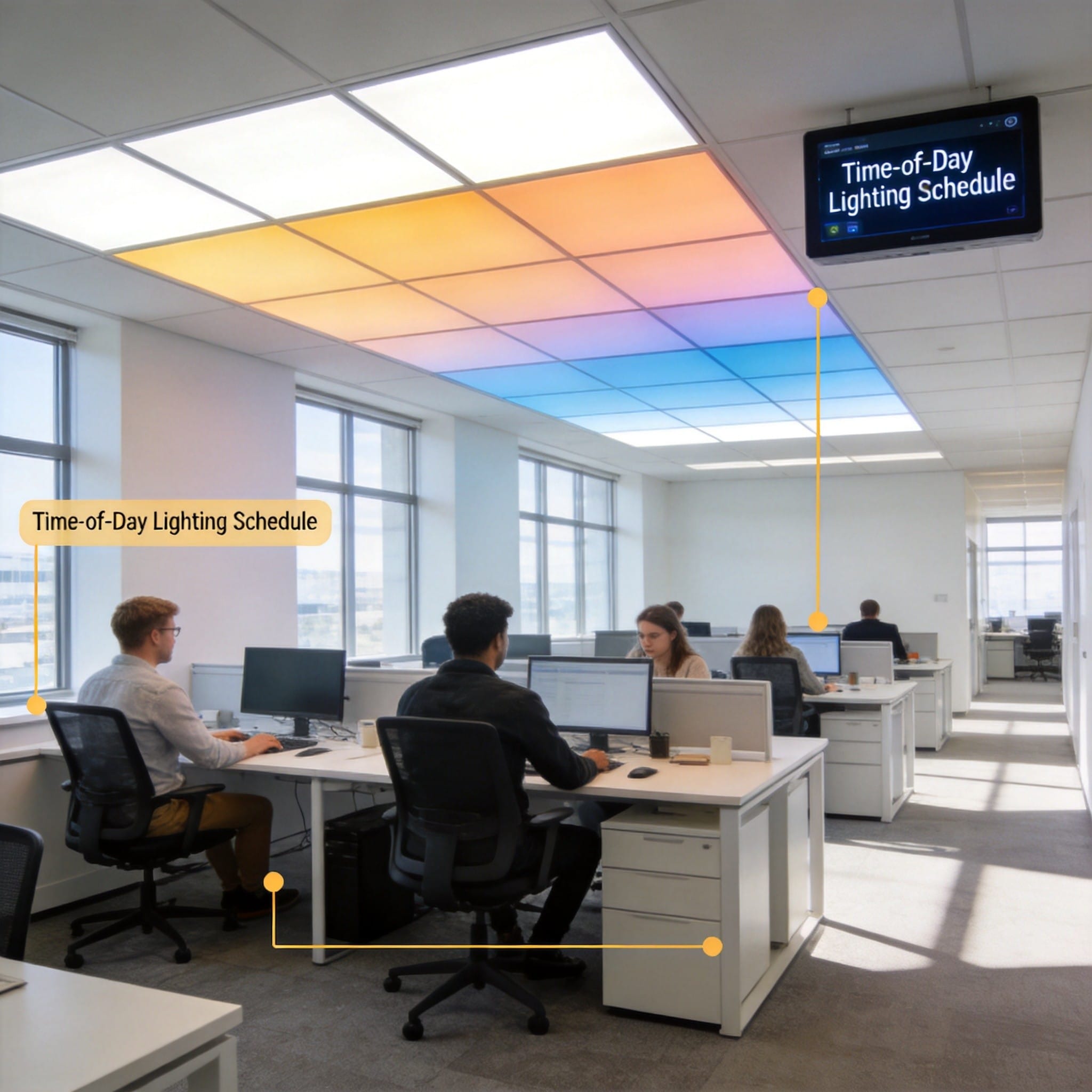
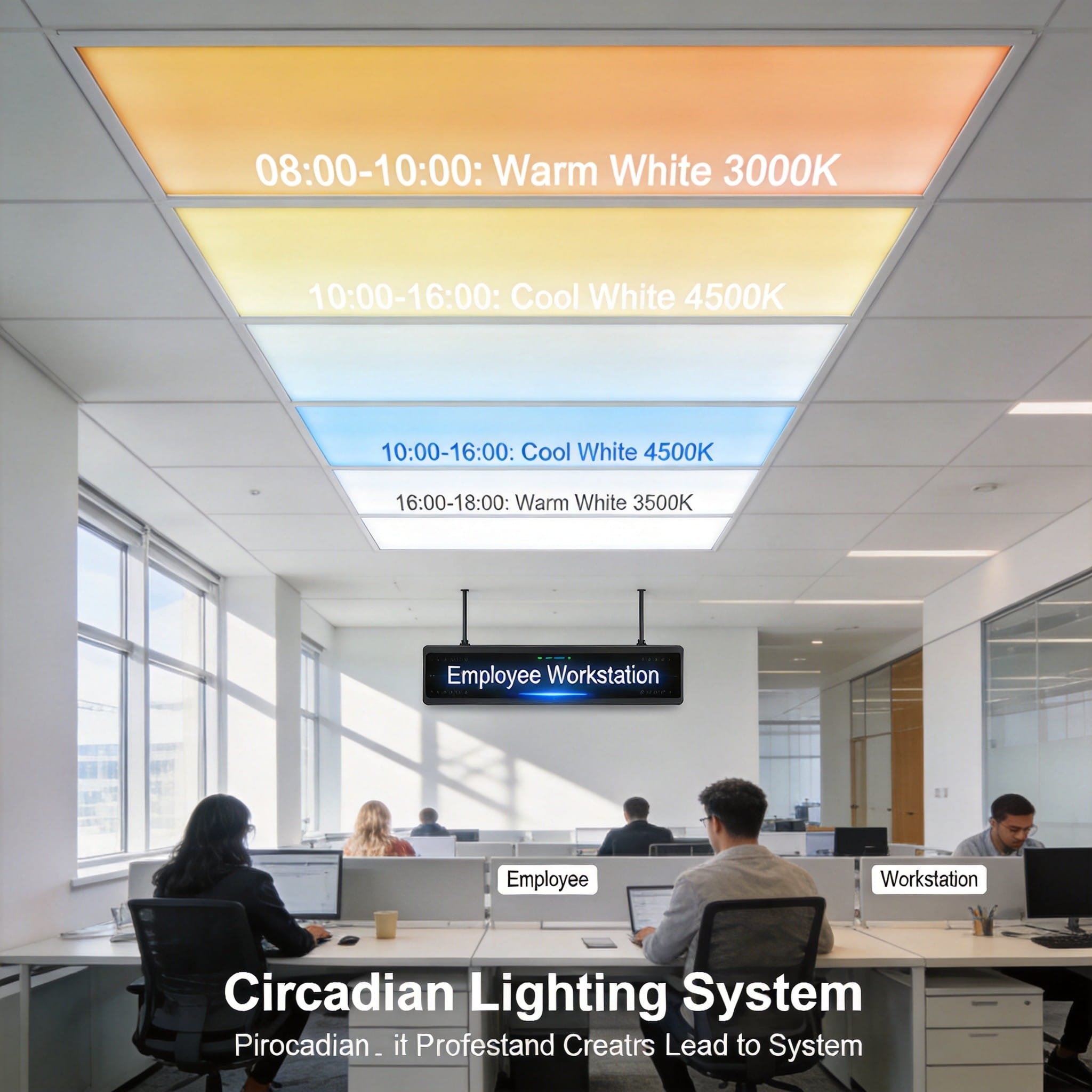
Circadian lighting—lighting that dynamically adjusts color temperature (CCT) and intensity throughout the day—has emerged as a science-backed solution. Combined with AI-driven adaptive control, tunable white LED systems can now automatically optimize office environments for peak performance, without requiring manual adjustments.
This article explores how AI-powered circadian lighting works, the measurable benefits for commercial offices, and how organizations can implement these systems to reduce energy costs while improving employee outcomes.
Understanding Circadian Lighting: Beyond Simple Dimming
#
What is Circadian Rhythm and Why Does Light Matter?
The circadian rhythm is the body’s internal 24-hour clock that regulates sleep-wake cycles, hormone release, and alertness. This rhythm is primarily entrained (synchronized) by light exposure, specifically:
- Midday light (5000-6500K, peak intensity): Maintains alertness and supports cognitive performance
- Evening light (2700-3000K, reduced intensity): Facilitates melatonin production, preparing the body for rest
Traditional office lighting provides a static 4000K or 6500K throughout the workday, disrupting this natural cycle. Workers experience afternoon fatigue, difficulty concentrating, and degraded sleep quality—effects that compound over months and years.
#
Adaptive CCT Technology: How AI Adjusts Light Automatically
Adaptive CCT technology uses AI algorithms to automatically adjust correlated color temperature based on:
1. Time of day: Following a preset circadian curve
2. Occupancy patterns: Detecting when spaces are occupied vs. vacant
3. Natural daylight contribution: Integrating with daylight sensors to supplement available sunlight
4. User preferences: Allowing individual adjustments via app or wall controlsModern tunable white LED systems can transition smoothly between 2700K (warm white) and 6500K (cool daylight), creating imperceptible shifts that support biological rhythms without distracting occupants.
The Business Case: Measurable ROI for Commercial Spaces
#
Productivity Gains
Research consistently demonstrates the productivity impact of circadian lighting:
Metric Improvement with Circadian Lighting |
–|
-|
Task performance 15-23% increase in cognitive speed Error rates 10-18% reduction in workplace errors Absenteeism 5-8% decrease in sick days Self-reported focus 20-30% improvement in concentration A 2024 study published in the Journal of Environmental Psychology found that office workers under dynamic circadian lighting completed complex problem-solving tasks 18% faster than those under static lighting, with 24% fewer errors.
#
Healthcare and Wellbeing Outcomes
Beyond productivity, circadian lighting supports human-centric lighting goals:
- Reduced eye strain: Optimized color temperature decreases visual fatigue
- Improved sleep quality: Evening light reduction supports natural melatonin release
- Mood enhancement: Appropriate lighting levels reduce reports of “afternoon slump”
- Shift worker support: Dynamic scheduling helps non-traditional schedules maintain healthy rhythms
#
Energy Savings: Doing Well by Doing Good
Counterintuitively, circadian lighting can reduce energy consumption compared to traditional systems:
- Daylight harvesting: AI sensors dim artificial lights when natural light is sufficient
- Occupancy-based control: Lights automatically turn off in unoccupied spaces
- Optimized intensity: Systems run at full power only when needed, not 100% of operating hours
Combined with LED efficiency, circadian-enabled offices typically achieve 30-45% energy savings versus conventional fluorescent systems, with additional savings from reduced HVAC load (cool white light generates less heat).
Implementation Guide: Deploying AI Circadian Lighting in Commercial Buildings
#
Step 1: Assess Your Current Infrastructure
Before deployment, evaluate:
- Existing fixture types: Are they LED-upgradeable or requiring complete replacement?
- Control system capability: Can current systems support tunable white drivers?
- Natural daylight availability: Conduct a daylight study to understand contribution
- Space types: Open offices, conference rooms, and private offices have different needs
#
Step 2: Choose the Right System Architecture
Modern circadian lighting systems use two primary control approaches:
Control Method Pros Cons |
-|
|
|
Standalone with Edge AI No cloud dependency, fast response Limited analytics Cloud-connected IoT Advanced analytics, OTA updates Requires internet connectivity Hybrid (Edge + Cloud) Best of both worlds Higher complexity For commercial offices, a BLE Mesh (Bluetooth Mesh) network offers advantages: self-healing mesh topology, low power consumption, and native smartphone control without gateway hardware.
#
Step 3: Define Circadian Curves
Work with lighting professionals to define appropriate circadian curves based on:
- Building orientation: East-facing offices need earlier cool light than west-facing
- Local sunrise/sunset times: Adjust for geographic location
- Operating hours: Shift schedules require modified curves
- Task requirements: Color-critical work (design, lab) may need different profiles
#
Step 4: Integrate with Building Management Systems
For maximum efficiency, integrate circadian lighting with:
- HVAC systems: Coordinate lighting and cooling loads
- Occupancy sensors: Enable vacancy-based dimming
- Shading systems: Daylight sensors can coordinate blinds with artificial lighting
- Room booking systems: Preheat conference rooms before scheduled meetings
FAQ: Common Questions About AI Circadian Lighting
Q: Does circadian lighting work for everyone?
Individual sensitivity varies, but most occupants experience benefits within 1-2 weeks of exposure. Systems should include override capabilities for personal preference.Q: Can circadian lighting help with shift workers?
Yes. Dynamic scheduling allows non-24-hour rhythms to be supported, with different curves for morning, afternoon, and night shifts.Q: What color temperature should offices aim for?
Modern standards suggest: 4000K-6500K during morning/early afternoon (peak alertness), 3000K-4000K late afternoon, and 2700K-3000K in the final 2 hours before departure.Q: Are there standards for circadian lighting?
The WELL Building Standard v2 includes Circadian Lighting Design credits. IEEE PAR 1789 provides guidelines for flicker and temporal patterns.Conclusion: The Future of Work is Light-Aware
As organizations compete for talent and seek to maximize workplace productivity, AI-powered circadian lighting offers a compelling, measurable advantage. These systems align artificial lighting with human biology, creating offices that actively support employee wellbeing rather than fighting against it.
The combination of adaptive CCT technology, IoT-connected control, and AI-driven optimization makes deployment more accessible than ever. With energy savings offsetting much of the investment, the question is no longer whether to implement circadian lighting—but how quickly organizations can upgrade.
For commercial real estate developers and facilities managers, offering circadian-capable lighting is becoming a competitive differentiator for tenant attraction and retention. The future office will be one that knows when to energize and when to calm—intelligently, automatically, and invisibly.
*CAIMETA’s AIspace technology integrates adaptive circadian lighting with occupancy analytics and daylight harvesting, enabling commercial buildings to achieve WELL certification while reducing energy costs by up to 40%. Contact us to learn how AI-powered lighting can transform your workspace.*
- Room booking systems: Preheat conference rooms before scheduled meetings
- Shading systems: Daylight sensors can coordinate blinds with artificial lighting
- Occupancy sensors: Enable vacancy-based dimming
- Task requirements: Color-critical work (design, lab) may need different profiles
- Operating hours: Shift schedules require modified curves
- Building orientation: East-facing offices need earlier cool light than west-facing
- Space types: Open offices, conference rooms, and private offices have different needs
- Natural daylight availability: Conduct a daylight study to understand contribution
- Control system capability: Can current systems support tunable white drivers?
- Optimized intensity: Systems run at full power only when needed, not 100% of operating hours
- Occupancy-based control: Lights automatically turn off in unoccupied spaces
- Shift worker support: Dynamic scheduling helps non-traditional schedules maintain healthy rhythms
- Mood enhancement: Appropriate lighting levels reduce reports of “afternoon slump”
- Improved sleep quality: Evening light reduction supports natural melatonin release
- Evening light (2700-3000K, reduced intensity): Facilitates melatonin production, preparing the body for rest