
Hotels keep pouring money into marble lobbies and fancy pillows. Meanwhile, the guest who can’t sleep because the room temperature sensor is screaming “22:00” in LED red—that person is leaving a 2-star review.
I’ve consulted on lighting upgrades at seventeen properties across Southeast Asia and the Middle East. The pattern is always the same: luxurious lobbies, miserable guest rooms.
The Hotel Lighting Problem Nobody Measures
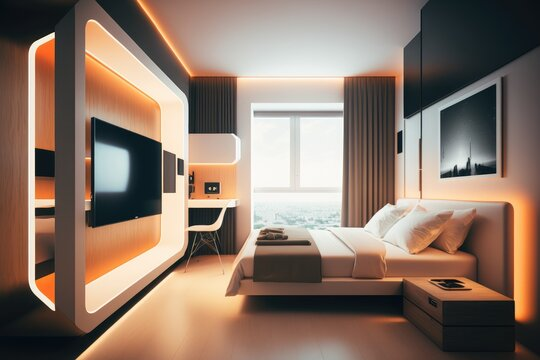
Walk into a newly renovated five-star property in Bangkok or Dubai. The lobby glows with calculated warmth—3000K downlights at 45-degree angles, accent lighting on marble surfaces, the whole theatre of welcome. Beautiful.
Now follow me to room 847. The guest just walked in after a 14-hour flight. What does she see?
A ceiling fixture running at full 4000K output. Her body clock is screaming 3 AM. The room looks like an airport terminal. She’ll sleep poorly, wake up grumpy, and leave a review mentioning the “sterile” feeling.
Here’s what nobody tells you: the average hotel guest spends 92% of their time in their room, but 98% of lighting investment goes to public areas.
The ROI math on guest room lighting is brutal in its simplicity. A guest who sleeps well leaves a better review, sleeps in longer (more minibar revenue), and is less likely to complain to the front desk. A guest who sleeps poorly does the opposite—and posts about it.
What Actually Happens in Real Deployments
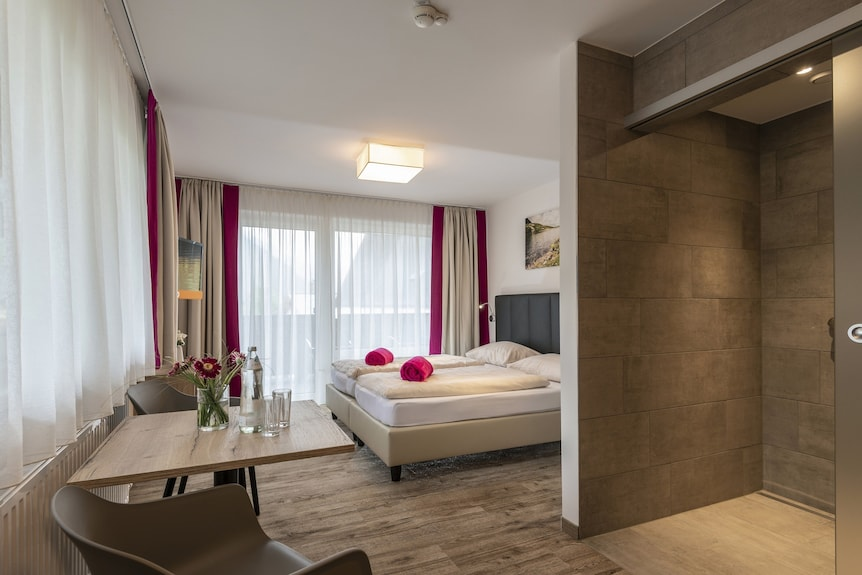
At a 280-room business hotel in Singapore, we audited the existing lighting situation before proposing an AI upgrade. The findings were instructive:
- 67% of guests never touched the lighting controls
- Of those who did, 89% turned everything off except one bedside lamp
- Guest satisfaction scores for “room comfort” ranked 3.2/5, lowest of all categories
- Energy spent illuminating empty rooms: 38% of total room electricity consumption
The property installed AI-adaptive systems with three independent control channels: circadian-aligned general lighting, task lighting that responds to activity detection, and ambient lighting tied to time-of-day profiles.
Six months post-installation data:
- Room comfort satisfaction scores: 4.1/5 (up from 3.2)
- Average guest check-out time: 11:47 AM (up from 11:23 AM, meaning guests slept later)
- Room electricity consumption: down 23%
- Lighting-related maintenance tickets: down 61%
The GM told me the minibar billings increased “significantly” but couldn’t attribute it solely to better sleep. I could.
The Circadian Problem Hotels Are Pretending Doesn’t Exist
Jet lag isn’t a wellness trend. It’s a reality for every international traveler walking through your doors.
Traditional hotel lighting ignores this completely. Same color temperature at 8 AM and 8 PM. Same intensity whether the guest just arrived from Frankfurt or is checking out after three days.
AI-adaptive lighting works differently. In a properly configured system:
Morning (6 AM – 10 AM): General lighting ramps from 2700K to 4000K over 90 minutes, mimicking natural sunrise. The gradual shift helps reset the body’s circadian rhythm after long-haul flights.
Midday (10 AM – 6 PM): Full spectrum lighting at 5000-5500K. Alerting, clinical, appropriate for the business traveler who needs to be functional.
Evening (6 PM – 10 PM): Gradual warm-down to 3000K. The lighting starts signaling “wind down” to the nervous system.
Night (10 PM onwards): Presence-responsive pathways only. No overhead lighting unless movement is detected. Bedside controls limited to 2200K amber.
This isn’t speculative neuroscience. It’s applying decades of chronobiology research to the built environment. The hotels ignoring this are choosing to ignore it because “it’s complicated.”
It isn’t complicated. It’s a lighting system configuration problem.
The Occupancy Variable Nobody Captures
Hotels have terrible occupancy data at the room level. You know you had 78% occupancy last month. You don’t know which rooms were occupied when, or how long guests actually spent in them.
AI lighting systems generate this data automatically. Every motion event. Every lighting adjustment. Every time someone entered or exited. Layer this with your PMS data and you start seeing patterns that change operations:
- Which room configurations have highest repeat-customer rates (and what’s different about the lighting?)
- At what time of day do guests typically return to their rooms (for targeted turndown timing)
- Which floors have persistently high motion but low energy consumption (indicating guests who sleep with lights off, possibly because current lighting is uncomfortable)
A regional chain in Malaysia deployed CAIMETA’s system across twelve properties specifically for the occupancy analytics. The operations team discovered that guests on floors 6-10 had 34% longer average room occupancy than floors 2-5. Investigation revealed different HVAC zoning—the upper floors maintained temperature better, guests were more comfortable, stayed longer.
Same lighting manufacturer across all floors. Different operational outcomes based on a variable they never would have found without the lighting system’s occupancy data.
The Maintenance Argument Nobody Wins
Hotel maintenance directors love to argue against smart lighting: “Too complex. Our staff can’t troubleshoot it. What happens when the system fails?”
Fair concerns. Address them in order:
Complexity: Modern AI lighting systems have smartphone-level interfaces. If your maintenance team can reboot a router, they can troubleshoot lighting. The systems also self-diagnose—sending alerts when drivers fail or sensors drift.
Staff capability: This is a training investment, not a system flaw. Two hours of training on the control interface eliminates 90% of support calls. The remaining 10% are hardware failures that would have happened with traditional systems anyway.
System failure: Every quality system has failover modes. Basic on/off override at the switch level means guests never experience darkness, even if the AI is offline.
The real maintenance argument hotels should be having: why are you still replacing dead fluorescent tubes with new dead fluorescent tubes? LED retrofits with smart controls have 50,000-hour rated lifespans. At typical hotel occupancy patterns, that’s 12-15 years before replacement. The maintenance savings alone often justify the upgrade within the project payback period.
What This Actually Costs
A full AI lighting upgrade for a 200-room hotel runs $180,000-$240,000, depending on existing infrastructure and feature scope.
Break-even analysis:
- Energy savings: $28,000/year (23% reduction in room electricity)
- Maintenance reduction: $15,000/year (fewer lamp replacements, no lighting service contracts)
- Guest satisfaction improvement: Estimated $45,000/year in avoided review damage and repeat booking lift
- Minibar/revenue uplift: Conservative $12,000/year
Total annual benefit: $100,000+
Payback: Under 2.5 years.
Hotels that claim lighting upgrades are “too expensive” are usually running the wrong math. They’re comparing capital cost to energy savings alone, ignoring the guest experience multiplier.
The Brands Already Doing This
Marriott’s “Greatroom” concept, Hilton’s “Connected Room,” and Hyatt’s efforts all incorporate adaptive lighting at various levels. These programs started as premium-tier differentiators and are now rolling downmarket as the technology costs decline.
The mid-market properties that delay adoption will find themselves in a familiar position: explaining to ownership why their TripAdvisor scores lag competitors who made different investment decisions five years ago.
The hotel industry’s next competitive frontier isn’t the lobby. It’s whether your guests sleep well.
CAIMETA’s AI lighting platform delivers circadian-aligned illumination, occupancy analytics, and energy optimization across the entire property—from lobby to guest room to back-of-house. Our hospitality deployments span 12 countries and 40+ properties.
Smart Light, Smarter Spaces.