
AI-Powered Retail Analytics: How Smart Lighting Systems are Revolutionizing Store Intelligence
Published: May 13, 2026 | Category: Retail Lighting | Reading Time: 9 min
Introduction: The Data Revolution in Retail
In 2026, retail analytics has fundamentally changed. The question is no longer “what happened in my stores?”—it’s “what’s happening right now, and what should I do about it?”
Traditional dashboards that measured sales by hour and traffic by day served their purpose. But in an era where customer expectations shift hourly and competition intensifies daily, reactive reporting is simply not enough.
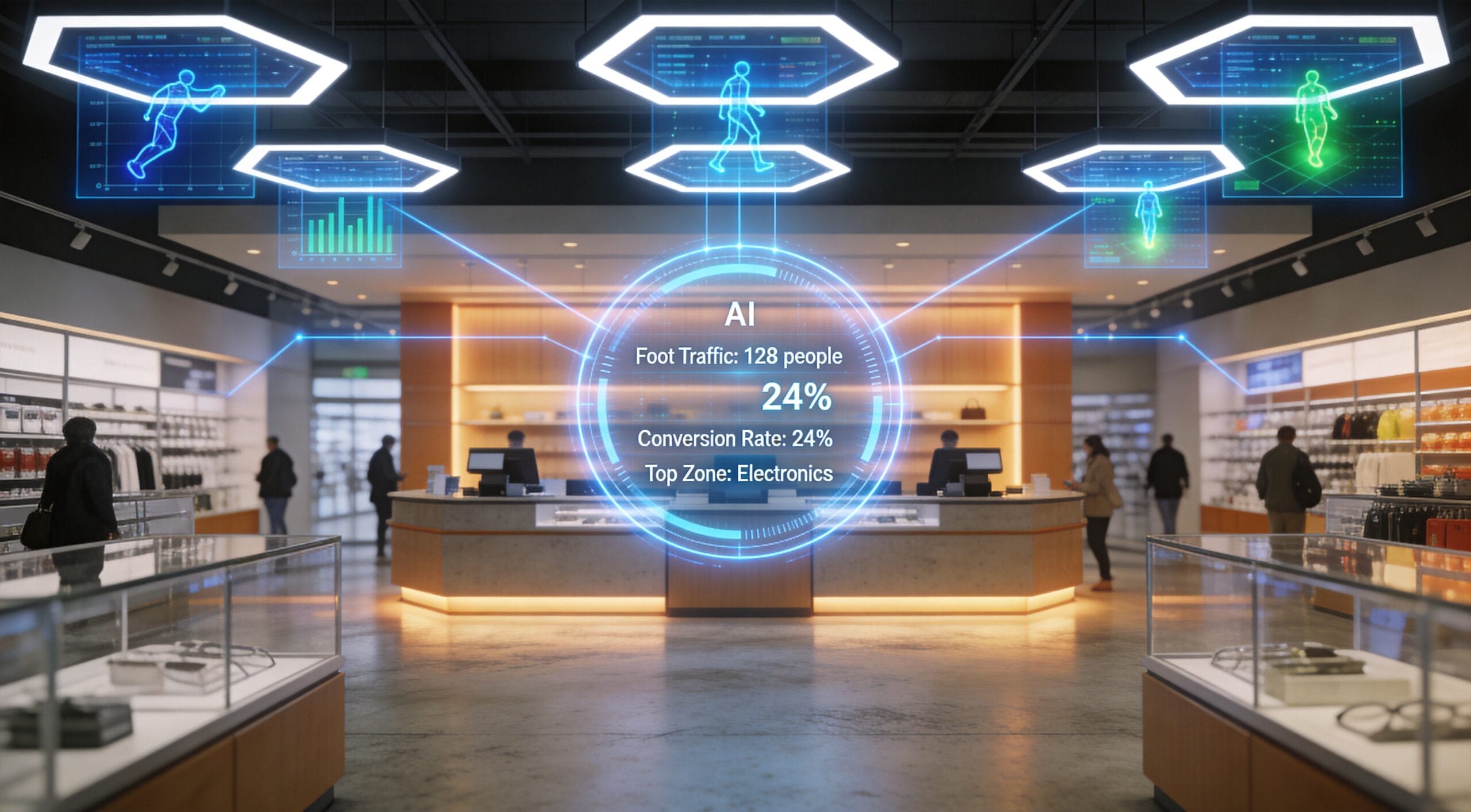
Enter AI-powered retail analytics—intelligent systems that transform lighting infrastructure into a comprehensive sensing network, delivering real-time insights that drive immediate action.
The Evolution from Dashboards to Decisions
The Problem with Traditional Retail Analytics
For the past decade, most retailers relied on:
- Point-of-Sale Data: What customers bought, not why they bought it
- Manual Traffic Counts: Hourly headcounts that missed detailed patterns
- Weekly Reports: Hindsight that arrived too late to capitalize on opportunities
- Generic Benchmarks: Industry averages that didn’t reflect local realities
These limitations created blind spots that cost retailers customers, sales, and competitive advantage.
The AI Revolution: From Data to Decisions
Modern AI retail analytics represents a fundamental shift from passive reporting to active intelligence:
- Real-Time Visibility: What’s happening in every store, right now
- Automated Detection: AI identifies anomalies and exceptions automatically
- Causal Analysis: Understanding why performance changed
- Prescriptive Recommendations: Exactly what actions will improve outcomes
- Outcome Tracking: Did the recommended action actually work?
“The most important shift isn’t prettier visuals—it’s automated insight delivery. Leading platforms surface what’s happening, what changed, why it changed, what action to take, and what outcome to expect.” — Retail Analytics 2026 Report
How Smart Lighting Enables Retail Intelligence
The Lighting Infrastructure Advantage
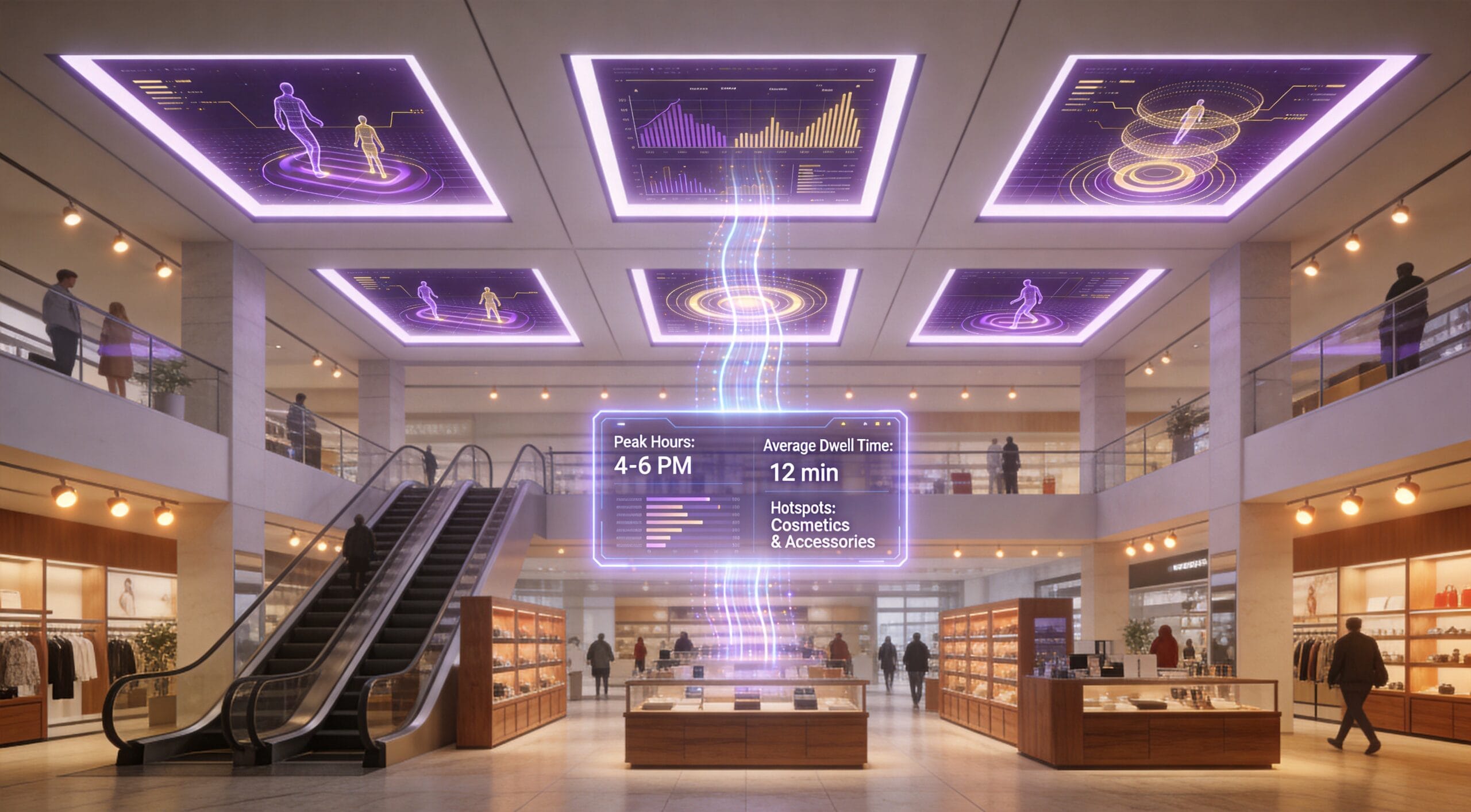
Traditional analytics systems require dedicated hardware—cameras, sensors, people counters—that add cost, complexity, and privacy concerns. Smart lighting offers a smarter approach.
By integrating sensors directly into luminaires, AI-powered lighting systems become the sensing layer for the entire store:
- Occupancy Sensors: Detect presence without capturing images
- Lux Sensors: Measure ambient light for daylight harvesting
- Temperature Sensors: Monitor environmental conditions
- PIR Detectors: Identify movement patterns and dwell times
Case Study: EuroShop 2026 Innovation
At EuroShop 2026, Pyramid Computer showcased a groundbreaking approach: cameras integrated directly into retail lighting rails. This innovation demonstrates how lighting is evolving from passive illumination to active intelligence.
Key features of this approach:
- Reduced Installation Complexity: Cameras replace dedicated mounting hardware
- Discreet Integration: Nearly invisible in store design
- Local AI Processing: All data analyzed on-premise without cloud dependency
- Maximum Privacy: No images transmitted externally
- Real-Time Insights: Virtually zero latency for immediate response
Key AI Analytics Capabilities for Retail
1. Foot Traffic Analytics
Understanding customer movement is fundamental to retail success. AI-powered traffic analytics provides:
- Accurate Counting: Distinguishing customers from staff and false triggers
- Dwell Time Measurement: How long customers spend in specific zones
- Conversion Analysis: The ratio of visitors to purchasers
- Peak Period Identification: When traffic actually occurs vs. when you think it does
2. Heatmap Visualization
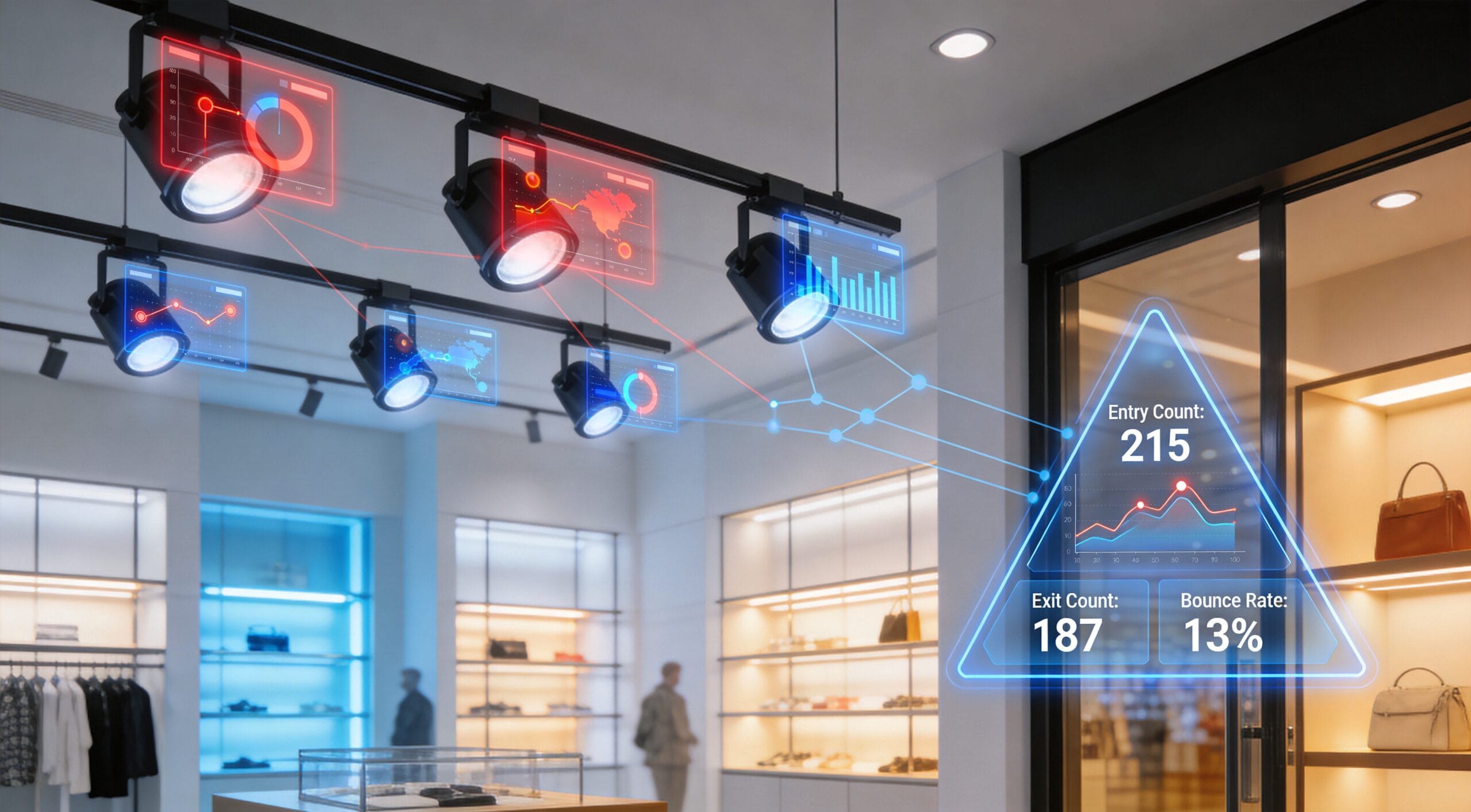
Visual representation of customer behavior reveals patterns invisible to the naked eye:
- High-Traffic Zones: Where customers naturally gravitate
- Dead Zones: Areas that attract little attention
- Traffic Flow Patterns: How customers navigate through the space
- Seasonal Variations: How behavior changes throughout the year
3. Product-Level Analytics
Beyond store-level insights, AI enables product-specific intelligence:
- Shelf Engagement: Time spent in front of specific displays
- Product Interaction: Physical interactions with merchandise
- Cross-Selling Patterns: Which products are purchased together
- Promotional Impact: Measurable lift from display and lighting changes
4. Staffing Optimization
Connecting customer traffic to staffing decisions transforms operations:
- Traffic-Based Scheduling: Aligning coverage with actual demand
- Performance Tracking: Sales per customer by team member
- Engagement Speed: How quickly staff responds to customers
- Queue Management: Predicting and preventing checkout delays
Prescriptive Analytics: The New Standard
Beyond Prediction to Action
Predictive analytics tells you what’s likely to happen. Prescriptive analytics tells you what to do about it—and that’s the crucial difference.
Real-World Applications
Scenario: Engagement Speed Declining
Traditional Analytics: “Engagement speed is 15% below target this week.”
AI Prescriptive Analytics: “Engagement speed is 15% below target because traffic patterns shifted to peak hours when coverage is lowest. Recommendation: Shift coverage by 30 minutes during Tuesday-Thursday peak, and trigger coaching prompts for team members with below-average engagement rates.”
Scenario: Conversion Divergence
Traditional Analytics: “Conversion dropped 8% month-over-month.”
AI Prescriptive Analytics: “Conversion diverged from expected performance after the recent floor plan change. The new layout creates a bottleneck at the fitting room entrance, causing walkouts. Recommendation: Relocate fitting room entrance 3 meters east and add supplementary lighting to the redirected traffic flow path.”
The Automation Loop
AI-powered retail analytics doesn’t just recommend actions—it initiates them:
- Detection: System identifies anomaly automatically
- Analysis: AI determines root cause
- Recommendation: Specific action is suggested
- Execution: Automated workflows trigger when conditions are met
- Verification: Outcome is tracked and reported
This closes the loop from insight to action, eliminating the delay between discovery and response.
Implementing AI Retail Analytics: Best Practices
Phase 1: Foundation (Months 1-3)
- Assess Current State: Inventory existing systems and data sources
- Define Success Metrics: What does improved performance look like?
- Select Technology Partner: Look for proven solutions with retail expertise
- Pilot Program: Start with 2-5 representative locations
- Establish Baselines: Document current performance before changes
Phase 2: Optimization (Months 4-6)
- Calibrate AI Models: Fine-tune algorithms for your specific environment
- Train Staff: Ensure teams understand and trust the insights
- Refine Processes: Adjust workflows to incorporate AI recommendations
- Measure Impact: Quantify improvements in key metrics
- Document Learnings: Capture insights for broader rollout
Phase 3: Scale (Months 7-12)
- Expand Deployment: Roll out to all locations
- Integrate Systems: Connect AI analytics with POS, inventory, and ERP
- Develop Custom Models: Build algorithms optimized for your business
- Automate Decisions: Implement trigger-based automation for routine responses
- Continuous Improvement: Regular model retraining and optimization
Technology Requirements for AI Retail Analytics
Hardware Considerations
- Smart Lighting Infrastructure: Luminaires with integrated sensors
- Edge Computing: Local processing for real-time response
- Network Connectivity: Reliable bandwidth for data transmission
- Power Monitoring: Smart breakers for energy analytics
Software Requirements
- Cloud Platform: Scalable infrastructure for data processing
- AI/ML Engine: Algorithms trained on retail-specific data
- Dashboard Interface: Intuitive visualization for non-technical users
- Integration APIs: Connections to existing retail systems
- Security Framework: Encryption, access controls, and audit logs
Data Governance
- Privacy Compliance: GDPR, CCPA, and local regulations
- Data Retention: Policies for historical data storage
- Anonymization: Techniques that protect individual identity
- Consent Management: Transparent opt-in/opt-out for customers
Measuring ROI: The Business Case for AI Retail Analytics
Direct Benefits
| Metric | Typical Improvement | Impact |
|---|---|---|
| Energy Costs | 30-50% reduction | Immediate savings |
| Conversion Rate | 10-20% increase | Revenue growth |
| Labor Efficiency | 15-25% improvement | Cost reduction |
| Inventory Accuracy | 95%+ accuracy | Shrinkage reduction |
| Customer Satisfaction | 20-30% NPS improvement | Loyalty and retention |
Indirect Benefits
- Faster Decision-Making: From weeks to hours
- Competitive Intelligence: Real-time market awareness
- Employee Satisfaction: Clear metrics and coaching
- Risk Mitigation: Early warning systems
- Strategic Planning: Data-driven expansion decisions
The Future of AI in Retail
Emerging Trends for 2026 and Beyond
- Generative AI Assistants: Natural language interfaces for store management
- Computer Vision Integration: Advanced behavioral analysis without privacy concerns
- Autonomous Store Intelligence: Self-optimizing environments
- Unified Commerce: Seamless online/offline data integration
- Sustainability Tracking: Real-time carbon footprint monitoring
The Human Element
Despite AI’s capabilities, successful retail analytics keeps humans at the center:
- Manager Oversight: AI supports, not replaces, human judgment
- Training and Development: Building analytical capabilities in teams
- Ethical Considerations: Responsible AI that respects privacy and fairness
- Continuous Learning: Adapting to changing consumer expectations
Conclusion: Transforming Data into Competitive Advantage
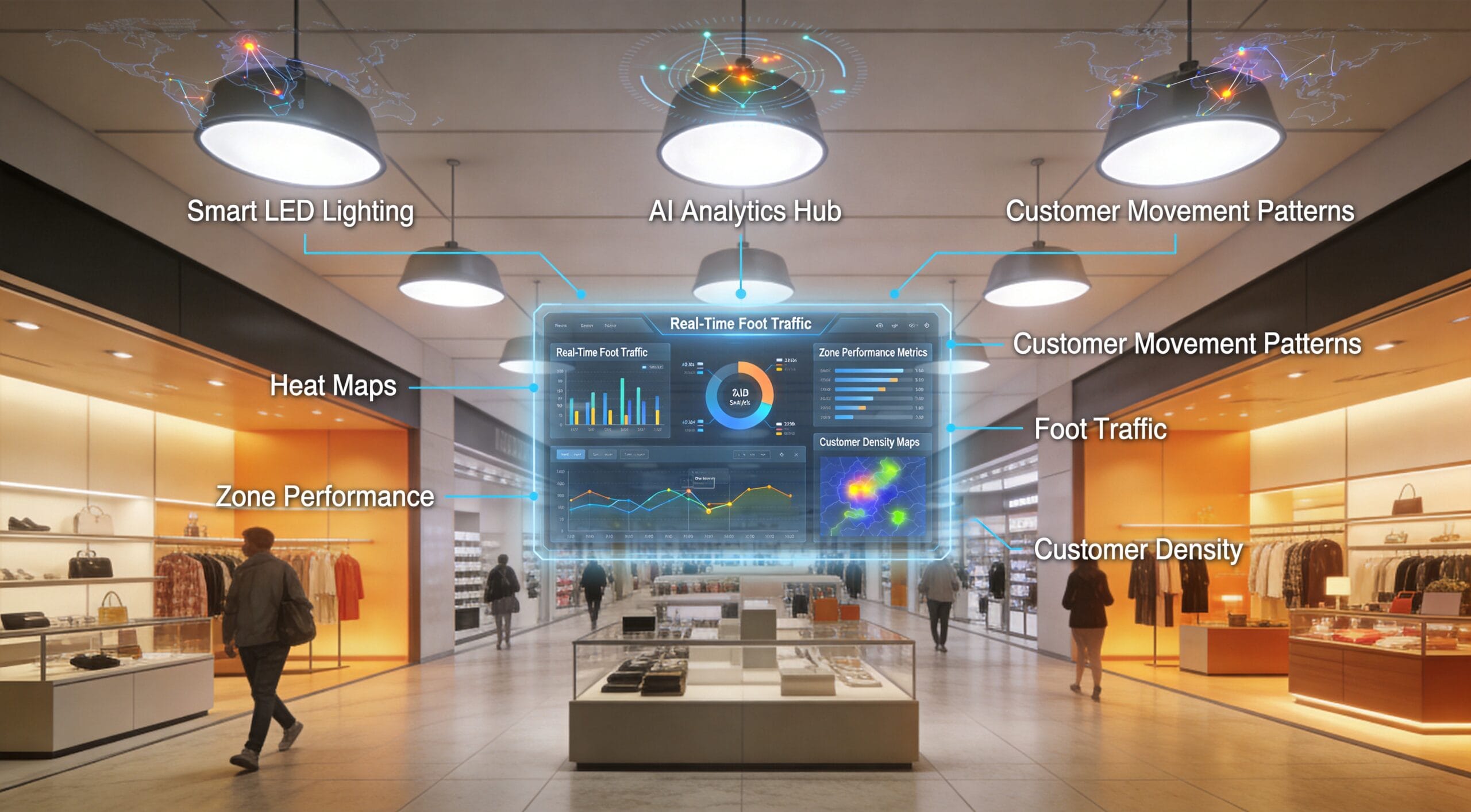
AI-powered retail analytics represents the most significant advancement in store management since the introduction of POS systems. By transforming lighting infrastructure into intelligent sensing networks, retailers gain unprecedented visibility into customer behavior, operational efficiency, and market opportunities.
The question facing retail leaders today isn’t whether to adopt AI analytics—it’s how quickly they can deploy it before competitors do.
CAIMETA’s AI-driven approach to retail lighting combines illumination excellence with advanced analytics, creating spaces that don’t just light up—they learn, adapt, and optimize.
Ready to see what your store is really telling you? Discover how AI retail analytics can transform your operations and drive measurable results.