
When retailers evaluate smart lighting investments, the conversation typically begins—and often ends—with energy consumption metrics. LED conversion promises 50-70% energy reduction. Smart controls add another 15-30%. The business case appears straightforward.
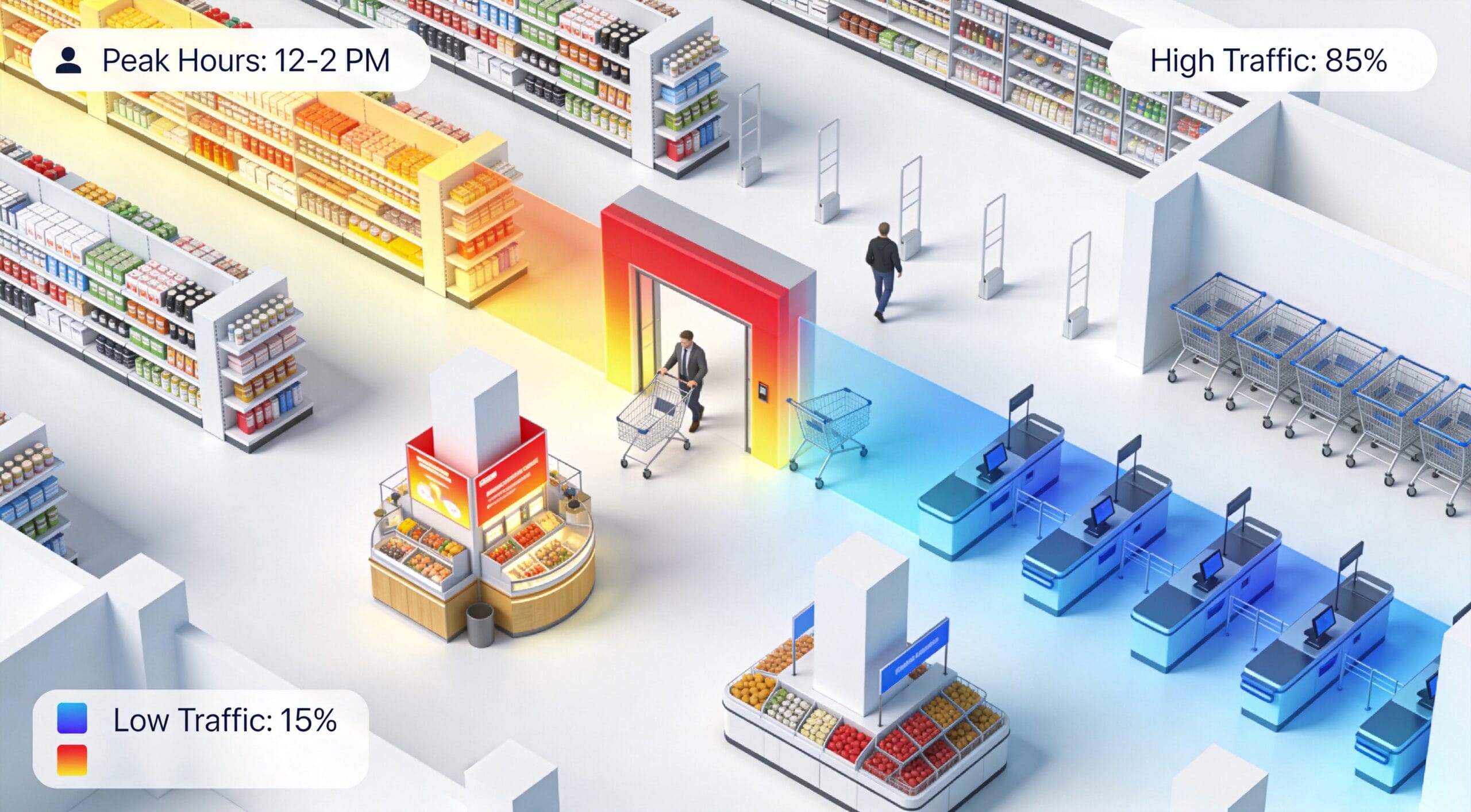
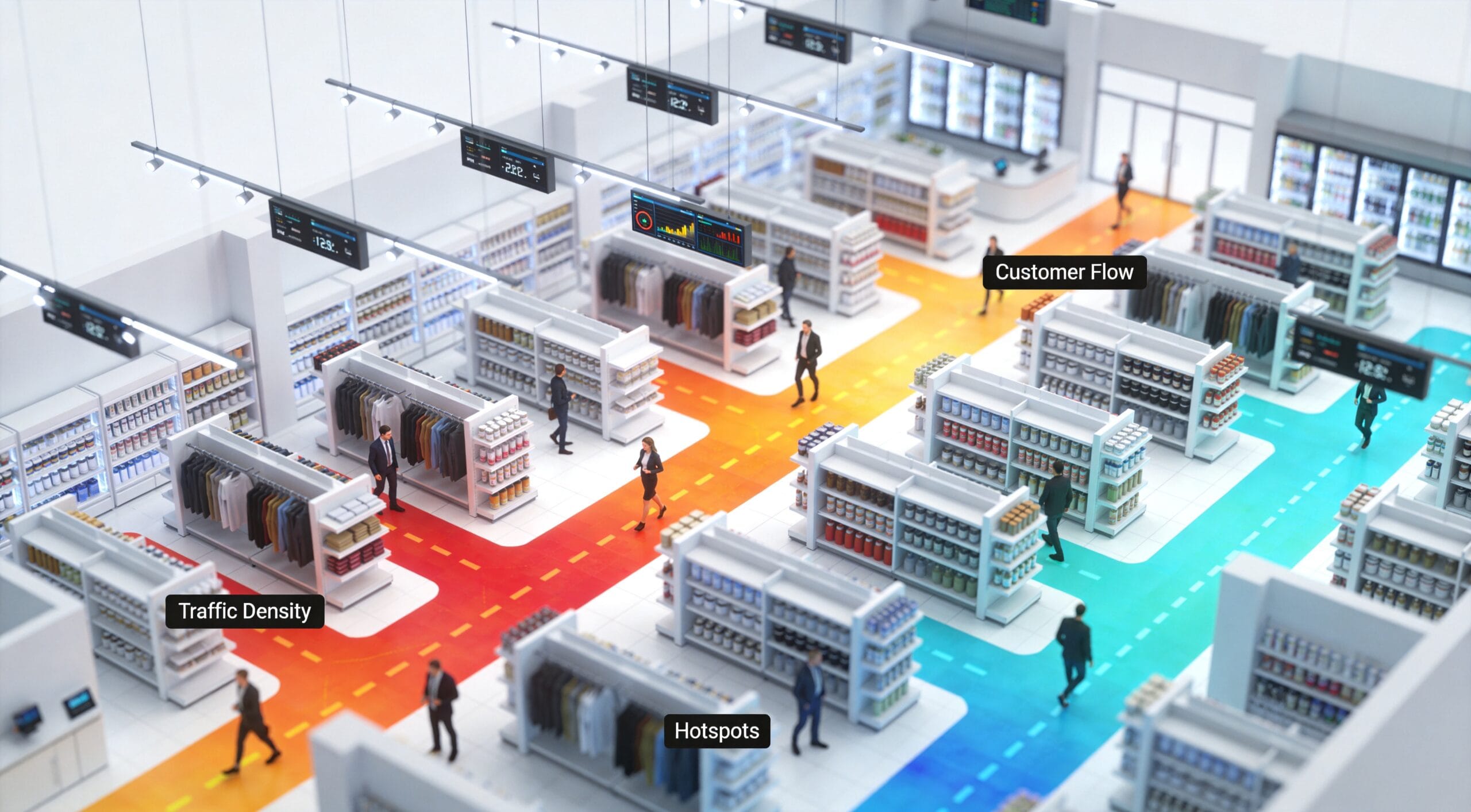
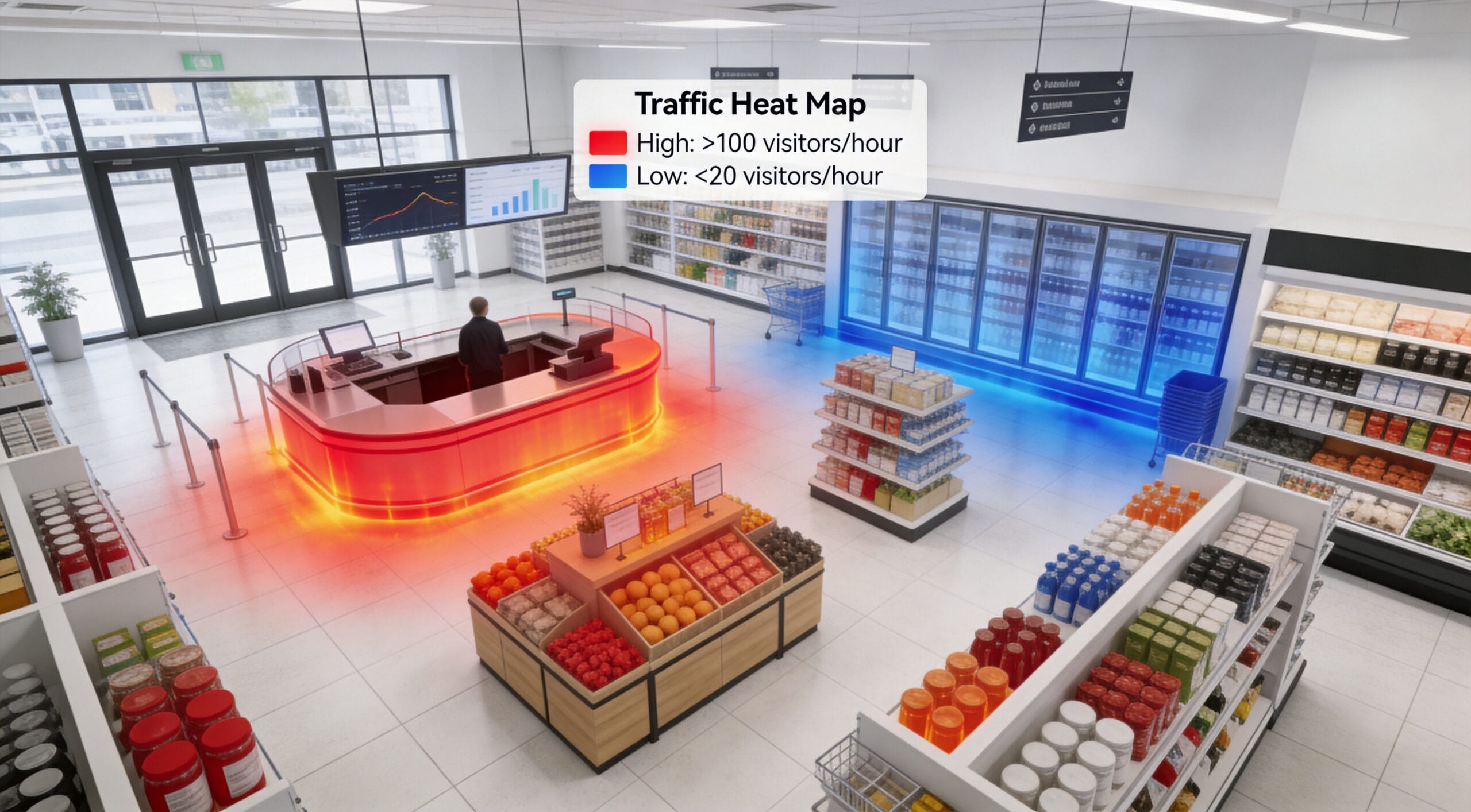
But forward-thinking retail operators are discovering that intelligent lighting infrastructure serves a dual purpose: energy optimization and customer behavior intelligence.
The Data Opportunity Hidden in Your Ceiling
Consider the typical retail environment: one luminaire per 80-100 square feet. Each fixture represents a fixed observation point with power supply already routed, mounting infrastructure already in place.
Modern AI lighting platforms transform every luminaire into a potential data collection point. Occupancy sensors embedded in smart fixtures capture foot traffic patterns. Integrated cameras with edge processing generate heat maps without compromising customer privacy.
Why This Data Matters for Retail Operations
Customer behavior data transforms lighting investments from cost centers into strategic intelligence assets:
- Merchandising Optimization: Heat map data reveals which product displays genuinely attract attention versus those serving merely as visual filler
- Staffing Efficiency: Traffic pattern analytics enable data-driven staffing decisions
- Store Layout Validation: Before-and-after traffic analysis quantifies the impact of layout changes
CAIMETA’s Retail Intelligence Platform
CAIMETA’s AIBBS (Big Data Monitoring System) exemplifies the analytics-first approach to retail lighting. The platform captures granular traffic data while maintaining strict privacy compliance.
Core Analytics Capabilities
- Real-Time Occupancy Dashboard: Live customer density visualization enables immediate response to unexpected traffic patterns
- Historical Trend Analysis: Weekly, monthly, and seasonal traffic patterns inform staffing models and inventory forecasting
- Zone Performance Comparison: Comparative analytics across store zones reveal underperforming product sections
Privacy-Preserving Technology
AIBBS employs edge processing architecture where customer data never leaves the local network. Heat maps and traffic statistics transmit to cloud dashboards, but raw video or behavioral data remains on-premise—ensuring GDPR and CCPA compliance.
Implementation Strategies for Different Retail Formats
Grocery and Supermarket
Fresh produce and prepared foods sections benefit particularly from traffic analytics. A regional supermarket chain deployed AIBBS analytics across 40 locations, identifying that 23% of produce department traffic occurred in a 90-minute window during evening hours—enabling targeted staffing adjustments that reduced perishable waste by 18% annually.
Department and Specialty Retail
Fashion and home goods retailers leverage traffic analytics for browse-to-purchase ratio analysis, associate positioning optimization, and promotional ROI quantification.
Measuring ROI: Beyond Energy Savings
Conservative ROI calculations for retail analytics deployments consider:
- Direct Revenue Impact: Improved product placement (3-8% category sales increase), reduced waste (12-20% perishable loss reduction)
- Operational Efficiency: Staffing optimization (8-15% labor cost reduction), reduced shrinkage through anomaly detection
- Infrastructure Value: Analytics capability from infrastructure that would exist anyway
Conclusion
Smart lighting infrastructure represents an underutilized opportunity for retail intelligence. The same ceiling positions that deliver illumination can simultaneously capture customer behavior data—transforming a cost center into a strategic asset.
For retailers seeking competitive advantage through operational excellence and customer experience optimization, AI lighting platforms with built-in analytics capabilities offer compelling value across energy, operations, and merchandising dimensions.