
Color is the language of retail. When a customer evaluates a fabric, assesses fresh produce, or considers a cosmetic purchase, their decision hinges entirely on visual perception—specifically, how accurately the lighting reveals the true colors of the product.
Understanding Color Rendering: The Technical Foundation
To appreciate AIcolor’s capabilities, we must first understand the metrics that define color quality in artificial lighting. The Color Rendering Index (CRI) measures how accurately a light source reveals colors compared to a reference light source. Traditional CRI measurements evaluate eight standard color samples, with scores above 90 generally considered excellent for commercial applications.
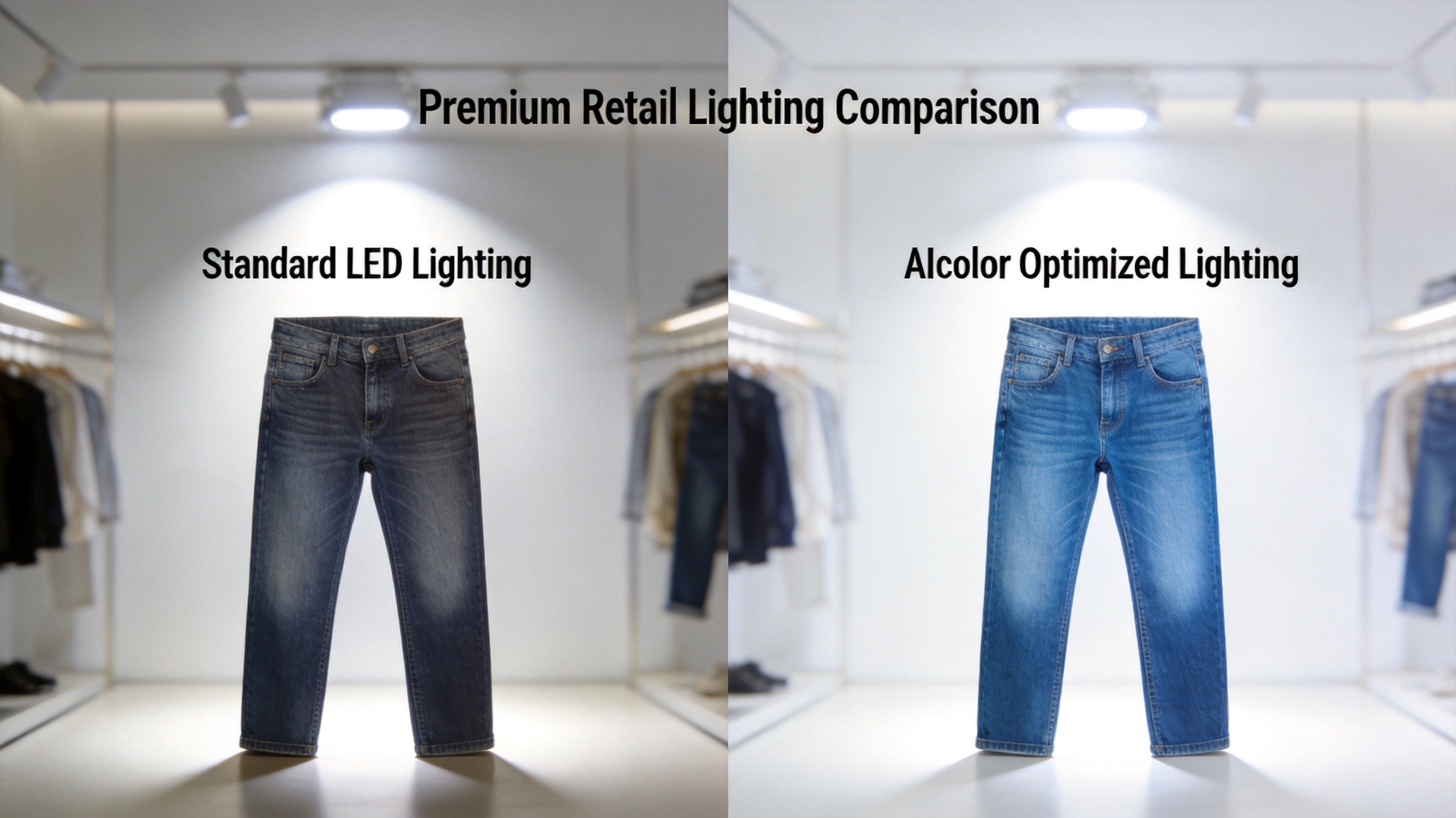
Adaptive CCT: Intelligent Color Temperature Optimization
AIcolor systems continuously monitor ambient light conditions—including natural daylight contribution, adjacent zone lighting, and overall space luminance—to automatically adjust CCT within defined parameters. This adaptive approach delivers several tangible benefits:
Circadian Alignment
ensures that lighting color temperature supports natural human rhythms throughout the day. Morning light typically operates at warmer CCT (3000K-3500K) to support alertness without jarring transitions.
Product Optimization
tailors CCT to specific merchandise requirements. Fresh bakery products appear most appetizing under warm white lighting (2700K-3000K) that enhances golden crust tones.
The Science of Spectral Tuning
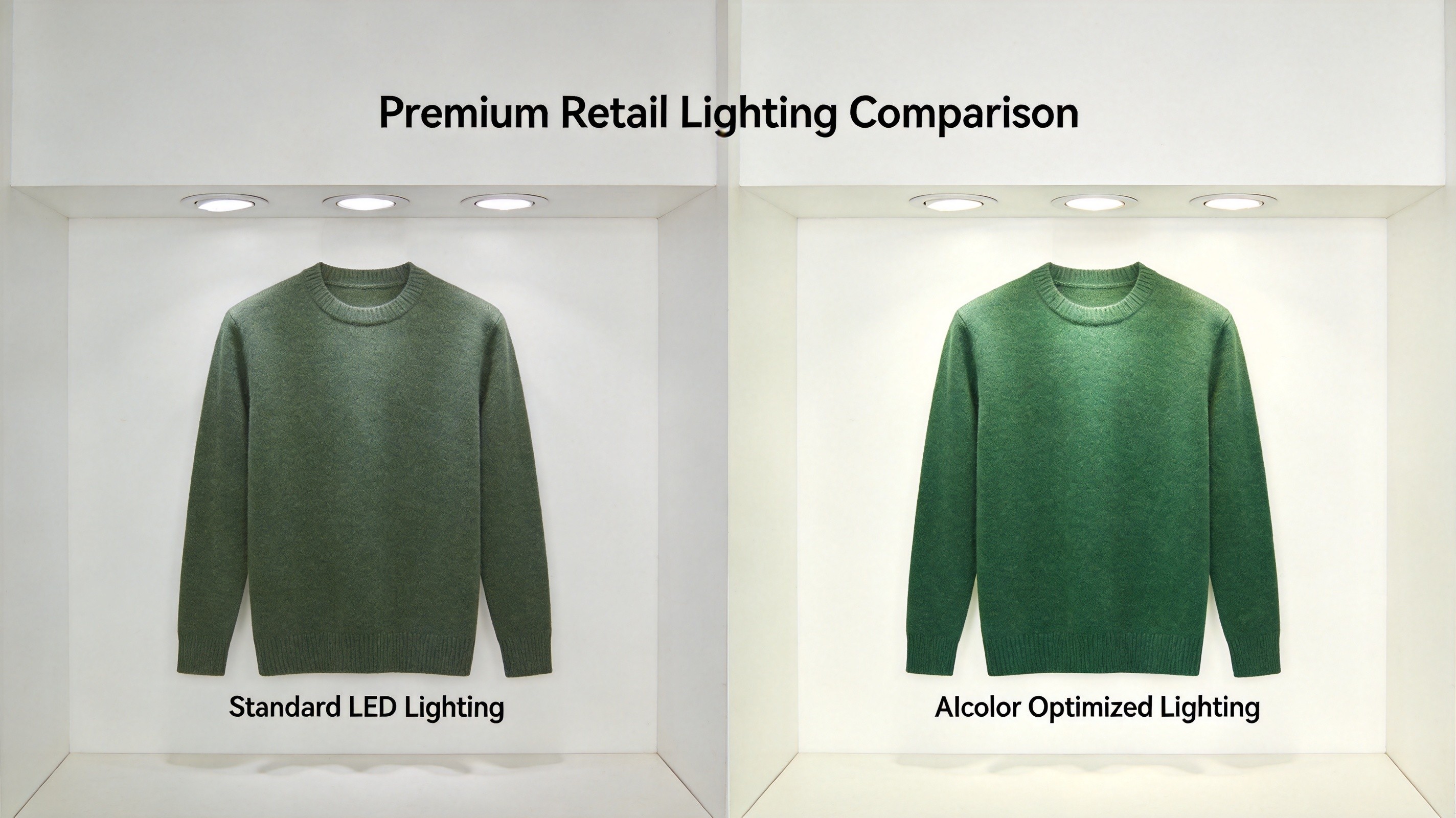
AIcolor’s most sophisticated capability involves spectral power distribution (SPD) tuning—the precise adjustment of light output across the visible spectrum to maximize color rendering for specific applications.
Implementation Architecture for Commercial Environments
Deploying AIcolor technology requires thoughtful system design that addresses both technical and operational requirements. The typical architecture includes several interconnected layers:
- Fixture-level intelligence: Smart LED drivers with network communication
- Zone-based control: Grouped fixtures sharing common characteristics
- Central management platform: AI optimization algorithms
- Integration with building systems: HVAC, daylight shading, analytics
Compliance and Certification Requirements
Commercial deployment of AIcolor systems must address relevant standards and certifications: ETSI EN 303 645 for cybersecurity, BLE Mesh certification, Wi-Fi Alliance certification, and Energy Star certification for qualifying products.
The Business Case for Superior Color Rendering
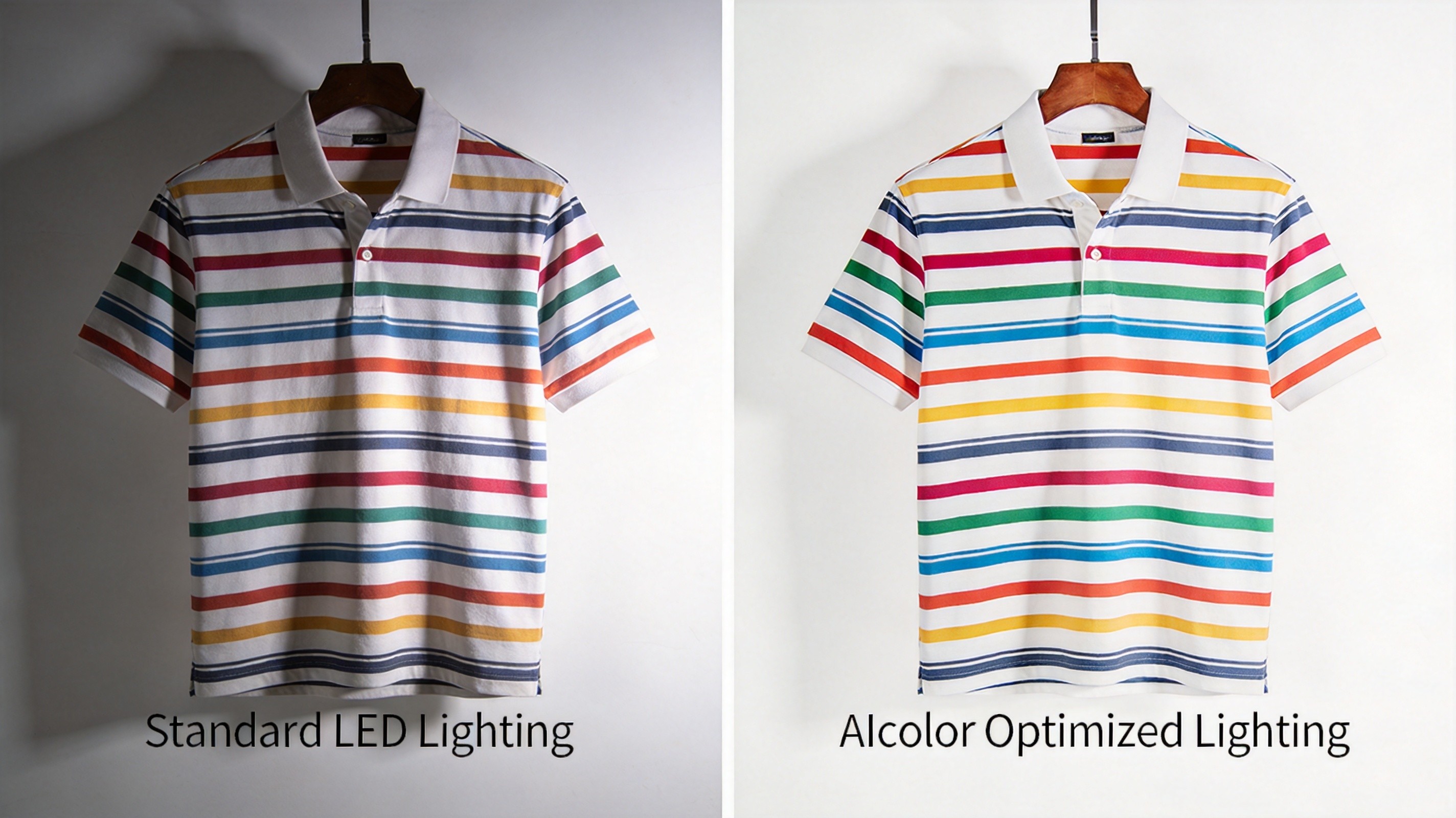
Investment in AIcolor technology generates returns across multiple dimensions. For an average mid-size fashion retailer, these factors typically generate 8-15% improvement in gross margin contribution from equipped areas.
Future Evolution: Machine Learning and Predictive Optimization
AIcolor technology continues advancing as machine learning algorithms become more sophisticated. Predictive optimization will enable systems to anticipate requirements based on scheduled events, weather forecasts, and historical patterns.