
Commercial lighting systems are often treated as set-it-and-forget-it infrastructure. Fixtures are installed, bulbs are occasionally replaced, and problems are addressed only when a room goes dark. This reactive approach comes with hidden costs: emergency service calls, unplanned downtime, and the cumulative toll of deferred maintenance on brand perception and occupant experience.
In 2026, AI-powered smart lighting is flipping this model. Predictive maintenance — the ability to forecast equipment failures before they occur — is becoming a standard capability of commercial IoT lighting platforms. For facility managers overseeing office buildings, retail chains, or hospitality portfolios, AI-driven diagnostics are transforming how lighting infrastructure is managed, maintained, and optimized.
What Is Predictive Maintenance in Lighting?
Predictive maintenance (PdM) uses continuous data collection and analysis to identify early warning signs of equipment degradation. Rather than replacing components on a fixed schedule or waiting for complete failure, facility managers receive actionable alerts when conditions suggest a fixture is approaching end-of-life or operating outside normal parameters.
For commercial LED lighting systems, predictive maintenance monitors:
- Lumen depreciation: LEDs lose brightness over time; AI tracks actual output against expected degradation curves
- Driver thermal stress: Elevated thermal signatures predict imminent driver failure
- Voltage fluctuations: Abnormal patterns indicate wiring issues or driver instability
- Color temperature drift: Age-related shifts affecting visual consistency
- Network communication failures: Mesh-connected fixtures that stop responding may be experiencing power issues
- Motion sensor calibration drift: Environmental factors affecting occupancy sensor sensitivity
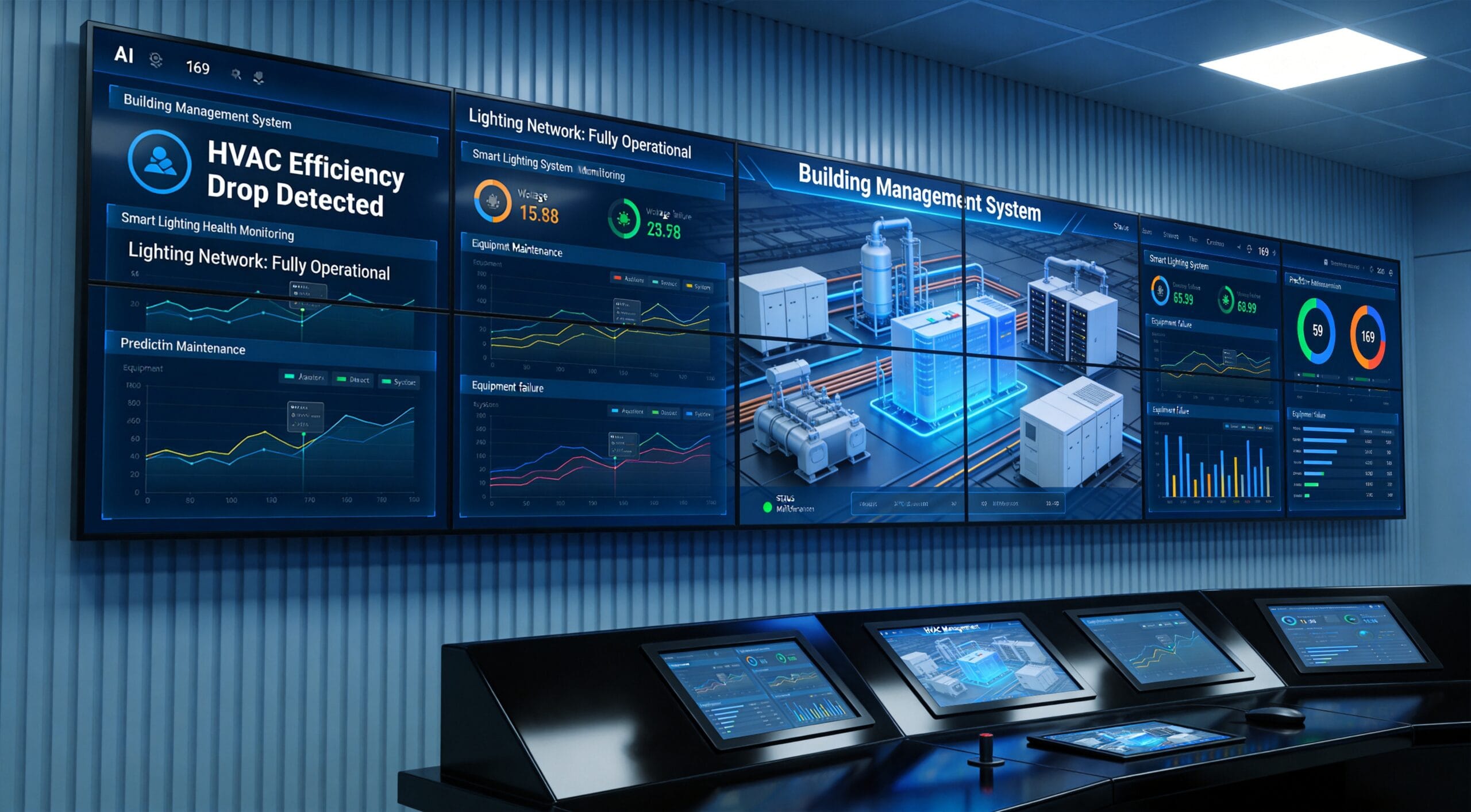
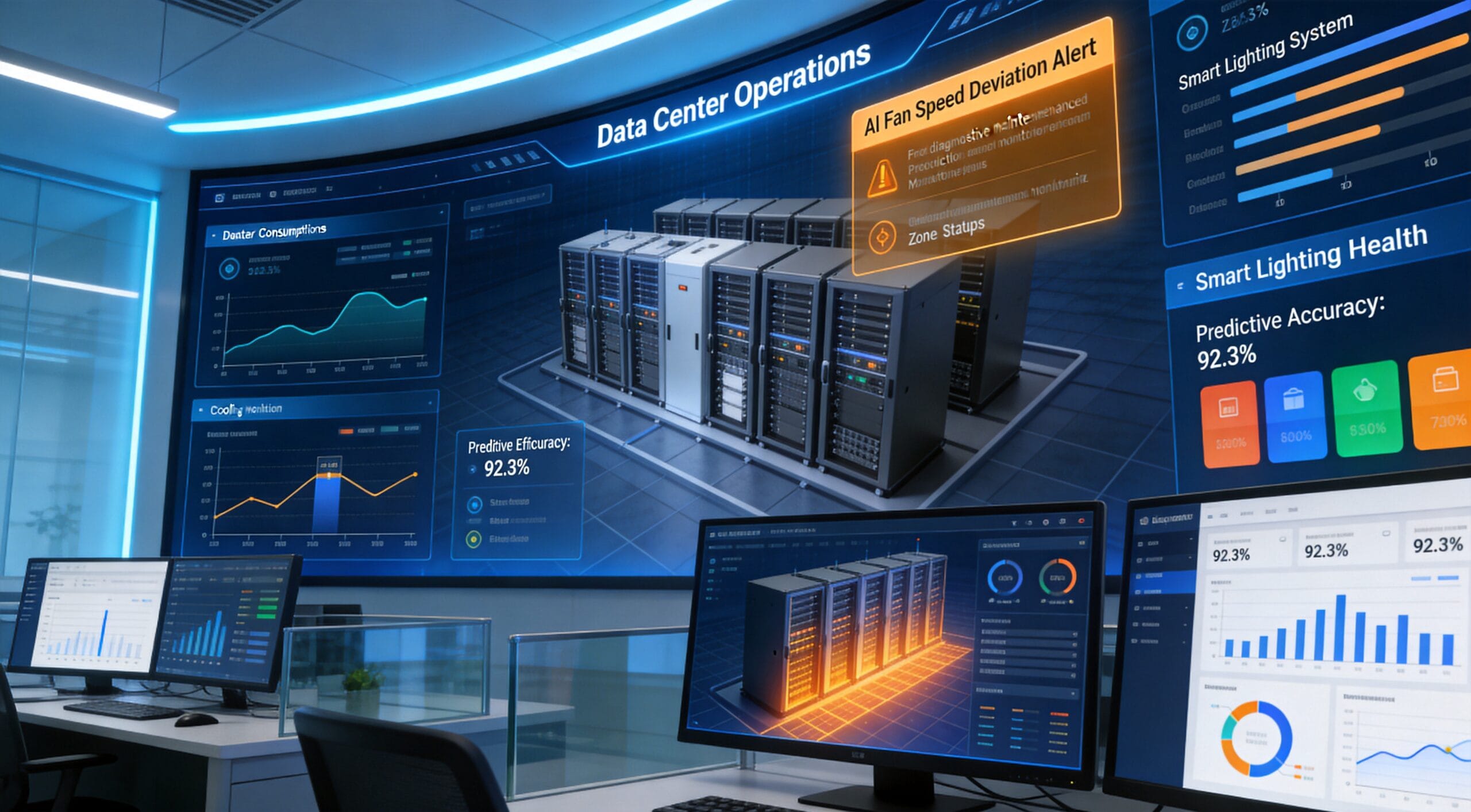
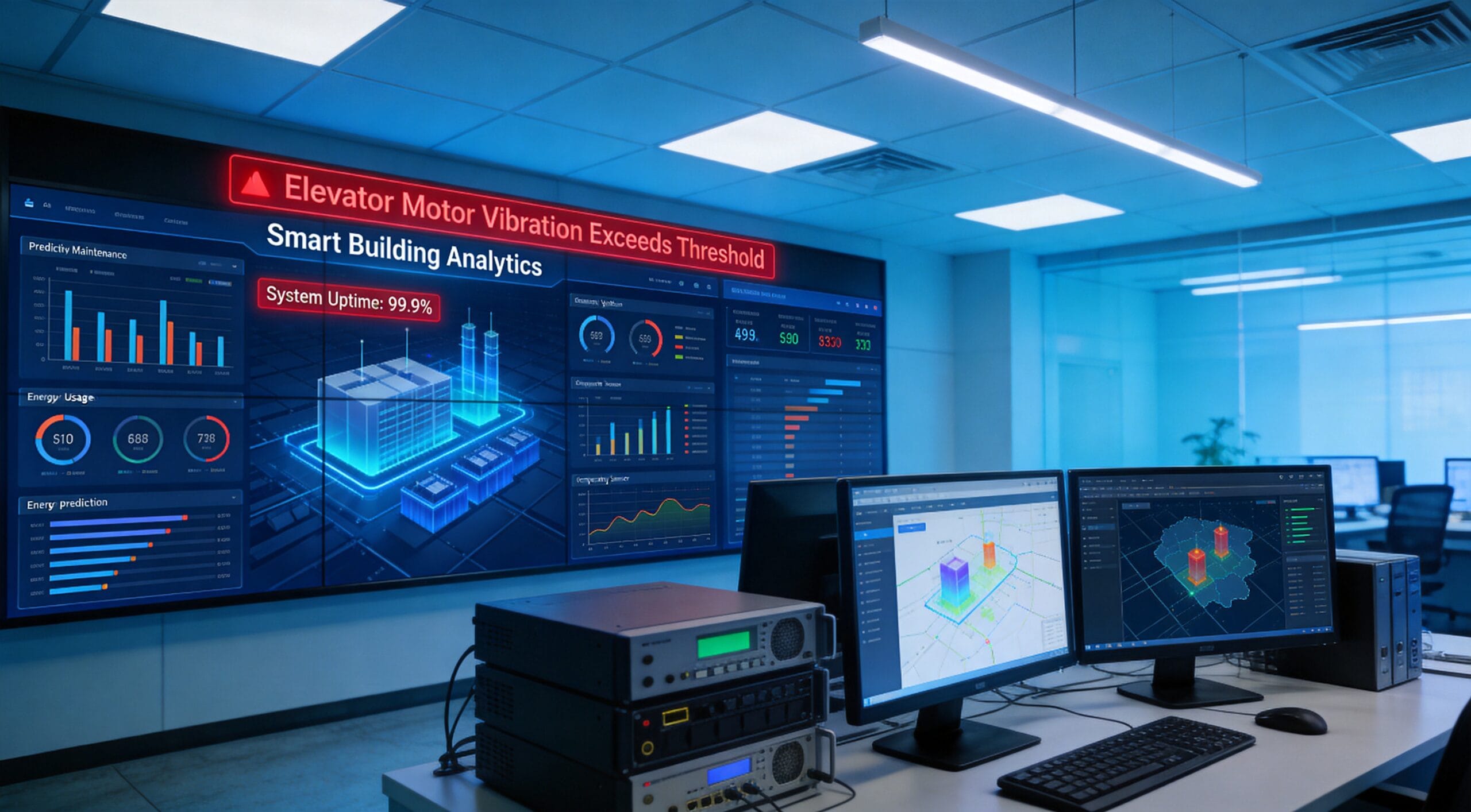
CAIMETA’s AIBBS (Big Data Monitoring Analysis) platform aggregates telemetry from connected fixtures, applying machine learning models to identify patterns that precede failures — shifting from rule-based alerts to behavioral anomaly detection.
The Cost of Reactive Maintenance
To appreciate the value of predictive maintenance, consider the economics of reactive lighting maintenance:
- Emergency Service Costs: After-hours emergency electrical service typically costs $150–400 per visit, compared to $60–120 for planned maintenance. Emergency calls often involve multiple trips, doubling the cost.
- Productivity Loss: In office environments, a failed light in a common area creates safety concerns and reduces usable space. The International Facility Management Association estimates that unplanned facility downtime costs businesses $1,100–$9,000 per incident.
- Guest and Customer Impact: In retail and hospitality environments, lighting failures directly affect customer experience and brand perception.
How AI Diagnostics Work in Practice
Stage 1: Continuous Telemetry Collection
IoT-connected fixtures — typically based on BLE Mesh, DALI, or hybrid protocols — transmit operational data at regular intervals: electrical parameters (voltage, current, power consumption), thermal readings, optical data (luminous flux, color coordinates), network health metrics, and runtime hours since installation.
Stage 2: Baseline Modeling and Anomaly Detection
The AIBBS platform establishes performance baselines for each fixture type, location, and usage pattern. Machine learning models continuously compare real-time data against these baselines, flagging deviations that exceed statistical thresholds.
Stage 3: Risk Scoring and Alert Prioritization
As multiple indicators converge toward a failure signature, the system assigns a risk score (0–100). Alerts are ranked by risk score:
- Low (0–30): Monitor; log entry for scheduled attention
- Medium (31–60): Plan replacement within 2–4 weeks
- High (61–85): Schedule replacement within 1 week; proactively order components
- Critical (86–100): Dispatch maintenance within 24 hours
Stage 4: Work Order Generation and闭环
Leading platforms integrate directly with FM/CMMS systems to automatically generate work orders with fixture location, probable failure mode, and recommended replacement components. After repair, technicians log completion and the system validates performance — closing the feedback loop.
Real-World Performance Gains
Facilities deploying AI-driven predictive maintenance consistently report:
- 50–70% fewer emergency lighting service calls within 12 months
- 25–45% reduction in overall lighting maintenance costs
- 10–20% extended average fixture lifespan through early stress identification
- Energy waste identification through anomalous consumption detection
Implementation Considerations
- Network Infrastructure: Predictive systems require IoT-connected fixtures with reliable communication pathways. BLE Mesh networks offer self-healing topology, but initial deployment requires careful RF planning.
- Gateway and Cloud Connectivity: Edge gateways should have local storage and buffering to prevent data loss during connectivity interruptions.
- BMS Integration: For maximum value, lighting telemetry should integrate with building management systems for correlated analysis and unified dashboard views.
- Staff Training: Facility teams need to shift from reactive response to data-informed planning — a fundamental change in maintenance philosophy.
The Road Ahead: Autonomous Maintenance
The trajectory points toward truly autonomous maintenance — systems that not only predict failures but initiate and complete repair workflows without human intervention:
- Self-configuring fixture replacement: New fixtures with integrated AI automatically download configuration parameters, enabling true plug-and-play replacement
- Digital twin integration: Building digital twins that continuously sync with live fixture data, enabling 3D visualization of system health
- Cross-system predictive correlation: Lighting data correlated with HVAC, access control, and energy management to identify systemic issues
CAIMETA’s AIBBS platform provides the data foundation that enables facilities to transition from reactive firefighting to proactive infrastructure stewardship. For commercial operators seeking to reduce maintenance costs, improve system uptime, and deliver better experiences to occupants and customers, predictive maintenance is no longer a luxury — it’s a strategic imperative.