
Why Your Warehouse High-Bay Retrofit Budget Is Probably Wrong
Walked into a 280,000 sq ft distribution facility last month. They’d just completed a “smart lighting” retrofit—500W metal halide replaced with 200W LED fixtures, occupancy sensors on each rack aisle. Total cost: $1.4M.
Their energy savings after 8 months: 28%.
Their projected payback at that rate: 11 years.
Something went very wrong in the planning phase. Here’s what I’ve learned from doing this wrong—and then doing it right.
The Single-Zone Problem
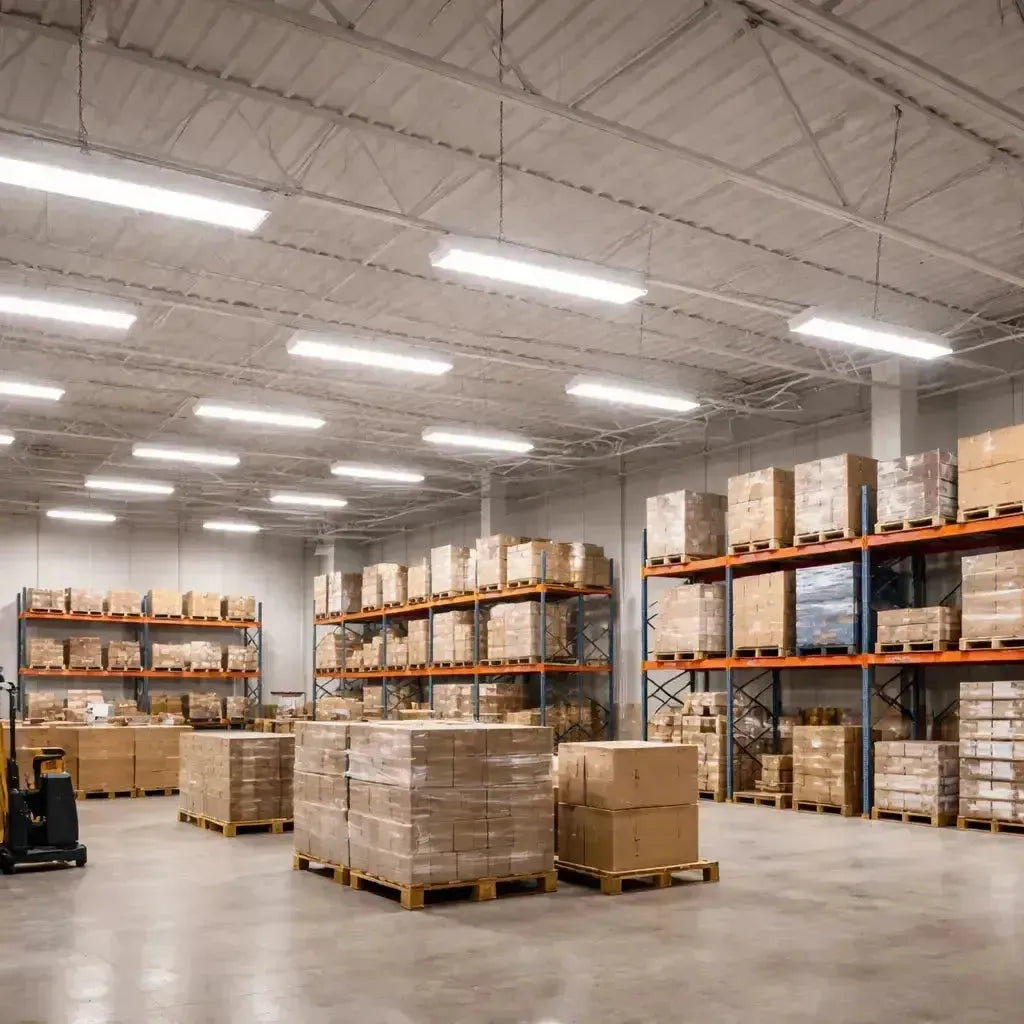
Most warehouse lighting specifications treat the entire space as one zone. You put sensors at aisle entrances, you dim when no motion detected for 15 minutes, you save money.
Except distribution warehouses aren’t one zone. They’re multiple operating modes that overlap unpredictably:
- Receiving dock: peak activity 6-9 AM, secondary peak 4-7 PM
- Pick-and-pack: continuous activity 9 AM-6 PM with picking waves
- Cold storage zone: 24/7 low-activity monitoring
- Shipping dock: peak 2-5 PM
- Mezzanine offices: 8-5 business hours
A single-zone sensor strategy will either create constant on-off cycling in transitional areas or leave high-activity zones running full power during genuinely unoccupied periods.
The solution is granular zone definition—but that means more sensors, more controller channels, and more configuration time. Budget accordingly.
Occupancy Detection Accuracy in Metal Shelving Environments
This one trips up a lot of specifiers.
Standard PIR (passive infrared) occupancy sensors work on line-of-sight detection. In a warehouse with 40-foot racks, that means coverage gaps between rows and phantom triggering when Forklift A triggers the sensor intended for Aisle 7.
The better approach for dense racking: ultrasonic + PIR dual-technology sensors, or AI-powered imaging sensors that can distinguish between human movement patterns and mechanical equipment.
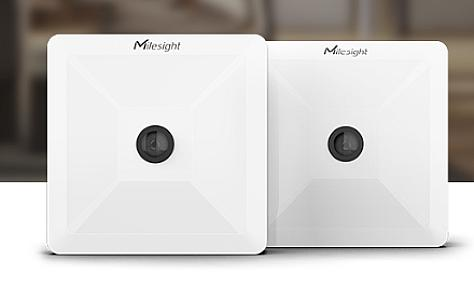
We deployed the Milesight VS121 AI sensor in a client’s 150,000 sq ft e-commerce fulfillment center. The AI detection accuracy hit 98%—meaning almost zero phantom triggers from forklifts or automated guided vehicles. That translated to 40% more actual dimming events compared to their previous PIR-only system, because zones weren’t staying lit due to false positives.
Is the AI sensor 3x the cost of a basic PIR? Yes. Does it pay back in reduced phantom lighting within 14 months in a 24/7 operation? Also yes.
The Color Temperature Question Nobody Asks
Distribution center operations have a dirty secret: most of their workforce is doing repetitive visual tasks—reading labels, scanning barcodes, inspecting packaging—for 8-10 hour shifts.
Poor color temperature at task level creates eye strain. This shows up as early-shift complaints about “not seeing clearly” and late-shift errors from accumulated fatigue.
The fix isn’t circadian lighting—it’s task-appropriate fixed CCT. We specify 5000K at task height for pick-and-pack operations, with warmer 4000K in break rooms and offices. This costs nothing extra if you’re using tunable-white drivers you probably already spec’d for energy code compliance.
The error is assuming “one CCT for the whole warehouse” is acceptable. It’s not, for the same reason you wouldn’t use the same prescription glasses for distance and reading.
Maintenance Reality: What the Sales Pitch Omits
LED fixtures have 50,000-hour rated life. That’s great—until you actually maintain a warehouse.
Fixtures in forklift traffic zones get hit. Repeatedly. We’ve seen 12% annual fixture damage rates in facilities with aggressive picking schedules.
Standard LED high-bay: requires scissor lift for replacement, 2-person crew, 45 minutes per fixture including setup.
Solution that actually pencils out: IP67 modular fixtures with tool-free driver replacement. When a driver fails, you swap the module in 8 minutes, no lift required. Cost delta: $40 per fixture. Maintenance labor savings: $180 per replacement.
Spec the maintenance access before you spec the luminaire. A fixture that’s 15% cheaper but requires industrial rigging for service is not a savings.
The Controls Integration Nobody Wants to Talk About
WMS (Warehouse Management System) integration for lighting is increasingly common in new builds. The pitch: “Your lighting system knows exactly where inventory is and can illuminate for picking efficiency.”
The reality check: WMS integration typically adds $200K-$400K to a project and requires 6-9 months of software development. The lighting “smart” features most WMS integrations deliver—zone activation based on pick paths—are marginal value-add compared to the cost.
What WMS integration does deliver: real-time energy reporting for ESG compliance, automated fault detection for maintenance scheduling, and occupancy data for space utilization analysis.
If your client needs ESG reporting and maintenance scheduling optimization anyway, the integration cost may make sense. If they’re buying it for “smart warehouse” marketing, walk them back to basics.
The Number That Actually Matters
For a 150,000+ sq ft distribution facility with 24/7 operations, here’s what a properly-specced retrofit looks like:
Equipment:
– LED high-bay (150W tunable, 5000K task / 4000K ambient): $180/fixture
– AI occupancy sensors: $85/unit, 1 per 800 sq ft
– BLE mesh gateway + controller: $12,000 per building
– Total: $2.40/sq ft equipment
Integration + Commissioning:
– Sensor network configuration: $35K
– BMS integration (BACnet): $28K
– Commissioning + tuning: $22K
– Total: $0.57/sq ft
Maintenance (5-year):
– $0.08/sq ft/year
Total 5-year cost: $3.37/sq ft
Energy reduction vs. metal halide: 52% (including realistic occupancy behavior)
Simple payback: 4.2 years
Compare that to the 11-year payback I walked into last month. Same square footage, same fixture count, completely different outcome. The difference was in the specification details.
CAIMETA’s commercial lighting platform supports warehouse and logistics applications with AI-powered occupancy detection, tunable-white task lighting, and BACnet BMS integration. Request a site assessment for facilities over 100,000 sq ft.