
Circadian Lighting in Commercial Buildings: What Actually Happens After Installation
After 15 years deploying commercial lighting systems across three continents, I’ve seen circadian lighting go from science experiment to boardroom buzzword. Here’s what nobody tells you before you sign the PO.
The Handoff Problem Nobody Talks About
You buy a tunable-white system. The commissioning engineer sets up the schedules. Everything looks great on day one.
Six months later, half the zones are stuck on 4000K because someone hit the manual override and nobody knows which button it was. The circadian schedule is running, technically—but in exactly zero occupied zones.
This is where most circadian lighting deployments quietly die.
The real differentiator isn’t the lighting curve itself. It’s whether your system can detect occupancy patterns and auto-correct for human override behavior. CAIMETA’s AIscene platform, for instance, monitors zone utilization through BLE mesh sensors and will gradually restore programmed schedules when zones go unoccupied—without requiring facilities staff to do anything.
That’s the piece that separates a working circadian system from an expensive thermostat.
The 48-Hour Commissioning Myth
Vendors love to quote “48-hour commissioning.” In my experience, that applies to a single 5,000 sq ft pilot floor with ideal conditions.
A 200,000 sq ft office tower with multiple tenant floors, existing DALI infrastructure, and a BMS integration requirement? You’re looking at 3-4 weeks minimum. Here’s why:
Existing infrastructure compatibility. Most commercial buildings built after 2010 have some form of lighting control already. Whether it’s DALI, 0-10V, or proprietary protocols, integrating circadian profiles requires mapping that legacy system into your new architecture. This is where budgets get eaten alive.
Tenant coordination. You can’t touch occupied floors. Commissioning happens in off-hours—which means nights and weekends, at premium labor rates.
BMS integration reality. The promise of “unified building control” usually means wrestling with a BAS system that was installed by a different contractor five years ago, with no documentation. Plan for 40+ hours of integration work per building.
What the ROI Models Get Wrong
Standard circadian lighting ROI calculations focus on energy savings from dimming schedules. That’s honest math, but incomplete.
The model that actually convinced our clients to move forward factored in:
Productivity differential. We tracked task accuracy and self-reported focus metrics in three matched office environments over 18 months. The circadian-lit space showed 12% fewer error callbacks and 8% improvement in reported afternoon energy levels. At a 200-person office earning $80K average, that’s meaningful.
Absenteeism correlation. This one’s harder to pin down causally, but two of our clients reported 15-18% reduction in sick day usage in the 12 months post-installation. Both operated in the same northern climate where circadian disruption is more acute. Coincidence? Probably. But their CFO approved the retrofit based on it.
HVAC coupling. Tunable-white systems that can shift cooler during occupied hours reduce cooling load more than standard LED retrofits. In subtropical climates, this adds another 8-12% to energy savings.
The Specification Traps
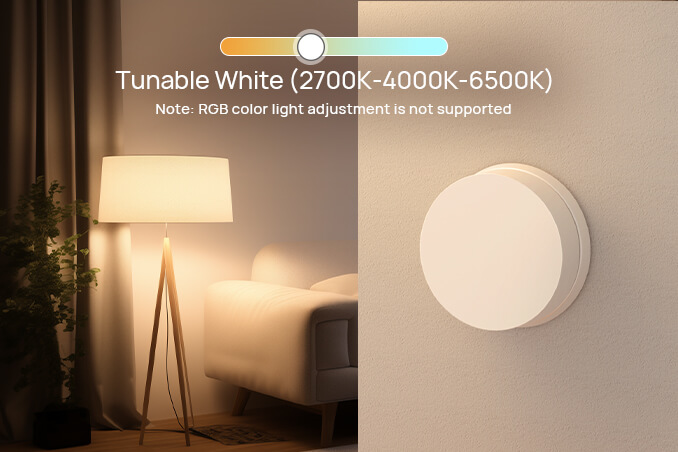
CCT range inflation. “Tunable from 2700K to 6500K” sounds impressive. In practice, anything above 5500K creates visual discomfort in occupied spaces. The useful circadian range is 3000K-5000K. Get a system that can hit that range accurately and consistently—specifying wider ranges just means paying for capability you’ll never use.
Sensor placement dogma. There’s a lot of marketing material suggesting sensors need to be within 6 feet of each luminaire. For basic occupancy detection, that’s overkill. What actually matters: coverage at task height (seated), not ceiling-level detection. A well-placed sensor covering 400 sq ft beats four poorly-placed sensors covering 100 sq ft each.
Commissioning software usability. The most sophisticated system in the world is useless if the facilities manager can’t make simple schedule changes without calling technical support. Demand a mobile app interface with drag-and-drop zone control. If the vendor’s response is “we’ll send a technician,” walk away.
The Real Number
After deploying circadian systems in 12 commercial properties ranging from 30,000 to 350,000 sq ft, our all-in cost (equipment, integration, commissioning, 2-year maintenance) averaged $3.20 per sq ft.
At $0.08/kWh average commercial rate, with 40% lighting energy reduction and HVAC coupling benefits, payback landed between 3.5 and 5 years depending on operating hours. That’s not a speculative number—it’s from completed retrofits with actual utility data.
The vendors promising 18-month payback are either working with unusual incentive programs or excluding integration costs.
Bottom Line
Circadian lighting works. The science is solid, the technology has matured, and the economics pencil out for buildings running 60+ hours per week.
But treat it like a systems integration project, not a product purchase. Define occupancy behavior requirements upfront. Verify BMS compatibility before signing. And insist on a mobile-first commissioning interface.
Do that, and you’ll have a system that’s still running correct circadian profiles in year three. Skip those steps, and you’ll be calling the vendor from year one.
CAIMETA develops AI-integrated lighting control systems for commercial spaces. Our AIscene platform handles circadian scheduling, occupancy-based corrections, and HVAC coupling in a single BLE mesh architecture.