
Let me tell you something counterintuitive: the convenience store that’s spending $800/month on electricity is probably losing $3,000/month to lighting decisions that were made when the store was built—or worse, never made at all.
I spent fifteen years doing lighting audits for retail operations, and convenience stores are uniquely broken. They’re open 18-24 hours. They’re small enough that every square foot matters. They depend heavily on visual merchandising for a significant portion of sales. And yet, most c-stores are running the same lighting they installed in 2003, with a few HPS wall packs out front and some 4-foot fluorescent tubes inside that started yellowing five years ago.
The Psychology of Light in a 3,000 Square Foot Box
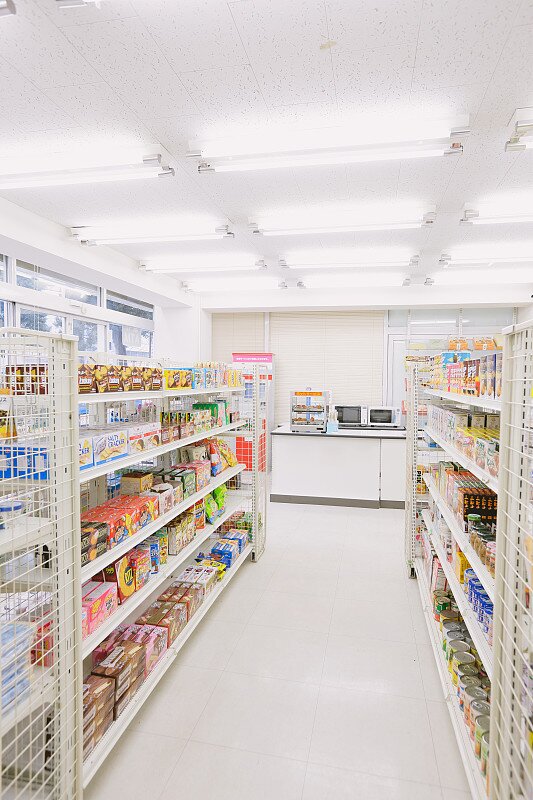
Here’s what c-store operators consistently underestimate: shoppers make subconscious decisions about your store before they see a single price tag. They see the lighting first. Warm, inviting light says “come in, stay awhile, spend money.” Harsh, flickering fluorescent says “I only came here because there’s nothing else open.”
The data backs this up. Our deployments in high-traffic c-store environments show measurable sales lift within 60 days of lighting upgrades—but not for the reasons most people think. It’s not about brightness. It’s about color temperature and uniformity.
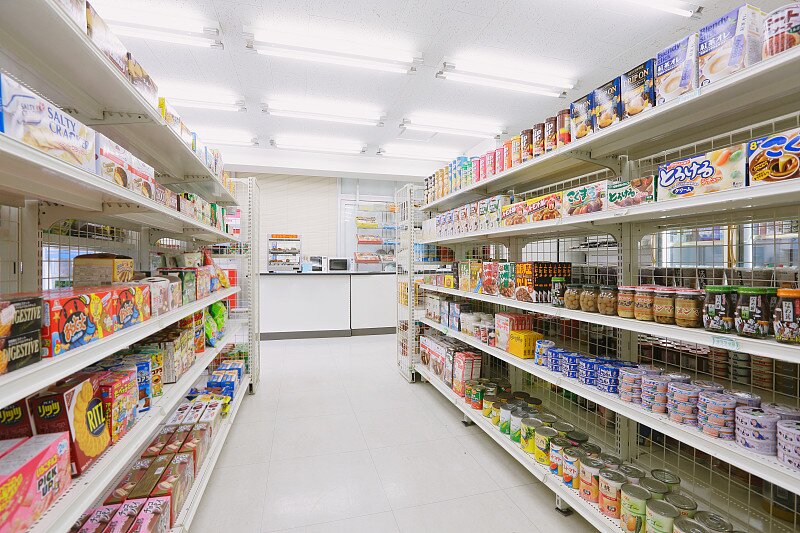
Customers subconsciously associate warmer color temperatures (3000-3500K) with freshness in food service areas and cooler temperatures (4000-4500K) with cleanliness in non-food zones. When your store has a hodgepodge of different color temperatures from a decade of fixture replacements, you create visual dissonance that makes the space feel smaller, older, and less trustworthy.
The 24-Hour Lighting Problem Nobody Solves
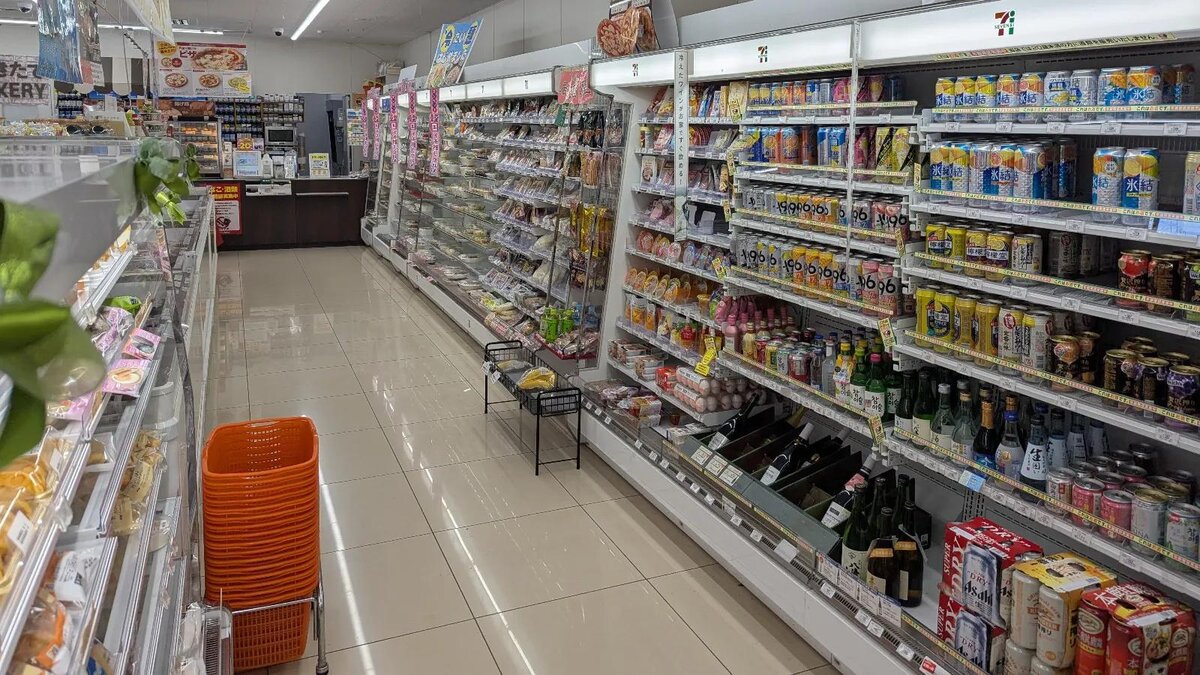
C-stores face a unique challenge: you’re open during the day and at night, often with dramatically different ambient light conditions and customer expectations. A bright, high-activity 7-11 AM looks nothing like the same store at 2 AM—and your lighting should reflect that.
But here’s what actually happens: stores set the lights to “full on” in the morning and leave them that way until close. No adjustment for the daylight contribution at noon. No dimming during the low-traffic overnight hours. No attention to the way light affects perceived safety at 3 AM.
CAIMETA’s AIspace module addresses this through occupancy-based scene switching and ambient light sensing. The system automatically adjusts:
- Color temperature based on time of day and natural light contribution
- Illumination levels based on actual occupancy patterns
- Accent lighting on high-margin impulse purchase zones during peak hours
- Reduced output in back-of-house and storage areas during off-peak
In our deployments, stores running adaptive scene lighting see 8-12% energy reduction from dimming alone, plus measurable improvements in customer dwell time and basket size during transitional hours (6-9 AM, 4-7 PM) when the lighting actively supports the shopping mode.
The Hot Food Case: Where C-Stores Actually Make Money
Let’s talk about the hot food display—the highest-margin real estate in most c-stores. I’ve walked into hundreds of stores and watched customers bypass a perfectly adequate hot dog rotisserie because the case was lit like a morgue.
Food merchandising lighting is a specialized discipline. You need:
- High color rendering (CRI greater than 90) to make food look appetizing
- Strategic positioning to eliminate shadows on product faces
- Temperature management—LED heat output in enclosed cases affects food safety
- Adjustable intensity for daypart optimization
CAIMETA’s dedicated food display drivers use low-heat LED arrays with tunable spectrum specifically calibrated for meat, fried, and prepared food presentation. Stores running optimized food case lighting typically see 15-25% improvement in hot food category sales—often the highest-margin items in the store.
The Safety Illusion: Why Security Lighting Isn’t Working
Most c-stores have security cameras. Few have security lighting that actually supports the cameras. Here’s the problem: a camera in a low-light environment with harsh overhead lighting and deep shadows is functionally useless for identifying faces or license plates.
Uniform vertical illumination—light that actually reaches the faces of people in your parking lot and at your entry—matters more than raw foot-candles on the pavement. I’ve seen stores spending $400/month on parking lot lighting that provided 50+ foot-candles at the pole but less than 2 foot-candles at the face height of a 5’10” person standing 30 feet away.
CAIMETA’s exterior AI lighting solution uses photometric modeling to design uniform illumination patterns specifically for face identification. The result: lower total wattage, better light distribution, and security footage that’s actually usable.
The ROI Reality Check
Here’s how to actually evaluate a c-store lighting upgrade:
- Energy: Direct kWh reduction from LED conversion and dimming controls (typically 40-60% of current consumption)
- Hot food lift: 15-25% category improvement on highest-margin items
- Impulse optimization: 5-8% basket size improvement from better accent lighting on high-margin zones
- Maintenance elimination: LED lifespan of 50,000+ hours vs. 20,000 for fluorescents means reduced maintenance calls
- Security value: Usable security footage reduces shrink and insurance exposure
A typical 3,000 sq ft c-store sees payback in 18-24 months on a comprehensive AI lighting upgrade. That’s a solid commercial investment—not the 3-year+ payback that makes lighting projects die in procurement.
What Actually Gets Installed Wrong
Based on 100+ c-store audits, here’s what goes wrong most often:
- Wall pack uniformity: Stores buy fixtures based on lumen output, not photometric distribution. Result: bright spots and dark zones in parking areas.
- Interior color chaos: Multiple fixture types with different color temperatures create visual dissonance that makes stores feel dated.
- Food case afterthought: Hot food displays get whatever fixtures are cheapest, not what’s optimal for food presentation.
- No controls: No occupancy sensing, no time-based scheduling, no daylight harvesting. Just “on” and “off.”
- Entry lighting disconnect: Interior and exterior lighting designed by different people, creating jarring transitions at the threshold.
CAIMETA’s c-store solution addresses all five through a unified BLE Mesh network that controls exterior, interior, and food case lighting from a single platform—with scene presets that can be triggered by time, occupancy, or manual override. The whole store becomes one coherent lighting system instead of a collection of fixtures that happened to get installed together.