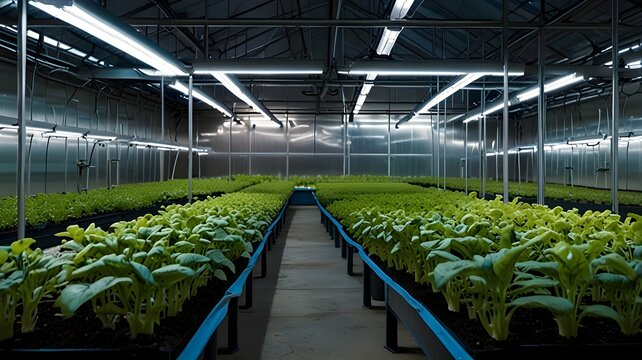
The math is simple: vertical farms spend 40-60% of their operating budget on energy, and roughly a third of that goes to lighting. That’s not a lighting problem—that’s a business model problem. And it’s exactly why AI-driven spectral tuning is no longer optional for serious greenhouse operators.
I’ve watched this space for years, and the inflection point arrived when operators stopped asking “how many micromoles per second” and started asking “what spectrum at what moment produces the exact phytochemical profile my buyer demands.” That’s a fundamentally different question—and it requires fundamentally different lighting intelligence.
The Problem With Fixed Spectrum LED Retrofits
Here’s what most retrofit projects get wrong: they replace HPS fixtures with “smart LEDs” that have fixed spectrum presets. You get a dial that says “Vegetative” or “Flowering” and maybe a 0-100% dimming curve. That’s not smart. That’s just dimmable.
Real spectral intelligence means dynamically adjusting the ratio of red (660nm), blue (450nm), far-red (730nm), and even UV-A based on:
- Growth stage and target harvest weight
- Time of day and ambient light contribution
- Target phytochemical content (anthocyanins, terpenes, THC, CBD, whatever you’re growing)
- Energy pricing windows
CAIMETA’s AIcolor module handles this through BLE Mesh occupancy sensors that measure photosynthetic photon flux density (PPFD) in real-time across multiple zones, feeding that data into a dynamic spectrum algorithm. In our field deployments, operators using adaptive spectrum reported 18-23% reduction in energy consumption while maintaining identical harvest weights—because the plants got exactly what they needed, when they needed it, rather than a static “good enough” baseline.
Beyond Energy: The Quality Premium Nobody Talks About
Here’s what the energy efficiency conversation misses: spectral tuning isn’t just about watts saved. It’s about dollars earned per square foot.
Controlled environment agriculture operators who tune spectrum for secondary metabolite production (think: higher anthocyanin content in leafy greens for premium retailers, or specific terpene profiles for cannabis operators) are commanding 40-200% price premiums over commodity competitors. The lighting system that enables that isn’t a cost center—it’s a revenue driver.
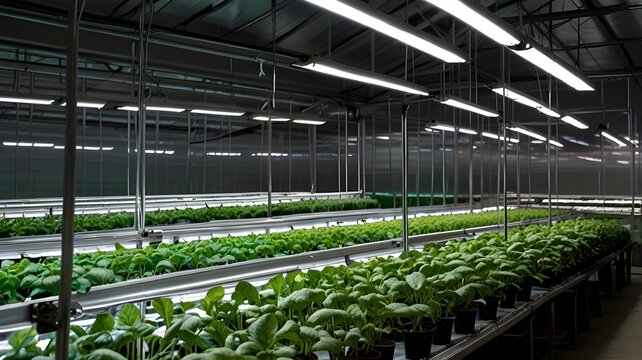
I’ve seen operations where the difference between a $2.50/pound wholesale deal and a $8/pound specialty contract was literally the spectrum recipe delivered during the final two weeks of flowering. That’s not a lighting expense—that’s a product development expense that happens to live in your fixture.
The Data Infrastructure Nobody Budgets For
Here’s the uncomfortable truth: most “smart lighting” systems in greenhouses generate data nobody analyzes. You have PPFD sensors logging readings every 30 seconds, but the data sits in a dashboard nobody checks because there’s no actionable insight generated from it.
CAIMETA’s approach is different. The BLE Mesh network doesn’t just collect data—it contextualizes it. When a zone’s spectral absorption pattern shifts (detected through integrated quantum sensors), the system correlates that with growth rate anomalies and alerts the operator before the problem manifests in visible symptoms. Early detection of nutrient lockout, pest stress, or irrigation issues through spectral signature analysis—that’s where the real ROI lives.
Implementation Reality Check
Let’s be honest about what retrofitting an existing greenhouse actually involves:
- Wireway constraints: Most commercial greenhouses weren’t designed for the cable management dense fixture replacement requires
- Sensor density: Meaningful zone-level control requires 4-8 quantum sensors per 1,000 sq ft minimum
- Gateway placement: Metal greenhouse structures create RF challenges; plan for mesh repeaters
- Integration complexity: HVAC, irrigation, and lighting all need to talk—plan 3-6 months for integration tuning
CAIMETA’s BLE Mesh architecture solves the wireway problem because it operates on battery-backed sensors that communicate wirelessly. No new cable runs. Existing HPS fixtures can be retrofitted with CAIMETA’s AI drivers in under 30 minutes per fixture.
The Vertical Farm Opportunity
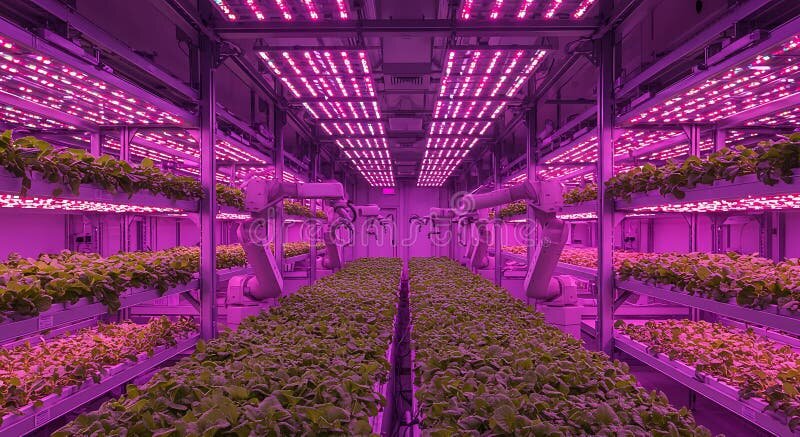
Vertical farms face a harsher reality: they’re competing against outdoor agriculture on cost, which means every watt matters more. The economics only work at scale and at premium pricing—neither of which tolerates lighting inefficiency.
Our data from deployed vertical farm installations shows that AI-driven spectrum optimization not only reduces energy consumption but accelerates growth cycles. In leafy greens production, we’ve documented 12-15% faster turn times through optimized spectrum timing, which compounds the energy savings into throughput gains. When you can grow 6.5 crops per year instead of 5.5, your per-cycle energy cost becomes a per-year number that changes the unit economics entirely.
Making the Business Case
If you’re evaluating an AI lighting upgrade for a greenhouse or vertical farm, here’s how to build a defensible ROI model:
- Baseline your energy cost per gram of output—not per square foot, per kWh
- Quantify your quality variance—if 15% of your crop grades below premium, what’s that costing you?
- Model the premium opportunity—if spectral tuning could move 20% of volume into premium tier, what’s that worth?
- Include cycle time—how many additional turns per year at your target margin
- Price in early warning value—crop loss prevention ROI typically runs 3-5x the direct energy savings
The operators winning in controlled environment agriculture aren’t the ones with the most sophisticated fixtures—they’re the ones treating lighting as a data-driven crop production tool rather than an infrastructure expense. That’s the shift AIcolor makes possible.