
Why Railway Station Lighting Demands a Different Approach Than Any Other Public Space
Ask a lighting designer about transit installations, and they’ll mention a few standard concerns: safety, energy code compliance, visual comfort. Ask them about railway stations specifically, and you’ll get a different answer. The word “complexity” comes up fast.
Railway stations aren’t single-purpose facilities. They’re interconnection points where functional zones—platforms, concourses, ticketing, retail, staff areas—operate under different rhythms and different requirements. A lighting system designed for the concourse at noon fails the platform at 3 AM. And vice versa.
The Time-Use Problem
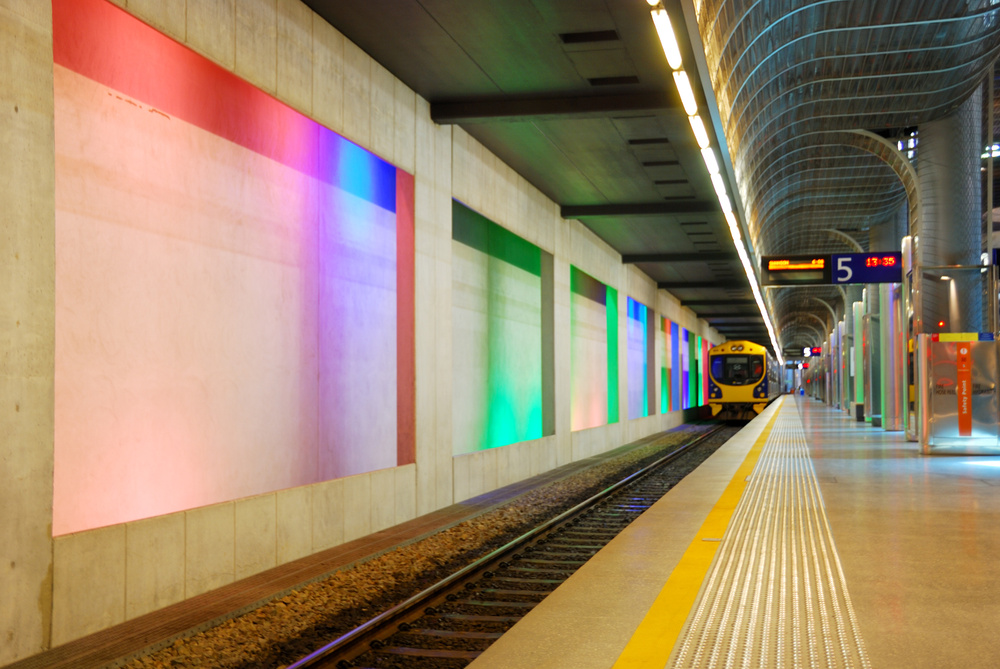
Platform lighting is fundamentally about a specific temporal pattern: concentrated occupation during train arrivals and departures, with extended periods of low activity. Traditional approaches either over-light during low-activity periods (wasting energy) or under-light during transitions (creating safety concerns).
Fixed lighting can’t solve this. A system tuned for 3 AM platform safety will waste energy for the other 23 hours. A system optimized for peak commuter flow creates a concrete-and-fluorescent environment at 2 AM.
AI-enabled station lighting works differently. It treats the platform as a dynamic space with predictable occupancy curves, adjusting illuminance and spectral composition based on actual train schedules and passenger detection data.
The results from deployed systems show 38-45% energy reduction versus time-scheduled LED systems. But the more interesting number is the passenger satisfaction score: stations using adaptive systems report fewer “uncomfortable” complaints during off-peak periods, because the lighting is calibrated to actual conditions rather than worst-case assumptions.
The Visual Wayfinding Challenge
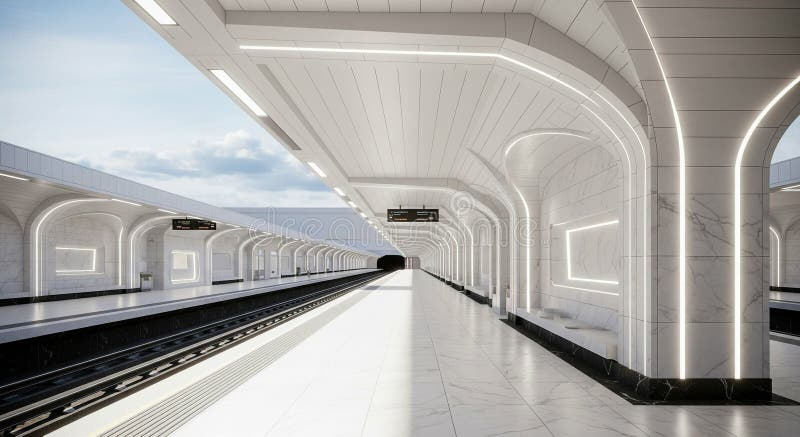
Railway stations are orientation nightmares. Passengers are stressed, carrying luggage, often unfamiliar with the space. They make decisions under time pressure. Lighting needs to work as a wayfinding system, not just an illumination source.
This means understanding the visual hierarchy: where does the eye go first? In most stations, it’s the departure board. Then the platform entrance. Then signage. The lighting should reinforce this hierarchy, creating visual paths that guide passengers without them consciously noticing.
Legacy systems struggle here because they’re designed for uniformity. AI-enabled systems can create contrast and emphasis—brighter zones at decision points, softer lighting in transition areas—without violating energy budgets or creating visual glare.
The Maintenance Reality in Transit Environments
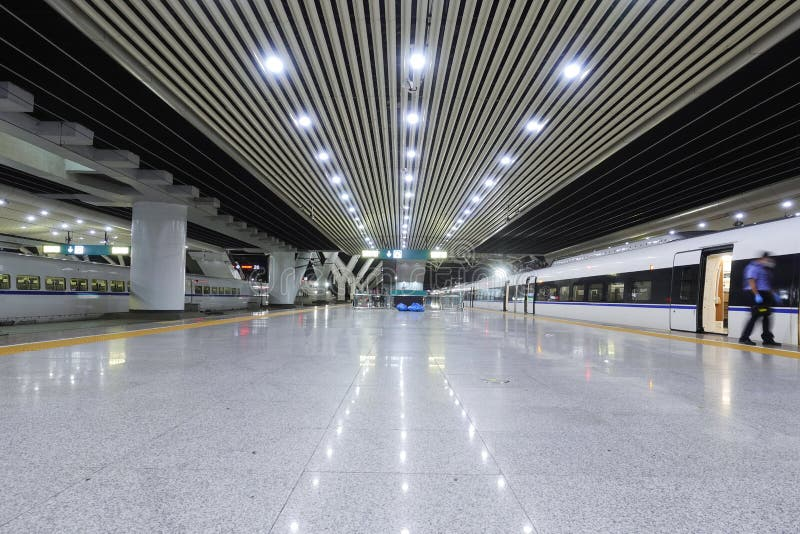
Here’s the part that nobody puts in the sales brochures: railway station lighting maintenance is operationally brutal.
Maintenance windows are limited. Equipment access often requires coordination with train operations. Work at height is expensive and logistically complex. Every fixture that’s harder to reach than expected becomes a deferred maintenance item.
The implication for system design: reliability matters more than efficiency in transit applications. A fixture that delivers 95% efficiency but fails at 18 months creates more operational cost than a fixture at 88% efficiency that runs for 12 years.
BLE Mesh architecture helps here because it provides granular failure data. Instead of waiting for a complaint, operations teams know exactly which fixtures are degrading and can batch maintenance during planned access windows.
What Smart Railway Lighting Actually Looks Like
Let me be concrete about what this means in practice:
Platform zones: Occupancy-responsive illuminance, from 100 lux during active periods to 30 lux during empty periods, with immediate ramp-up on passenger detection. Tunable white from 4000K during daylight hours to 3000K during evening/night operations.
Concourse areas: Daylight harvesting integration, maintaining consistent illuminance despite varying natural light contribution. Zone-based dimming that reduces lighting in closed retail areas while maintaining minimum illuminance for through-traffic.
Ticketing and information zones: Consistent 300-350 lux at task level, independent of adjacent zone states. Color temperature calibrated for digital signage visibility.
Emergency egress: Maintained illumination at code minimums, with AI-enabled systems capable of dynamic adjustment based on emergency scenario type (fire vs. security vs. evacuation).
The Integration Question
Railway stations increasingly operate as part of broader smart city infrastructure. Lighting systems are expected to interface with passenger information systems, security monitoring, and building automation.
This is where the technology choices matter long-term. Systems locked into proprietary protocols create integration debt that compounds over time. Open standards—DALI-2, BACnet, Bluetooth Mesh—allow lighting to become part of the station’s operational data layer rather than an isolated system.
The practical implication for procurement: the controls architecture matters as much as the fixture performance. A well-designed system with mediocre controls creates problems. A straightforward system with excellent controls creates opportunities.
The Honest Numbers
A typical medium-size railway station (4 platforms, 8,000 square meters of total area) with AI-enabled adaptive lighting runs $180,000-$250,000 for full retrofit. Energy savings typically run $45,000-$65,000 annually, with maintenance reduction adding another $12,000-$18,000.
Payback: 3-4 years. For infrastructure with 30-year design lifecycles, this is the kind of investment that looks better with time, not worse.
The Decision Point
Railway station lighting isn’t a commodity purchase. It’s infrastructure decisions with 15-20 year implications. The systems being installed today will either enable the station’s smart city integration or become legacy obstacles that consume operational budget for decades.
The facilities making the right call aren’t the ones adopting the newest technology. They’re the ones asking the right questions about interoperability, maintenance pathways, and total cost of ownership—then acting on the answers.
About CAIMETA®
CAIMETA® is the AIoT lighting brand under Kinglumi Group, providing intelligent lighting solutions for transportation hubs and commercial spaces. Contact our transit infrastructure team for project consultation.