
AI Lighting for Swimming Pool & Aquatic Facilities: Beyond Chlorine and Chemical Management
When pool operators talk about operational challenges, lighting rarely makes the top three. It’s always chlorine levels, filtration cycles, pH balance—until someone walks into a dimly lit natatorium at 6 AM and realizes their members are navigating a concrete bowl with shadows swallowing the lane lines.
Here’s the uncomfortable truth: most aquatic facilities are running lighting systems designed in the 1990s, making decisions with 2026 technology expectations.
The Humidity Factor Nobody Talks About
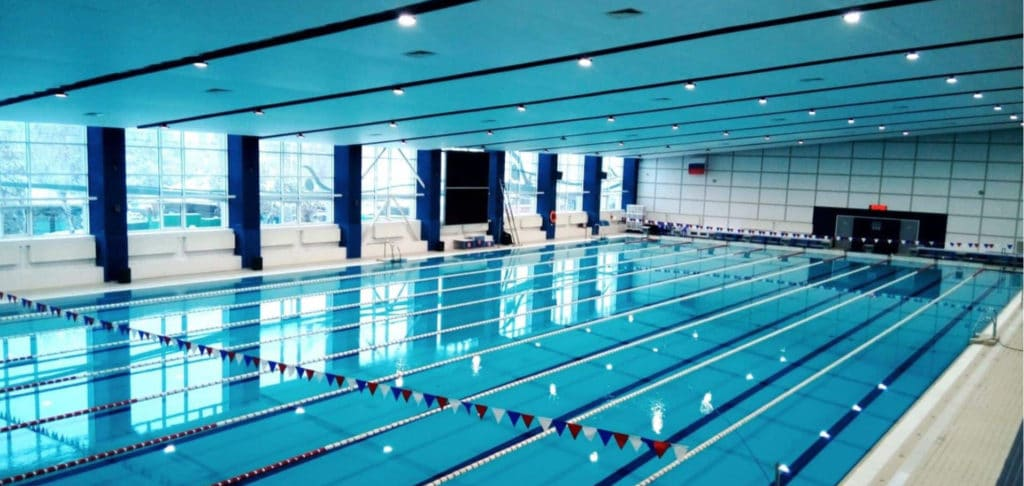
IP ratings exist for a reason. Pool environments aren’t just wet—they’re chemically aggressive. The combination of chlorine byproducts, humidity levels regularly exceeding 70%, and temperature differentials creates conditions that degrade standard LED drivers at 2-3x the rate of typical commercial installations.
In practice? Facilities tell me their lighting maintenance budgets are 40% higher than projected, not because fixtures fail catastrophically, but because the slow degradation in driver efficiency silently inflates their energy costs. A fixture running at 85% efficiency doesn’t trigger a maintenance ticket. It just runs up the bill.
What actually matters in fixture selection:
- Sealed driver compartments with independent thermal management
- Corrosion-resistant housings (stainless steel or specialized polymers, not painted aluminum)
- Color rendering index of 90+ for safety marking visibility (lane lines, depth markers, emergency exits)
The Safety Lighting Problem That Data Reveals
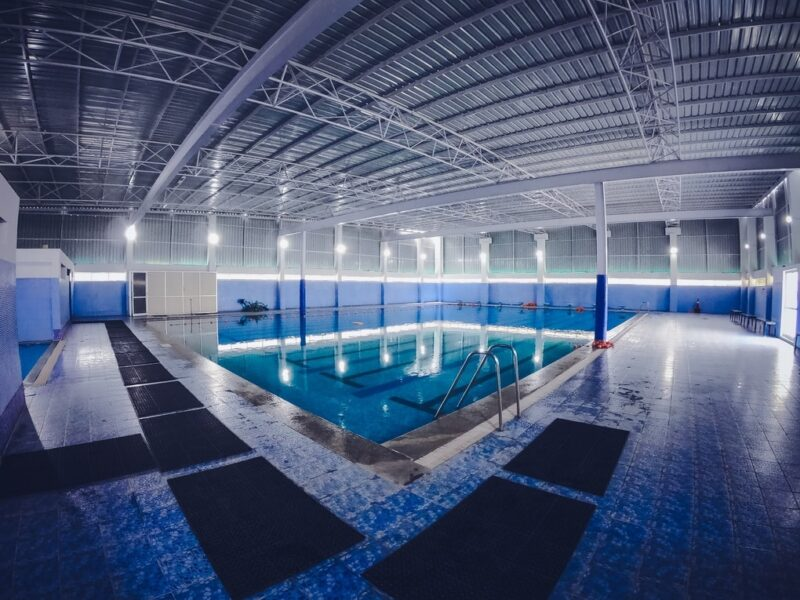
Aquatic facility accidents cluster in transition zones: pool edges, locker rooms, and areas where wet surfaces meet hard architectural transitions. These aren’t glamorous lighting design problems. They’re mundane, operational ones.
Most natatoriums handle the competition pool adequately. The dive well gets attention. But the leisure pool area—the zero-depth entry, the water slides, the therapy pools—these often operate under general illumination that’s designed for visual comfort, not for identifying slip hazards or monitoring child safety.
AI-enabled systems change the observation equation. Rather than uniform lighting across all zones, adaptive systems can:
– Increase illuminance in high-traffic transition areas by 30% during peak family hours
– Shift spectral composition toward warmer tones during evening adult swim sessions
– Maintain compliance-level lighting for lap lanes while adjusting recreational zones based on occupancy
Energy Reality Check
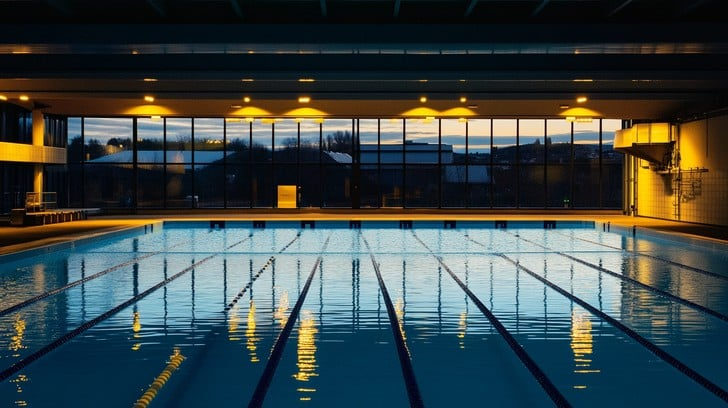
Natatoriums are thermally challenging environments. The pool itself is a massive humidifier. HVAC systems work overtime to maintain air temperature and dew point. Every watt of lighting heat that enters the space becomes a dehumidification load.
This creates an interesting optimization space. Reducing lighting wattage helps the HVAC system. But you can’t reduce below safety standards. The answer is precision—only lighting occupied zones at required levels, allowing unoccupied zones to drop to minimum code while the system monitors for entry.
Based on facility data from CAIMETA deployments in Southeast Asian aquatic centers, the combination of occupancy-based zone control and spectral tuning delivers 35-45% total energy reduction compared to time-scheduled legacy systems. Not 15%. Not 20%. The gap exists because traditional approaches can’t react to actual usage patterns.
The Control System Question
Here’s where facility managers get decision fatigue: how do you actually implement this?
For new construction, the pathway is relatively clear—specify DALI-2 or Bluetooth Mesh at the design stage, integrate with the building automation system. For retrofit? That’s where caution is warranted.
The existing fixture infrastructure at most aquatic facilities wasn’t designed for intelligent controls. Retrofit kits exist, but the moisture ingress risk during installation is real. Facilities that skip the temporary enclosure protocols during retrofit work often create more problems than they solve.
My recommendation: phase the retrofit by zone, starting with the areas where maintenance calls cluster. Use that operational data to build the business case for full-system upgrades.
What This Actually Costs
A typical 50-meter competition pool with 200 fixtures, retrofitted with AI-enabled controls and occupancy sensing, runs $85,000-$120,000 depending on existing infrastructure and local labor rates. Energy savings typically hit $18,000-$25,000 annually, with maintenance reduction adding another $6,000-$8,000.
Payback: 4-6 years without incentives. With typical utility rebates for commercial energy efficiency, you’re looking at 3-4 years. For a facility with a 20-year building lifecycle, that’s not a marginal investment.
The Honest Assessment
Pool lighting isn’t sexy. It’s wet, chlorinated, and full of legacy infrastructure decisions made before Bluetooth was commercialized. But the operational improvements are real, measurable, and compound over time.
The facilities that’ll move ahead on this in the next three years aren’t the ones chasing the newest technology. They’re the ones looking at their maintenance tickets, their energy bills, and their incident reports—and doing the math.
Most of them are already running the numbers. The question is whether they trust themselves to act on what the numbers are telling them.
About CAIMETA®
CAIMETA® is the AIoT lighting brand under Kinglumi Group, specializing in intelligent commercial and industrial lighting solutions. For inquiries about aquatic facility lighting systems, contact our commercial solutions team.