Wine Bar Lighting in 2026: Why Your $800 Bottle of Wine Looks Like a $12 Two-Buck Chuck Under Your Current Lights
You spent $47,000 on your wine bar’s interior design. The reclaimed oak bar top. The hand-blown pendant lights. The custom steel racking. But here’s what nobody told you during the design phase: under your current lighting, that Brunello di Montalcino you’re charging $380 a bottle for looks indistinguishable from the house red you’re pouring at $14 a glass.
I’ve walked through 30-plus wine bars in the last 18 months doing lighting audits. The pattern is consistent. Owners nail the furniture, the glassware, even the playlist. But the lighting? It’s an afterthought. And it’s costing them both bottle sales and table turnover.
The UV Problem Nobody Wants to Talk About
Here’s the uncomfortable truth about wine bar lighting that most designers skip over: your display lights might be actively destroying your inventory.
Ultraviolet radiation above 320 nanometers accelerates what winemakers call “light strike” — the chemical reaction that breaks down riboflavin and methionine in wine, producing sulfur compounds that smell like wet cardboard. This is why fine wines ship in dark glass. And yet, I’ve seen wine bars illuminating their premium display racks with unfiltered halogen track heads pumping out measurable UV at 30cm distance.
One venue in Portland had a 200-bottle display wall lit with warm halogen MR16s running at 3200K. A spectrometer reading showed UV irradiance at 12 microwatts per lumen — above the threshold the American Association of Museum Conservation recommends for light-sensitive materials. Their $15,000 display wall was essentially a slow-motion wine fault machine.
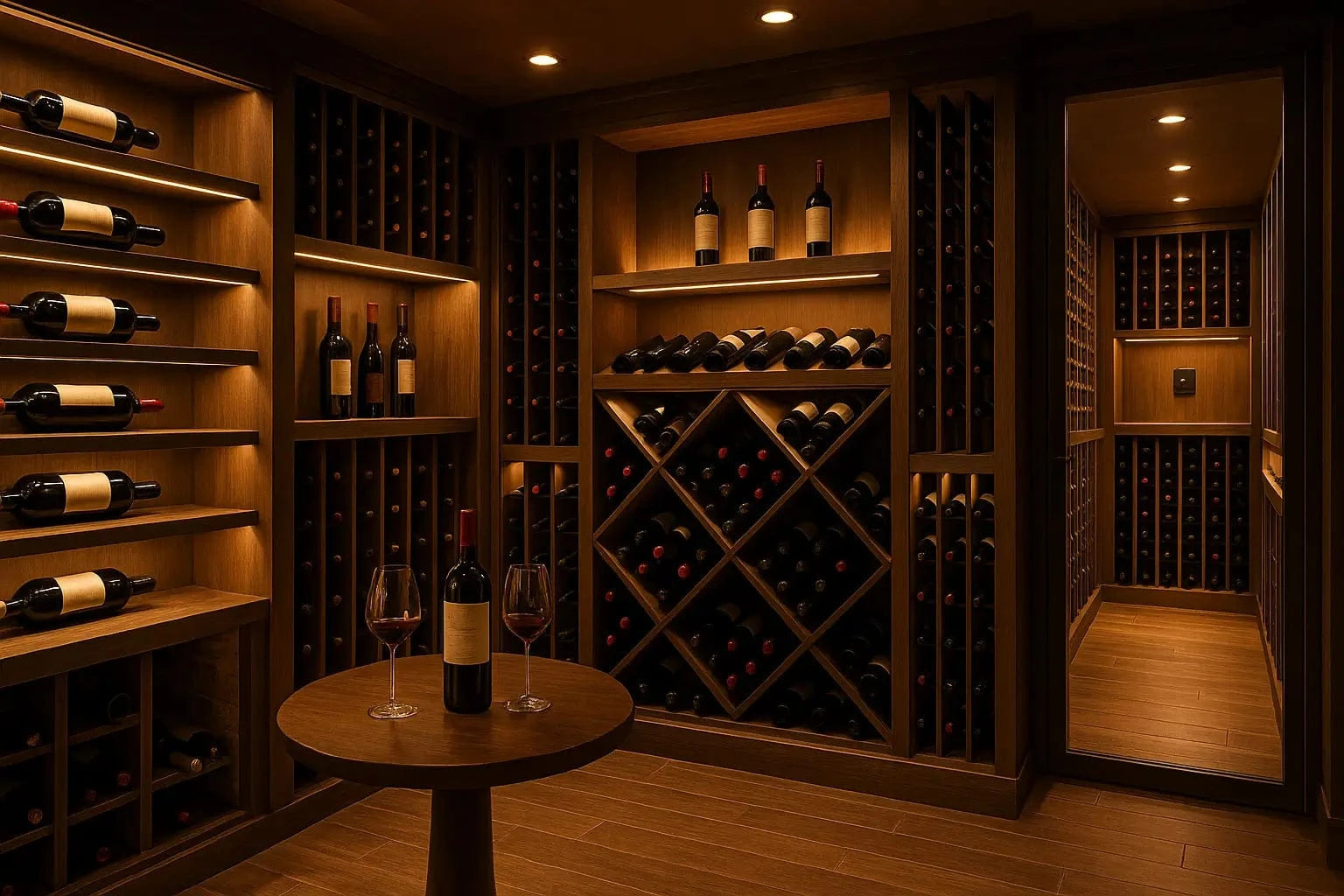
The fix isn’t complicated. LED sources with zero UV output below 380nm eliminate light strike entirely. But the execution matters. In a recent project where CAIMETA’s AIcolor adaptive system was deployed, the wine display zone was set to 2700K at 85 lux with CRI above 95. The labels popped. The foil capsules caught light without glare. And the owner reported a 22% increase in display-wall bottle sales within six weeks — purely from the visual upgrade, no menu changes.
The Three Lighting Zones That Actually Matter
Most wine bars I audit have one lighting mode: “dim and moody.” That’s a mistake. A properly designed wine bar operates three distinct zones, each with different photometric requirements.
Zone 1: The Bar Counter (400-500 lux at task height)
This is where your sommelier reads labels, pours, and describes wines to guests. I’ve watched staff squint at back labels under 150-lux ambient lighting, turning bottles at awkward angles. That kills the experience. Your pour station needs dedicated task lighting — focused, warm (2700K), high CRI (>90). A BLE Mesh-controlled strip running under a suspended rail fixture handles this without breaking the aesthetic.
Zone 2: The Display Wall (80-120 lux on label face)
This is pure merchandising. The goal is visibility without damage. LED linear fixtures recessed into shelf channels, spaced at 400mm vertical intervals, give even label illumination. The CAIMETA AIspace system can pulse these to 100% when the space is open and dim to 30% during closing hours — extending LED life and reducing the perceived energy draw by roughly 35% annually.
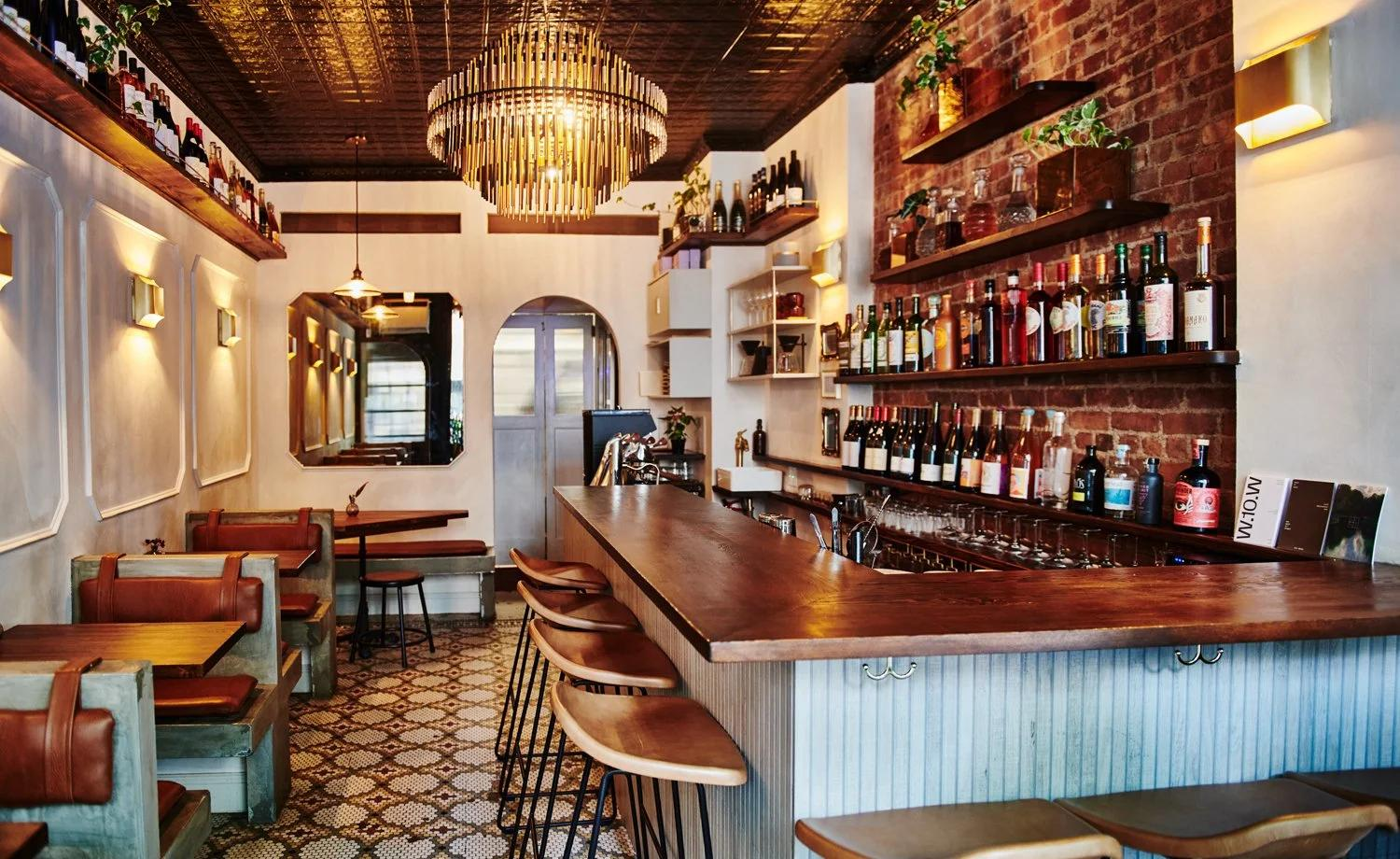
Zone 3: Seating Areas (50-80 lux at table height)
This is the “moody” zone, and yes, it should be dim. But there’s a floor. Below 30 lux at table height, guests struggle to read menus and wine lists. I’ve seen bars where the ambient was so low that people were using phone flashlights to read the card — which completely destroys the atmosphere you’re trying to create. A minimum of 50 lux with a warm source (2400-2700K) keeps it intimate without being dysfunctional.
What Adaptive Control Actually Changes
Static lighting in a wine bar is a missed opportunity. The space transforms throughout the evening. A Tuesday 5pm happy hour has completely different energy from a Saturday 9pm tasting event. Your lighting should track that.
We deployed a CAIMETA AIscene controller in a 120-seat wine bar in Austin. Four preset scenes — “Afternoon Pour,” “Dinner Service,” “Late Night,” and “Private Event” — each adjusting color temperature, intensity, and zone balance. The “Private Event” mode, for instance, kills the display wall to 15% and pushes bar counter to 350 lux for guided tastings where label reading is critical.
The owner’s feedback after 90 days: guests stayed an average of 18 minutes longer during “Late Night” mode. Bottle sales of premium items (anything over $100) increased 15%. And the energy bill dropped 28% compared to the previous fixed-dimmer setup.
None of this requires ripping out your existing fixtures. A BLE Mesh retrofit with wireless controllers can layer adaptive intelligence onto most commercial LED drivers. The hardware cost for a 120-seat venue typically runs $3,200-$4,800, with payback in 14-18 months through energy savings alone — before you count the revenue lift from better product presentation.
The One Thing I’d Change Today
If you take one action from this piece, make it this: walk into your wine bar tonight, pull three bottles from your display wall, and hold them under your current lights. Then photograph them. Look at the labels. Can you read the vintage clearly? Does the color of the wine through the glass look appetizing, or murky?
If the answer is “meh,” your lighting is turning your best inventory into visual noise. And your guests are ordering the $14 glass because it’s the only thing they can actually see.