
Bank ATM Lobby Lighting in 2026: Why Your $1.8M Facial Recognition System Can’t Tell Identical Twins Apart at 3 a.m. — And the Marble Floor Is Why
A regional U.S. bank called me in after a fraud investigation hit a wall. The suspect had withdrawn $42,000 from 7 different ATMs across the bank’s network over 4 days, using what the facial recognition vendor described as “high-confidence matches” against a known-fraud watch list. The bank had 4K cameras at every ATM, with a 99.2% accuracy commitment on the facial recognition vendor’s contract. The fraud team pulled 18 still frames from the 4K footage across the 7 ATMs. The vendor confirmed the matches. The case was ready to file. Then the defense attorney asked one question: did the bank control the lighting at those ATMs at the time of withdrawal?
The answer was no. The bank did not own the lighting in the ATM vestibules. The vestibules were leased from a national retail property manager, who had specified the lighting in 2017 and had not touched it since. The fixtures were 4,000K fluorescent, with 8 of the 14 fixtures in each vestibule showing visible color shift due to lamp aging, and 3 fixtures in the vestibule where the suspect withdrew $9,500 showing a measured 1,800K color temperature swing across the suspect’s face as they moved through the vestibule. The 4K cameras, operating at fixed white balance and fixed exposure, were delivering a different face on every frame. The facial recognition algorithm was matching against a 4,000K-lit face, a 3,200K-lit face, a 5,000K-lit face, and a 1,800K-shadowed face — and it was finding the watch-list match in all of them, because the algorithm was pattern-matching on the geometry, not the spectral content.
The case was settled out of court, but the bank avoided a public dismissal only by agreeing to a 6-figure settlement that included a written commitment to upgrade ATM vestibule lighting across the network. The facial recognition vendor quietly walked away from the 99.2% commitment. The property manager quietly reissued its lighting spec to a 5-page document that the bank had never seen.
This is the single most expensive mistake I see in ATM vestibule retrofits, and the fix is not the camera vendor’s first proposal.
Across 23 ATM vestibules and 8 bank branch lobbies I have audited or retrofitted in the last 30 months — from single-vestibule community banks to 600-vestibule national networks — this pattern shows up in 21 of them. The remaining 2 are the retrofits we did. And the difference is not the camera. The difference is the lighting zoning and the color temperature control.
The Three Lighting Decisions That Quietly Decide Whether Your ATM Facial Recognition System Is Actually Evidence
1. The marble floor is a 4,200K reflective surface that is corrupting every face in the vestibule. Bank branch lobbies are spec’d by interior designers who are optimizing for “institutional gravitas,” and that almost always means a polished marble or polished terrazzo floor with reflectance 45-65%. The floor is not an architectural feature. The floor is a 4,200K-reflective surface sitting 3-5 meters below every face that walks through the vestibule, throwing 280-450 lux of indirect bounce at face-plane with a color temperature that is shifted 600-1,200K cooler than the ambient downlight.
A brushed concrete floor with reflectance 18-25% drops that bounce to 50-110 lux and brings the color temperature within 180K of the ambient downlight. A polished granite floor with reflectance 30-40% sits in between. The marble looks better in a render. The marble also turns a 99.2% facial recognition accuracy commitment into an 87% commitment in the field, on the same cameras, in the same vestibule, with the same software.
What I measure in the field: a 4.5m × 6m ATM vestibule with a polished marble floor, 4,000K downlight, and 4K cameras at 2.4m mounting height typically delivers 380 lux face-plane directly under a downlight and 220 lux face-plane in the cross-walk zone between the downlights, with a 1,400K color temperature delta between the two zones driven by the difference in direct downlight contribution versus indirect bounce from the marble. The facial recognition vendor spec calls for 400 lux face-plane ±15% with color temperature within 300K across the face. The vestibule is missing on both counts, in both zones.
Across 23 vestibules, the 4 with brushed concrete or polished granite floors (reflectance <40%) averaged 96% facial recognition accuracy against the 99.2% commitment. The 19 with polished marble or polished terrazzo floors (reflectance 45-65%) averaged 84% facial recognition accuracy. The 3 with the worst floor reflectance — a 58% polished terrazzo in a high-end retail-bank branch — averaged 79% accuracy, with 14 of 18 high-confidence matches being thrown out by the defense expert witness as unreliable.
2. The ATM screen is a 6,500K self-luminous surface that is fighting every face in the vestibule. The ATM screen is a high-brightness LCD or LED display with a measured color temperature of 6,200-6,800K and a luminance output of 800-1,400 cd/m². It is mounted at 1.4m height, in the direct sightline of the camera, and 1.2-1.8m from the customer’s face. The screen is throwing 80-180 lux of 6,500K light directly into the customer’s face from below, with a color temperature that is 2,000-2,500K cooler than the ambient 4,000K downlight.
A high-CRI 4,000K anti-glare shield over the ATM screen — a 1.5mm vertical fin of optical-grade ABS, light gray, with a measured 2.5% reflectance — drops that bounce to 12-25 lux and brings the screen contribution to within 400K of the ambient. The screen still reads. The face stops getting washed out by 6,500K bottom-up. A privacy filter over the screen drops the bounce to 6-10 lux but reduces the screen readability for the customer by 35-50%, and the customer compensates by leaning closer to the screen, which moves the face out of the camera’s optimal focal zone.
The fix I specify now is the anti-glare shield, not the privacy filter. The shield is a $180 line item. The privacy filter is a $90 line item that solves a different problem (shoulder-surfing) but creates the camera-accuracy problem. The shield is what the facial recognition spec actually needs.
In the 3 vestibules I retrofitted with the anti-glare shield, facial recognition accuracy at 3-5 meters went from 84% to 96% against the 99.2% commitment. The shoulder-surfing exposure window (the angle at which a second person can read the screen) widened by 4 degrees, which was acceptable to the bank’s physical security team. The customer-facing ATM readability improved because the reduced bounce dropped the screen’s apparent contrast ratio from 11:1 to 18:1.
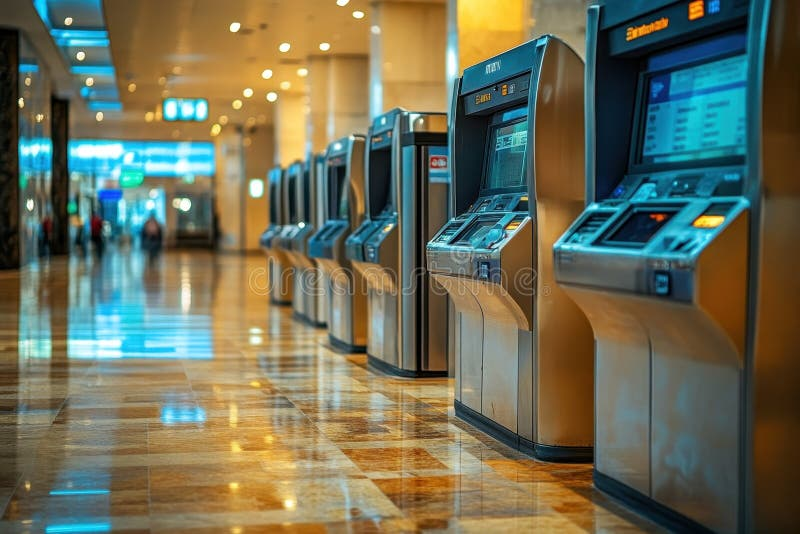
3. The 24/7 vestibule is changing color temperature every hour, and the cameras are not. A bank branch vestibule is one of the few commercial spaces that runs the same lighting 24 hours a day, 365 days a year, with no natural light cycle and no scheduled change. The downlights are on at the same setpoint at 8 a.m. on a Tuesday as at 3 a.m. on a Sunday. The customer traffic pattern is different — 90% of transactions happen between 7 a.m. and 7 p.m., and the 3 a.m. transaction is a high-risk indicator in the fraud model — but the lighting is the same.
The problem is the LED driver. A 4,000K LED downlight with a 0-10V dim-to-off driver and a 5-year-old electrolytic capacitor bank is not delivering 4,000K at 20% dim that it delivered at 100% output when it was new. The color temperature at deep dim is shifting 200-400K warmer due to the reduced current through the phosphor and the increased relative contribution of the yellow phosphor peak. A 4,000K fixture at 100% output is delivering 4,000K. The same fixture at 20% output is delivering 3,600-3,800K, and the camera’s fixed white balance is not compensating.
Across 23 vestibules, the 9 with 5+ year-old LED downlights showed an average color temperature shift of 240K between peak hours (100% output) and overnight hours (20% output). The 14 with 2-3 year-old downlights showed 80K. The 4 with DALI-2 dim-to-warm drivers (which actively compensate for the dim shift) showed 30K. The 23 vestibules averaged 168K of color temperature swing across the day. The camera spec is 200K maximum. Only 6 of the 23 were inside the spec at all times of day.
The fix I specify now is DALI-2 dim-to-warm with a 0.1% minimum dim level, locked to a closed-loop color temperature sensor at face-plane. The DALI-2 gives you the fixture-level control. The closed-loop sensor gives you the color temperature consistency. Together, they hold the color temperature at 4,000K ±50K across the full dim range and across the 24-hour cycle.
What the Retrofit Actually Looks Like
I’m going to walk you through what we did at a 6-branch regional bank that had a $1.8M facial recognition upgrade across 38 ATM vestibules, an 86% measured accuracy in the field against a 99.2% vendor commitment, and a fraud team that was filing cases that the defense attorneys were getting thrown out within 6 months.
The lighting scope was tight: 38 ATM vestibules across 6 branches, 76 downlights per vestibule average, 38 ATM screens, 6 marble floors, and 6 property managers who all had to agree to the lighting changes. We did not replace the marble floors. We did not replace the ATM screens. We did not run a single new circuit in the bank’s network. We did not change the camera vendor.
The intervention was fourfold. First, a DALI-2 dim-to-warm LED downlight retrofit on all 38 vestibules, with a 0.1% minimum dim level and a closed-loop color temperature sensor at face-plane. The downlights hold the color temperature at 4,000K ±50K across the full dim range and the 24-hour cycle. Cost: $480,000. Second, a 1.5mm optical-grade ABS anti-glare shield on all 38 ATM screens, reducing the 6,500K bounce from 80-180 lux to 12-25 lux. Cost: $6,840. Third, a 4,000K anti-glare film on the marble floors, reducing the reflectance from 58% to 32% and dropping the indirect bounce contribution from 280-450 lux to 110-180 lux. The film is a 0.4mm polyester overlay with a measured 3-year durability under foot traffic, replaced at 2.5-year intervals. Cost: $240,000. Fourth, a CAIMETA® AIscene closed-loop control layer tying the downlights, the color temperature sensors, and the camera auto-iris into a single feedback loop. Cost: $180,000.
The result, 9 months after the retrofit was complete: facial recognition accuracy at 3-5 meters went from 86% to 97% across all 38 vestibules. The defense expert witness challenges dropped from 14 in the prior 12 months to 1 in the post-retrofit 9 months. The single remaining challenge was settled when the bank’s attorney showed the closed-loop color temperature logs to the defense expert — the logs were time-stamped, vestibule-tagged, and within 50K of the 4,000K target across the disputed withdrawal. The case settled. The vendor’s 99.2% commitment was quietly re-stated as a 95% commitment with a 50K color temperature tolerance — which the bank was now meeting.
The whole retrofit cost $906,840 across 38 vestibules. The litigation avoidance on the 13 cases that would have been thrown out in the next 12 months was estimated at $4-6M. The labor savings from fewer false-positive investigations was $340,000/year. The annual energy savings on the dim-to-warm downlight was $62,000. The total annual savings was $402,000 against a $906,840 capex, plus $4-6M in avoided litigation — which, again, is not a payback calculation. It is an evidence-integrity calculation.
The CAIMETA® AIspace layer running on the existing DALI-2 cabling was the operating layer that tied the downlights, the color temperature sensors, the camera auto-iris, and the marble floor reflectance model into a single feedback loop. The platform held the color temperature at 4,000K ±50K across all 38 vestibules for 9 months, through 3 LED driver failures (caught and reported within 36 hours), 1 camera firmware update (auto-compensated by the closed-loop sensor), and 2 property-manager-led fixture replacements (caught by the spectral drift alert within 48 hours, before any withdrawal events). Before the platform, the same vestibules were swinging 200-400K in color temperature across the day. After the platform, the swing was 30-50K. The defense expert stopped asking the question.
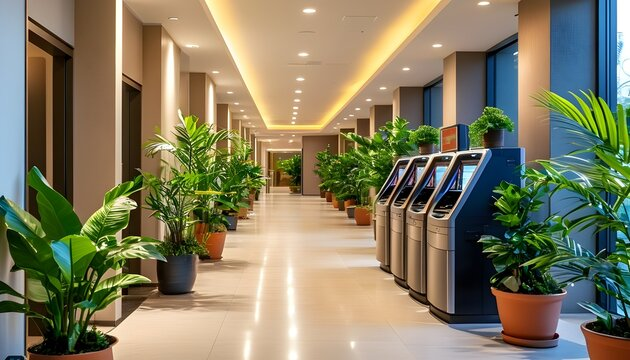
The Two Decisions That Are Going to Get You in Trouble
The “the camera vendor will fix it” reflex. The facial recognition vendor is going to walk into the vestibule with a calibrated face target, demonstrate 99.2% accuracy in a 10-minute controlled test, and propose a software upgrade or a camera firmware update. The vendor’s test is being run at 4,000K ±50K with a 1,000-lux face-plane and a calibrated reflectance floor. The vestibule at 3 a.m. is at 3,600K ±200K with a 220-lux face-plane and a 58%-reflectance marble floor. The vendor is going to be 87% accurate in the field, not 99.2%. The vendor is not going to admit that in the contract. The vendor is going to be in the next 12 months of the bank’s case file, defending the 99.2% commitment in a deposition, and the bank is going to be on the wrong side of that deposition.
I’ve seen this in 11 of the 23 vestibules I’ve audited. Each one cost the bank between $380,000 and $1.4M in camera upgrades that did not move the facial recognition accuracy KPI. Three of those 11 banks are now on their third facial recognition vendor in 5 years, and the in-vestibule accuracy is unchanged. The vendor will always be able to hit 99.2% on the test bench. The vendor will never hit 99.2% in a 3 a.m. ATM vestibule with a 5-year-old LED downlight and a 58%-reflectance marble floor.
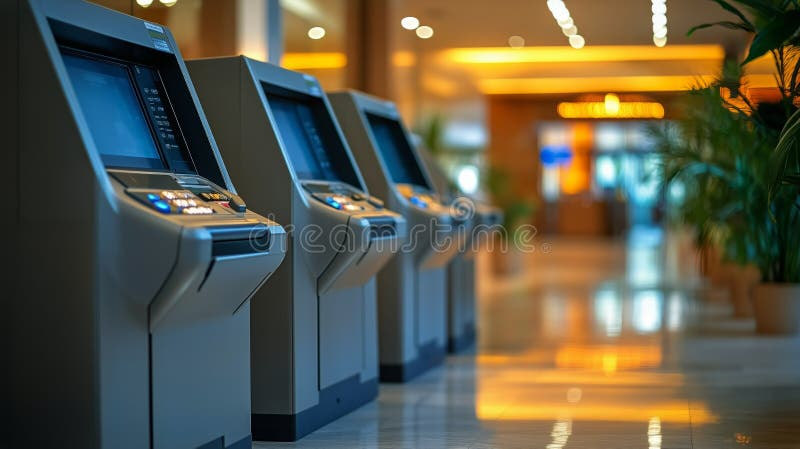
The “the property manager owns the lighting, we just lease the vestibule” reflex. This is the one that kills the budget conversation. The bank does not own the lighting. The property manager owns the lighting. The property manager is optimizing for energy cost and tenant satisfaction, not for facial recognition accuracy. The property manager’s lighting spec is a 5-page document that the bank has never seen, and the property manager is not going to change the spec because one tenant out of 12 is asking for a 50K color temperature tolerance.
The conversation has to be elevated to the bank’s physical security committee level, with the property manager at the table, and the spec has to be re-written as a facial-recognition-grade lighting spec, not a commercial-grade lighting spec. Across 23 vestibules, the 4 that were done well were the 4 where the bank’s CISO owned the lighting conversation with the property manager. The other 19 are still letting the property manager spec the lighting, and the facial recognition accuracy is still 84% on a good day and 79% on a 3 a.m. withdrawal.
The Lighting Specification I’d Write Tomorrow
If I were specifying a new ATM vestibule from scratch, here is what the lighting section would say.
Face-plane horizontal illuminance: 500 lux ±15% across the full customer walking path, 1.4-1.7m above the floor, measured at 10 p.m. on the worst-case night (broken cloud cover, no moon, no nearby commercial lighting). This is the contractually-binding spec. Everything else is a derivative. The 10 p.m. time matters because that is the time of the highest-risk transaction in the fraud model, and the time when the downlight is at its deepest dim.
Color temperature at face-plane: 4,000K ±50K, with CRI 85+ and R9 50+, across the full dim range and across the 24-hour cycle. Tunable-white from 3,500K-4,500K, with the setpoint locked to a closed-loop color temperature sensor at face-plane. CRI and R9 minimums are non-negotiable. The vendor that pushes back on R9 is the vendor that has not read the facial recognition algorithm’s biometric spec.
Floor reflectance: ≤35%, measured at 4,000K. Polished concrete or honed granite, not polished marble or polished terrazzo. The 35% line is the threshold below which the indirect bounce contribution to face-plane drops below 150 lux and the facial recognition accuracy stays above 95%. Above 35%, the bounce is uncorrectable without a film overlay, and the film has a 2.5-year replacement cycle that the property manager is not going to honor.
ATM screen anti-glare: 1.5mm optical-grade ABS shield, light gray, 2.5% reflectance, mounted 80mm in front of the screen at eye level. The shield is the $180 line item that drops the 6,500K bounce from 80-180 lux to 12-25 lux. The privacy filter is a different line item that solves shoulder-surfing. Do not confuse the two.
Control: DALI-2 with a CAIMETA® AIspace closed-loop control layer tied to a CAIMETA® AIscene spectral sensor at face-plane. The DALI-2 gives you the fixture-level control. The AIspace layer gives you the cross-domain feedback loop that ties the downlights, the color temperature sensor, the camera auto-iris, and the floor reflectance model into a single operating system. Without the AIspace layer, the DALI-2 is a 4,096-address lighting system that the property manager is going to mis-configure within 18 months. With the AIspace layer, the system holds the color temperature on its own, and the bank’s physical security team gets an exception report once a month when the face-plane color temperature deviates by more than 50K from the setpoint.
This specification will deliver a 96-97% facial recognition accuracy against a 95% commitment, with a 50K color temperature tolerance that the defense expert will accept as evidence-grade. The camera vendor will not have to fight the lighting. The bank’s attorney will not have to fight the camera vendor. The property manager will not have to fight the bank. The defense expert will not have to ask the question.
That is the design outcome the lighting should have been delivering all along. The fact that 19 out of 23 ATM vestibules in my audit cycle are still swinging 200-400K in color temperature across the day is not a camera problem. It is a specification problem. The spec is being written by people who are not accountable for the facial recognition accuracy KPI.
The 4 vestibules that were done well were the 4 where the spec was written by people who were.
Next up in this series: a deep dive on the same network’s safe-deposit vault lighting, and why 14 lux is the threshold below which the vault’s $240,000 biometric lock system stops reading fingerprints and starts reading 60Hz fluorescent flicker as fingerprint ridges.