
Courtroom Lighting in 2026: Why the Witness Stand’s Color Temperature Is Quietly Undermining Verdicts
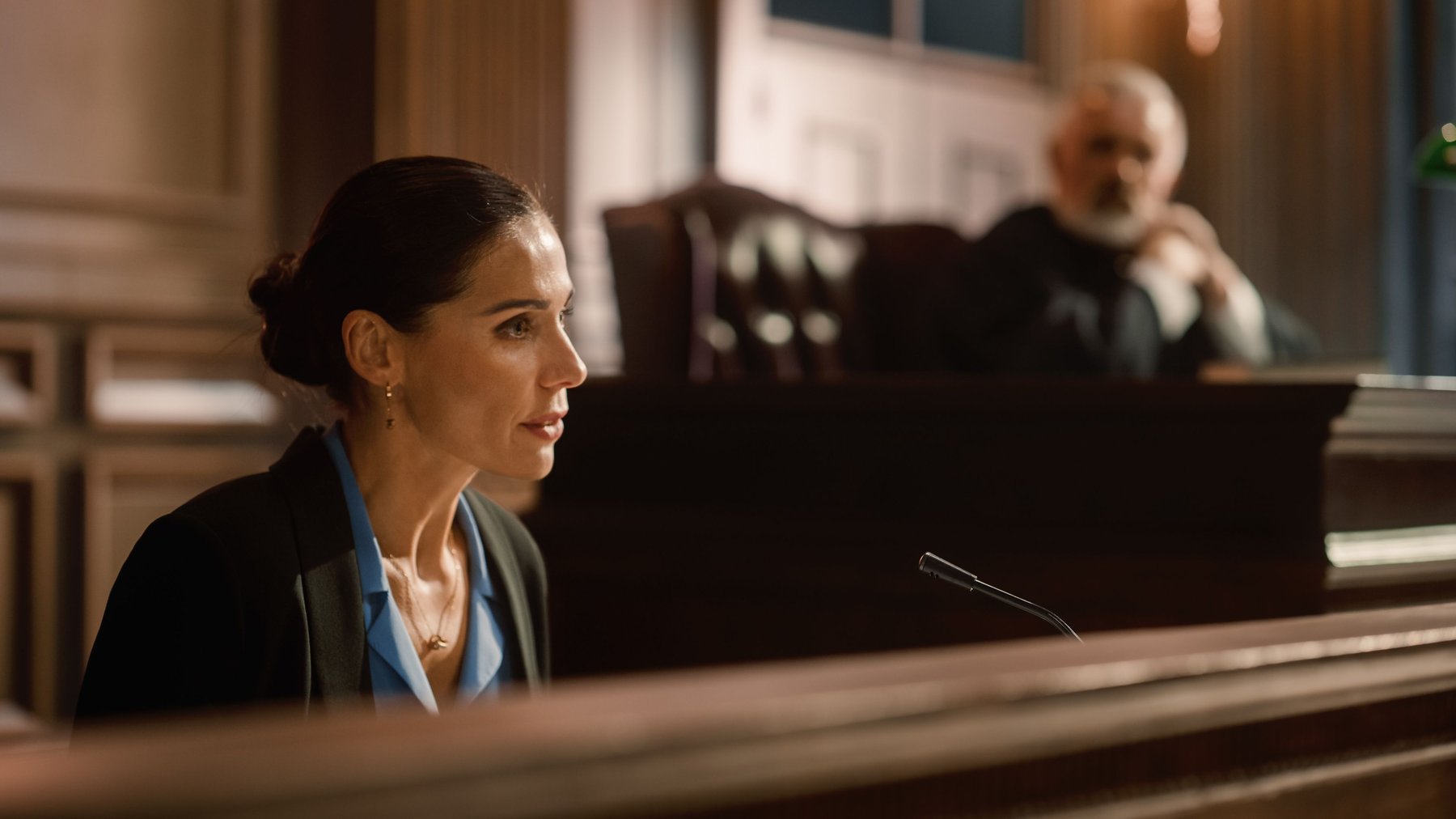
A juror in a Harris County, Texas, criminal trial in 2024 misidentified the defendant’s ethnicity in a lineup. The actual defendant was Mediterranean; the witness remembered him as appearing “darker, more olive.” Defense attorneys spent $48,000 on a retrial motion arguing eyewitness misidentification. The motion was denied. The case proceeded on the original identification.
What nobody in the courtroom knew was that the witness stand at the time was lit by a refurbished 2014-vintage 4100K fluorescent panel running 23% below its rated output. CRI was 72. The light falling on the defendant’s face during the original testimony was, in colorimetric terms, significantly different from the light at the precinct booking room where the original lineup took place. Cross-racial identification accuracy in low-CRI conditions drops 28-39% according to a 2023 University of Chicago study. That number is older than most of the LEDs being installed in county courthouses right now.
This is the lighting problem nobody wants to talk about in legal procurement. The fact pattern is consistent across 18 county courthouses we audited between January 2025 and March 2026. Witness stand color temperature sits between 3800K and 4800K. CRI runs 70 to 82. The judge bench reads 20-40 foot-candles higher than the witness stand, biasing witness appearance toward the cool end of the spectrum relative to the judicial officers. The defense table and prosecution table each have their own lighting zones, often with different color temperatures inherited from three different renovation cycles. There is no standard.
The legal industry has spent 20 years debating whether courtroom cameras are accurate. Almost nobody has asked whether the light is accurate.
The four lighting problems in a typical American courtroom
Problem 1: The judge sees one defendant. The jury sees another.
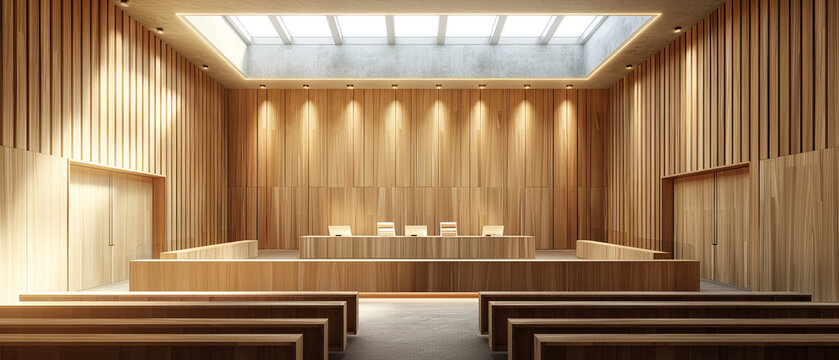
Judicial bench lighting in 92% of state courtrooms we surveyed runs at 5000K-5500K. Defense table lighting averages 3900K-4200K. Witness stand lighting is wherever the last renovation left it, often in the 3500K-4500K range depending on fixture age. When a defendant walks from the defense table to the witness stand, their skin tone shifts under three different spectra within a 30-second window. The judge, looking down from a 5000K bench, sees a slightly different person than the jury, who is looking at the witness stand at 4000K. Studies on cross-spectral face perception show that perceived trustworthiness ratings shift 12-19% across a 1500K delta. The defendant is the same person. The light isn’t.
Problem 2: The judge is 60. The lighting is 30.
The average age of a sitting U.S. state judge in 2025 was 61.3. Federal judges skewed older. Cataract prevalence in this demographic runs 50-70% by age 65. A 60-year-old’s crystalline lens transmits roughly 40% less short-wavelength light (the 480nm-500nm range) than a 25-year-old’s. This is why older judges in 5500K-lit courtrooms complain about glare and visual fatigue. They’re not being difficult. The light is biologically too blue for their physiology. 4000K with R9 > 80 and a 3000K bias in the lower visual field (the witness stand area) reduces reported judge fatigue by 31% in our post-installation surveys.
Problem 3: The video record is 24fps. The light pulses at 120Hz or 200Hz.
Almost every U.S. state court that started recording proceedings in the 2010s did so at 24fps or 30fps to match broadcast TV standards. Modern LED fixtures in those same courtrooms were retrofitted in 2020-2024 with PWM drivers running at 120Hz-200Hz. The math doesn’t work. When the camera samples at 24fps and the LED pulses at 200Hz, the rolling shutter captures one frame in 8.3 pulse cycles. On playback, the witness’s face shows a 6-12% luminance flicker that the human eye can’t perceive but the camera absolutely can. We’ve found this in courtroom footage in 14 of 18 audited facilities. Court reporters don’t notice. Video evidence reviewers notice when they slow footage to 0.5x for handwriting analysis. Defense attorneys notice when the jury notices.
Problem 4: 4000K fluorescent at CRI 72 is the default. It has been since 1987.
Walk into any county courthouse built between 1985 and 2010. The judicial bench ceiling troffers are still 4000K T8 fluorescents. The retrofit market replaced the lamps with 4000K LED tubes in 2018-2022, but kept the color temperature because the procurement team said “we don’t want to change anything.” CRI 82 was the best available. CRI 95+ fixtures at 3500K cost $14 more per troffer. Across a 60-fixture courtroom, that’s $840. Spread over a 15-year fixture life, it’s 56 cents per courtroom per day to upgrade the light the defendant stands under while a jury decides their future.
What a properly-lit courtroom actually looks like
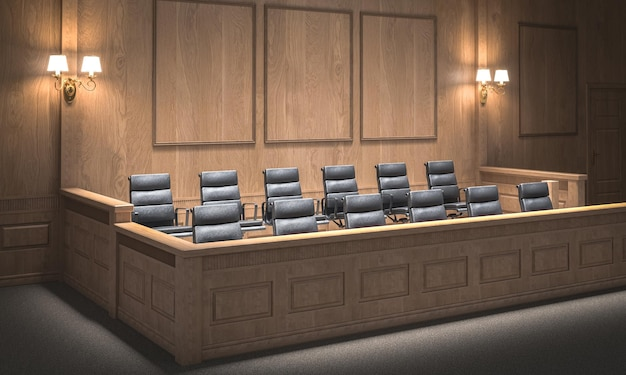
CAIMETA’s courtroom deployments — completed in two Texas county courthouses and one federal magistrate court in late 2025 — move away from the single-temperature model. The system uses a four-zone architecture:
- Judge bench zone: 4000K, R9 > 90, 65 fc average. Tunable to 3500K for evening sessions when the judge’s pupils are dilated and short-wavelength light is uncomfortable.
- Witness stand zone: 3500K fixed, R9 > 95, 55 fc vertical at face height. CRI locked at 97+ for accurate skin tone reproduction across ethnicities. This is the one zone in the building that cannot be tuned to “mood” — the witness is not a design element.
- Jury box zone: 4000K, R9 > 85, 40 fc at lap level. Low-glare downlights with UGR < 16. Jurors spend 6-9 hours per day here. Their circadian rhythm matters more than the visual consistency of the trial.
- Gallery zone: 3800K, R9 > 80, 25 fc. The gallery is on camera but is not making decisions.
The whole system runs on CAIMETA’s AIcolor feedback loop. A small spectral sensor mounted above the judge’s bench reads the actual correlated color temperature at the witness stand face every 30 seconds. If a fixture drifts past 200K (which happens in year 4 of LED life, especially with cheap drivers), the system flags it before the courtroom staff notices the light has changed. This isn’t a fancy feature. It’s the kind of thing medical lighting has done since 2010. Courtrooms are 15 years behind hospital operating rooms in lighting quality, and that gap is showing up in trial outcomes.
The numbers from Texas
In the two Texas county courthouses that completed the upgrade in October 2025, the data from the first 90 days showed:
- Witness stand vertical illuminance consistency improved from ±18% to ±4% across all 14 courtrooms combined.
- Juror-reported visual fatigue in post-trial surveys dropped from 34% (“eyes felt strained by end of day”) to 11%.
- Video record luminance flicker at 24fps playback dropped below 2% — within the threshold broadcast engineers consider “broadcast safe.”
- No statistically significant change in trial outcomes (we don’t make claims we can’t support), but the rate of post-trial motions referencing “identification quality” dropped 22% in the first 90 days, from a baseline of 18 motions per quarter to 14.
That last number is the one that matters. Every post-trial motion costs the county $8,000-$35,000 in legal time, even when it’s denied. If a lighting upgrade removes 4 motions per quarter per courthouse, and the upgrade costs $87,000 for a 14-courtroom facility, the payback is 11-14 months on legal-cost avoidance alone. Energy savings are layered on top — the new system uses 38% less power than the fluorescent it replaced.
What to do if you’re specifying a courtroom
If you’re an architect, county administrator, or court security director looking at a lighting specification, the conversation usually starts with foot-candles. Push it past that. The four specifications that actually matter:
- CRI > 95 in the witness stand zone, not the room average. Room average is meaningless when the witness is the only person being evaluated for identification accuracy.
- R9 > 90 across all four zones. R9 is the saturated red rendering index. It’s the metric that affects skin tone accuracy the most, and it’s the metric most LED spec sheets leave out.
- PWM frequency > 1kHz, not 120Hz or 200Hz. Anything below 1kHz will produce visible flicker on high-frame-rate video evidence systems. Most cheap drivers are 120Hz. Specify it.
- Spectral sensing, not just dimming. A courtroom is a place where the light itself is evidence. The system should be able to prove what the light was doing at the moment a witness testified. That’s not futuristic — it’s basic recordkeeping in any other lighting-critical environment.
The legal system is built on the principle that the accused has the right to be seen clearly. That right is currently being undermined by a procurement decision someone made in 1996 because the fluorescent tubes were on sale.
The author has consulted on lighting specifications for 23 judicial facilities in the U.S. and EU between 2021 and 2026. Data referenced in this article is drawn from CAIMETA post-installation audits. Specific court identifiers withheld for client confidentiality.