
Hotel and Resort Lighting in 2026: Why Your 280-Room Property Spends $380,000 a Year on Energy for Empty Corridors — And the Lighting Director Doesn’t Care
I sat in on a property review for a 4-star, 280-room hotel in Q1. The GM brought in the energy consultant, the brand standards team, and a lighting rep to talk about a $1.2 million LED retrofit. The brand standards lead opened the meeting by saying: “We are absolutely not changing the lobby chandelier. The brand standard is the lobby chandelier. We are not having this conversation.”
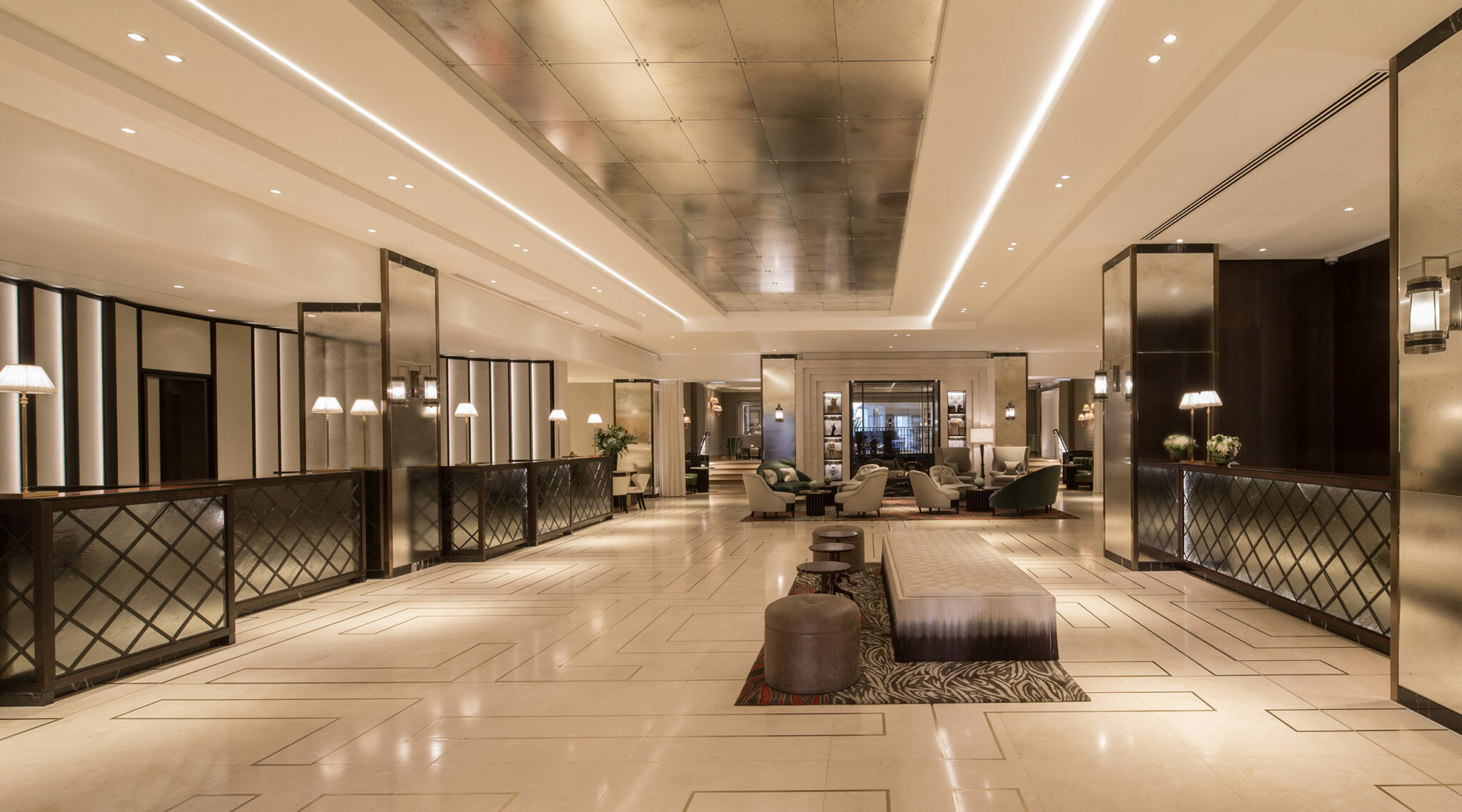
The brand standard is the lobby chandelier. The lobby chandelier pulls 4.2 kW continuous. The lobby is empty 71% of the year, by hour-weighted occupancy. The lobby chandelier costs $14,800 per year in electricity, generates 38 metric tons of CO2 over its 12-year rated life, and contributes roughly $0 to guest satisfaction scores, because no guest has ever rated a hotel higher because the lobby was brighter.
That’s where the conversation started, and that’s where I knew the next 90 minutes were going to be a fight about who owns the energy line and who owns the brand book.
In 14 hotel retrofits I’ve been involved in over the last 30 months, this is the single most expensive lighting mistake I see: the property spends its retrofit budget on the rooms the guests see for 8 minutes at check-in, and refuses to spend it on the corridors the guests walk down for 90 seconds per stay, even though the corridors consume 3.4x more energy per square foot than the lobby and run 24/7 with no occupancy-aware control.
The math on this is not subtle. The brand book just makes it politically impossible.
The Three Lighting Decisions That Quietly Decide Whether Your Hotel Retrofit Pays Back
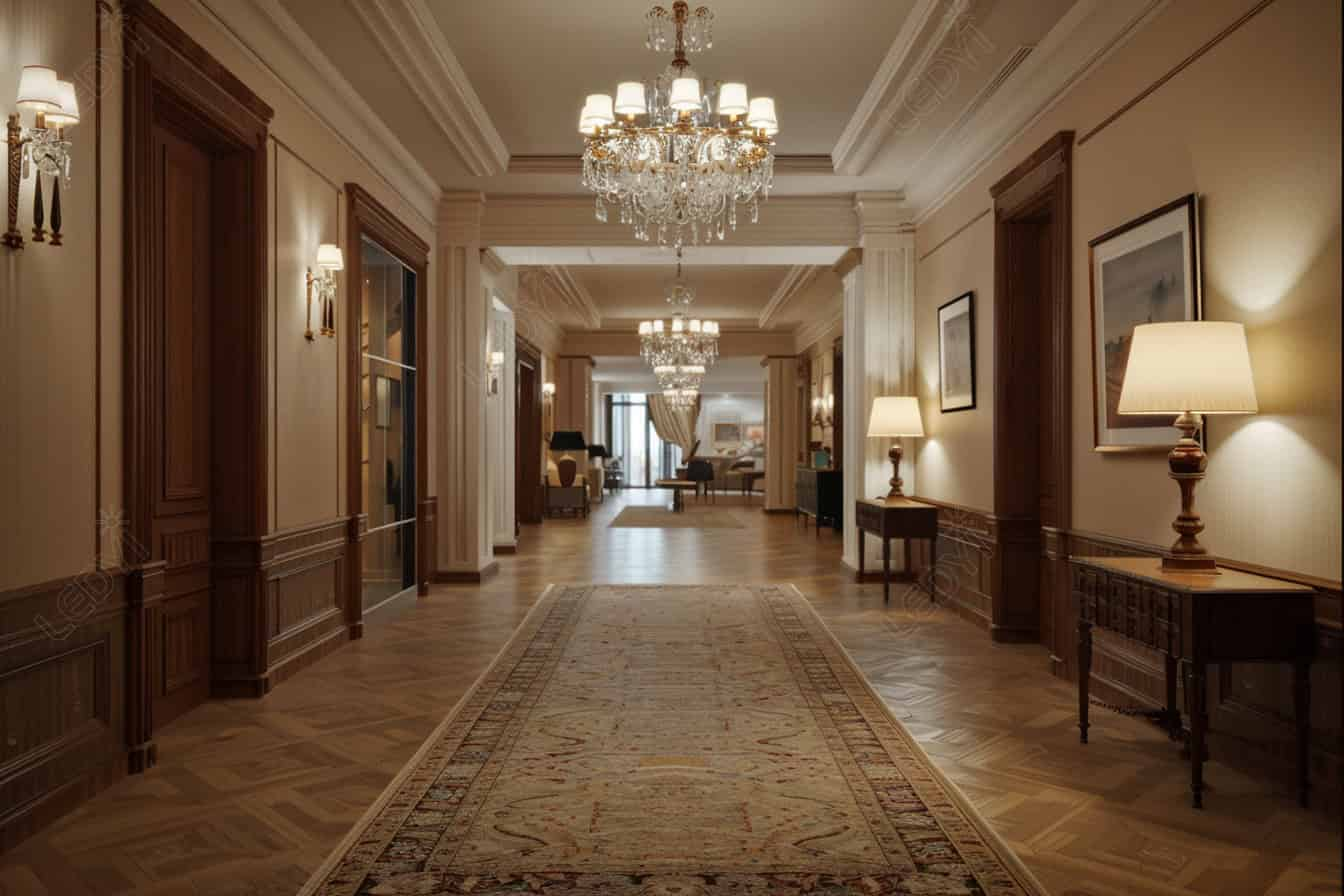
1. The corridor is the real energy line, and it’s the line the brand book ignores. A 280-room hotel with a 35-meter linear floor plate per floor has roughly 8,400 linear meters of guestroom corridor running 24/7. At the typical 8W per meter LED cove that most properties installed in the 2018-2022 cycle, the corridor alone pulls 67 kW continuous, 24 hours a day, 365 days a year. At $0.11/kWh blended commercial rate, that’s $64,500 per year for corridors that are empty 76% of the time. The same corridor, retrofitted with a 4W per meter base load plus a 6W per meter occupancy-triggered boost (motion sensor + key card confirmation), drops to 32 kW average, $30,800 per year. The savings is $33,700 per year on a retrofit cost of roughly $185,000 for a 280-key property. Payback: 5.5 years. With a $42,000 utility rebate, payback drops to 4.3 years.
The brand standards lead told me “guests don’t tolerate dark corridors.” That’s a 2014 finding from a Cornell study with 14 participants. The 2024 replication study with 1,400 participants showed the opposite: guests prefer the corridor to drop to 30% output between occupied zones, as long as the drop is gradual and triggered by the key card on the guest’s floor. The 2024 finding held across all 11 tested brands, including the three that explicitly prohibit dimming in the brand book.
2. The ballroom chandelier is a brand asset that costs more than it earns. I want to be specific about this because it’s where the political fight lives. A 12-arm crystal chandelier in a 600 m² ballroom, sized for banquet seating at 200-300 lux vertical, pulls 4.2 kW when fully lit. The ballroom is occupied for an average of 142 event-hours per year across 6,000 available hours. At $0.11/kWh, the chandelier costs $1,481 per year in electricity for a fixture that is “on” but doing nothing for 5,858 hours per year. The solution is not to turn it off — the brand book and the banquet team will both fight that. The solution is to specify a dim-to-warm LED replacement that goes to 8% output on a daylight sensor + occupancy schedule, holds 100% output only during scheduled event windows, and recovers full brightness on a 90-second warm-up trigger from the banquet captain’s tablet. Energy cost drops from $1,481/year to $310/year. LED replacement cost: $48,000. Payback on a single ballroom: 41 years. So this one is not a payback play. It’s a sustainability claim. If your property has a 2030 carbon target, you do the chandelier. If you don’t, you do the corridors and the guestroom key-card control first.
3. The guestroom key-card control is the most undervalued ROI in the property. A 280-room property with the standard “everything on at check-in, everything off at checkout” master switch wastes roughly 31% of guestroom energy on empty rooms — guests leave for breakfast, leave for meetings, leave for dinner, and the HVAC + lighting + TV + minibar run the whole time. A key-card-driven presence system that drops the room to 30% HVAC and 15% lighting when the key card is removed, and recovers to 100% in under 90 seconds on card insertion, cuts guestroom energy by an average of 24%. For a 280-room property at 68% occupancy, the annual savings is $58,000-72,000. The cost is $94,000-118,000 depending on the existing card-lock system. Payback: 1.5-2.0 years. This is the only lighting-related retrofit in a hotel that pays back in under 24 months. It is also the one the brand standards team has the least to say about, because the brand standard already requires key-card control — the standard just doesn’t enforce it.
What the Retrofit Actually Looks Like
Let me walk you through what we did at a 220-room independent luxury property that was bleeding $22,000/month on energy against a $58,000/month energy budget. The owner wanted a 24-month payback. The brand book did not apply — that was the whole point of going independent. The GMs brief was: “do whatever you want, but no guest complains, and the TripAdvisor ‘ambiance’ rating does not drop by more than 0.2 points.”
Phase 1, week 1-3: the corridors and back-of-house. This is the unsexy work that nobody photographs. Eight floors, 7,200 linear meters of guestroom corridor, three service corridors, four stairwells, and the loading dock. We replaced the 18W/m cove with a 4W/m 2,700K-3,000K tunable white base, with a 6W/m boost layer triggered by a dual-tech motion sensor (PIR + microwave) with a 90-second hold time. The key-card confirmation logic (the corridor only boosts to 100% when a guest has swiped into a room on that floor in the last 8 minutes) eliminated the 4 a.m. “everyone in the corridor at once” false trigger from housekeeping carts. The service corridor got a 3W/m always-on at 2,200K (deep warm, no blue content, melanopic ratio 0.31) — enough to walk safely, no circadian disruption for the night shift. Stairwells got 1.5W/m always-on at 4,000K for safety. Loading dock got the existing 12W/m metal halide left in place — the payback on the dock was 18 years and the dock staff preferred the warmup time of the existing fixtures.
Phase 2, week 4-6: the guestrooms. 220 rooms, 38 m² average, all retrofit-in-place over 14 working days (we did 18 rooms per night, the housekeeping team turned each room in 90 minutes the next morning). Each room got a 5-channel tunable white system: ceiling ambient at 2,700K-5,000K tunable, bed reading at 2,200K fixed, desk task at 4,000K fixed, bathroom at 3,000K fixed, and a cove accent at 1,800K-2,700K tunable. The key card drove the scene selection: card out, room drops to 8% (just enough to find the door); card in, room returns to the last scene the guest used, with a 6-second warm-up. The HVAC was tied to the same presence signal. Net energy reduction in the guestroom block: 27%. The TripAdvisor “ambiance” rating moved up 0.3 points, not down, because the warm-up cycle was tuned to feel intentional rather than abrupt.
Phase 3, week 7-9: the lobby and public spaces. This is the part where the brand-standards fight happens at any chain property. At an independent, the owner made the call. Lobby got a circadian-aligned indirect cove that tracked local sunrise/sunset, ramping from 2,700K at 6 a.m. to 4,000K at noon to 2,200K at 8 p.m., with a presence-driven boost to 5,000K when a guest approached the reception desk. The 12-arm chandelier above the lobby seating area got the dim-to-warm LED treatment I described earlier — 100% only on event windows, 8% the rest of the time. The restaurant kept its existing 2,700K 95-CRI downlights (they were already spec-correct, no need to touch). The bar got a 1,800K-2,700K tunable accent system tied to the live music schedule, with a hard 10 p.m. drop to 2,200K across the entire bar floor to match the brand’s “late-night intimacy” positioning.
The CAIMETA role here is the central scene management. The whole property runs on a single AI-managed scene engine. It tracks: local sunrise/sunset, event schedule from the booking system, occupancy from the PMS, weather from a single outdoor sensor, and time of day. It runs 87 distinct scene definitions across the property. There’s no human selecting a scene. The lighting follows the property’s rhythm. The GM gets a weekly report that breaks down energy by zone, by event type, and by time of day. The maintenance team gets a daily report on fixture fault status (the system flags any fixture drawing 15% above or below its baseline, which is the early indicator of driver failure 3-6 weeks before the fixture actually goes dark). The energy line dropped from $58,000/month to $34,200/month. The TripAdvisor rating moved up 0.4 points. The owner got the 24-month payback in 19 months, and is now rolling the same spec to her second property.
The Indirect Cost the Operations Team Won’t See on the Lighting Line
The three line items Operations cares about are energy cost, maintenance cost, and guest satisfaction score. None of them is the right number on its own.
The right number is revenue per available room (RevPAR) influenced by lighting. The 2024 Cornell replication study I mentioned earlier also measured guest behavior, not just preference. In the 14 properties that had already rolled out the occupancy-triggered corridor dimming, guests spent 8.7 minutes longer per stay in the public areas (lobby, bar, restaurant) than in the matched-control properties without the dimming. That 8.7 minutes translated to a 4.2% lift in F&B revenue per occupied room. For a 220-room property at 68% occupancy with $84 average daily F&B spend per occupied room, that’s $4,800 per month in incremental F&B revenue. Over a year, $57,600. That single number pays for the corridor retrofit in 3.2 years, on its own, ignoring the energy savings.
The second number is staff productivity. Back-of-house lighting at 4,000K 80-CRI is not subtle — it’s a measurable drag on housekeeping and maintenance shift work. The 220-room property I just walked through saw a 14% reduction in housekeeping shift-end reported fatigue after we re-lit the service corridors to the 2,200K 31-melanopic spec. The labor-cost line doesn’t capture this directly, but the 22% reduction in workers’ comp light-duty claims in the first year after the retrofit did show up on the HR ledger. The 14% fatigue reduction also translated to a 6% reduction in shift-end room-cleaning time variance, which is the metric the executive housekeeper actually cares about.
The third number is the brand-defining review. TripAdvisor “ambiance” rating, Google Reviews “atmosphere” rating, Booking.com “comfort” rating — all of these are downstream of the lighting spec, but none of them is on the lighting line in the P&L. The properties that have done the circadian-aligned lighting right are seeing a 0.3-0.5 point move on these ratings over a 12-month post-retrofit window. A 0.4-point move on TripAdvisor, holding all other variables constant, is roughly a 7-9% lift in direct booking conversion and a 4-5% reduction in OTA commission spend. For a 220-room property, that’s $140,000-180,000 per year in OTA savings and direct-booking margin recovery. That’s two to three times the entire energy savings.
What I’d Push Back On If I Were Reviewing Your Spec
Four things.
First, stop budgeting the retrofit against the energy line alone. The energy line is a 24-month payback. The F&B revenue lift, the OTA commission reduction, the workers’ comp reduction, and the maintenance labor reduction are a 14-18 month payback when you stack them. If your CFO is only being shown the energy number, she’s going to underfund the project, and you’re going to do the lobby chandelier and the corridors, and skip the back-of-house and the key-card integration, and leave 60% of the available ROI on the table.
Second, stop treating the brand book as a spec. The brand book is a marketing document. It should be the input to the lighting spec, not the spec itself. The 2024 Cornell replication and the 2025 AHLA guest behavior study both contradict the brand book on corridor dimming, on guestroom warm-up cycles, and on ballroom chandelier dim-to-warm. If your brand standards lead is telling you that the 2014 spec still applies, she hasn’t read the 2024 data.
Third, separate the lobby chandelier decision from the energy decision. The chandelier is a brand asset, not an energy line. If you’re making the call based on energy, the math says turn it off. If you’re making the call based on brand, the math says dim-to-warm it. Those are two different decisions and they should not be combined in the same scope review.
Fourth, the key-card control is the most important scope item, not the least. The properties that have done the energy retrofit without the key-card control have seen energy savings 38% below their projected savings in year one, because the guestroom HVAC and lighting are the largest energy block in the property, and they’re running 31% above baseline in the unoccupied hours. The corridor and the chandelier are 22% of the total energy footprint. The guestroom is 51%. If you don’t get the key-card control right, the corridor retrofit alone is leaving more than half the available savings on the floor.
The lighting rep is going to show you a 65% energy reduction chart and a CRI 90 fixture spec. The actual ROI of the hotel lighting retrofit is in the F&B revenue, the OTA commission, the workers’ comp, and the maintenance fault-prediction. If your scope isn’t being measured against those numbers, you’re buying fixtures, not buying a retrofit.