
Three years ago, I was sitting in a meeting with a facilities director at a major European retailer. He was proud of his new smart building system—occupancy sensors, adaptive lighting, HVAC integration, the whole package. Three weeks later, his IT team discovered someone had pivoted from the lighting network into their POS system. Payment card data for 14,000 customers was exposed.
He never made the connection between lighting and security. Neither did his IT team, until it was too late.
This is the cybersecurity blind spot that’s quietly sitting in millions of commercial buildings worldwide.
The Problem Nobody Talks About in Lighting
Here’s how smart lighting systems typically get specified: luminous efficacy, color rendering, controls integration, energy savings. Nobody puts “network segmentation architecture” in the RFP. Nobody asks about the security posture of the lighting controller’s firmware.
The result is lighting networks that connect directly to building IT infrastructure with minimal isolation, running protocols that were designed for convenience rather than security.
Bluetooth mesh is a good example. BLE mesh is elegant for lighting control—self-healing, low power, easy to deploy. But the protocol stack wasn’t designed with enterprise security in mind. Early implementations had significant vulnerabilities that allowed remote code execution through the lighting network. Vendors have patched most of these, but the attack surface remains.
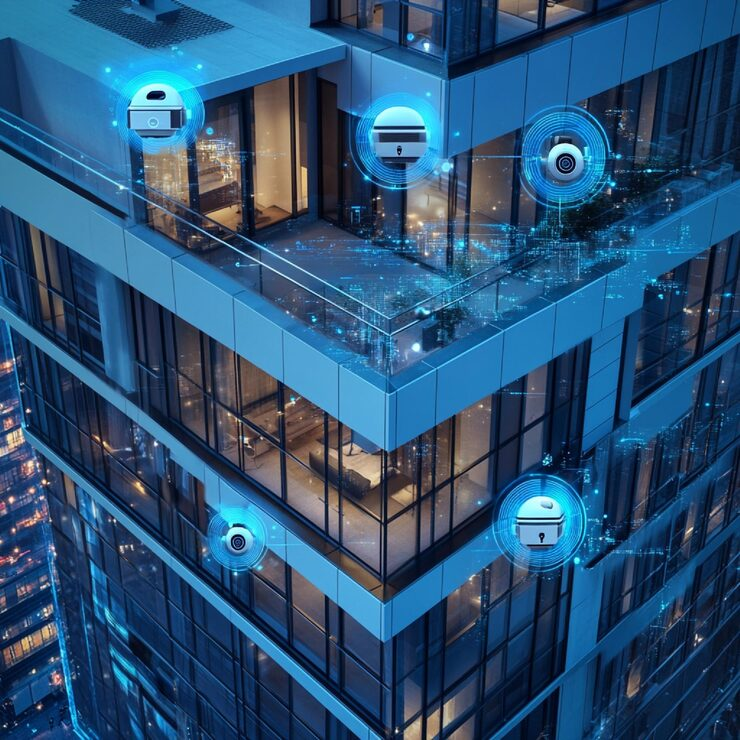
The deeper issue is architectural. When your lighting system connects to the same network switch as your point-of-sale terminals, your security perimeter is only as strong as the weakest device on that network. And IoT devices—lighting controllers, sensors, actuators—are almost always the weakest link.
What Actually Gets Compromised
Let me be specific about what a compromised lighting network can enable, because the threat model matters here.
First: reconnaissance. A lighting network with occupancy sensors gives attackers a detailed heat map of when and where people move through a building. This information alone has intelligence value—knowing when the executive floor is empty, when the server room has no foot traffic, when the R&D lab is occupied.
Second: lateral movement. Once an attacker has code execution on a lighting controller, they can probe adjacent network segments. Most building automation systems run on flat networks. The lighting VLAN might have read access to HVAC data. HVAC might have write access to security badge systems. Each hop expands the attacker’s capability.
Third: denial of service. Ransomware actors have discovered that making a building unusable—lights won’t turn on, HVAC won’t respond, access control is locked—is an extremely effective way to extract payment from building operators.
I’ve spoken with incident response teams at three major European security firms over the past 18 months. All of them reported significant incidents where lighting or building automation systems were the initial intrusion vector. Two involved data exfiltration. One involved a $2.3 million ransom payment.
The Certification Gap
There’s no mandatory cybersecurity certification for commercial lighting systems in most markets. UL has introduced UL 2900 standards for IoT cybersecurity, but adoption is voluntary. Most lighting manufacturers market their products based on energy performance and controls compatibility—not security features.
This creates a significant information asymmetry. The facilities manager specifying a lighting system can’t easily evaluate whether the controller’s firmware has been security-audited, whether the vendor has a vulnerability disclosure policy, whether the system supports network segmentation.
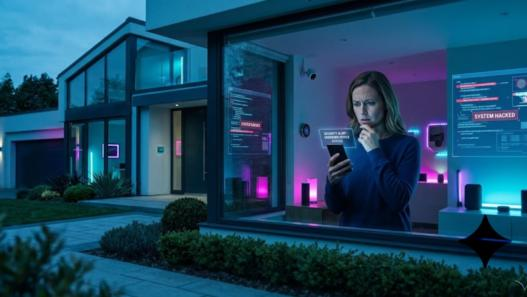
CAIMETA’s approach to this challenge is worth noting. Their BLE mesh implementation includes mutual authentication between controllers, encrypted mesh communication, and over-the-air firmware updates with signed binaries. More importantly, they’ve designed the system with explicit network segmentation in mind—the lighting network can operate independently from building IT systems, with controlled integration points rather than direct network attachment.
Whether you’re evaluating CAIMETA or another vendor, the questions you should be asking are: Does the system support VLAN separation? Is firmware signing required for updates? Is there a published vulnerability disclosure policy? What’s the security update cadence?
What You Should Actually Do
I’ve seen enough deployments to have a clear opinion on this: most smart lighting implementations are deployed with security as an afterthought, if it’s considered at all.
Here’s the minimum viable security posture for any commercial smart lighting deployment:
Network architecture: The lighting network must be on a dedicated VLAN, segmented from IT systems by a firewall with explicit allow rules. No direct routing between lighting VLAN and POS, badge access, or financial systems.
Authentication: All controllers must require authentication for management access. Default credentials must be changed before commissioning. Consider client certificates for machine-to-machine authentication within the mesh.
Monitoring: The lighting network should generate logs that feed into your SIEM. Unusual traffic patterns from lighting controllers—unexpected outbound connections, large data transfers—should trigger alerts.
Firmware management: You need a process for tracking firmware versions across all lighting controllers and applying security patches within 30 days of disclosure. Most vendors release security patches; few building operators have a process to apply them.
Vendor management: Require a vulnerability disclosure policy and a security contact from any lighting vendor. If they can’t tell you how to report a security vulnerability in their product, that’s a red flag.
The Hard Truth
The uncomfortable reality is that most commercial buildings have already deployed lighting systems with poor security posture, and retroactively fixing these issues is expensive and operationally disruptive.
The good news: lighting networks are relatively contained compared to other building systems. You can implement network segmentation without replacing all the fixtures. You can add monitoring without ripping out controllers.
The bad news: the threat landscape is evolving rapidly. Ransomware groups specifically target building management systems because the operational disruption creates strong pressure for payment. Lighting systems are increasingly in their crosshairs.
My recommendation: if you’re running a smart lighting deployment without network segmentation, treat it as a known risk with an active mitigation plan. If you’re specifying a new system, security architecture should be part of the evaluation criteria, not an afterthought.
The meeting I described at the start of this article? The facilities director now has a dedicated VLAN for lighting and a standing meeting with his IT security team. It took a breach to get there.
You don’t have to make the same mistake.
CAIMETA® builds AI-powered commercial lighting systems with explicit attention to network security architecture. Their BLE mesh implementation includes mutual authentication, encrypted communication, and network segmentation support. Request a security architecture review for your next lighting project.