
The Warehouse Lighting Retrofit Nobody Warns You About
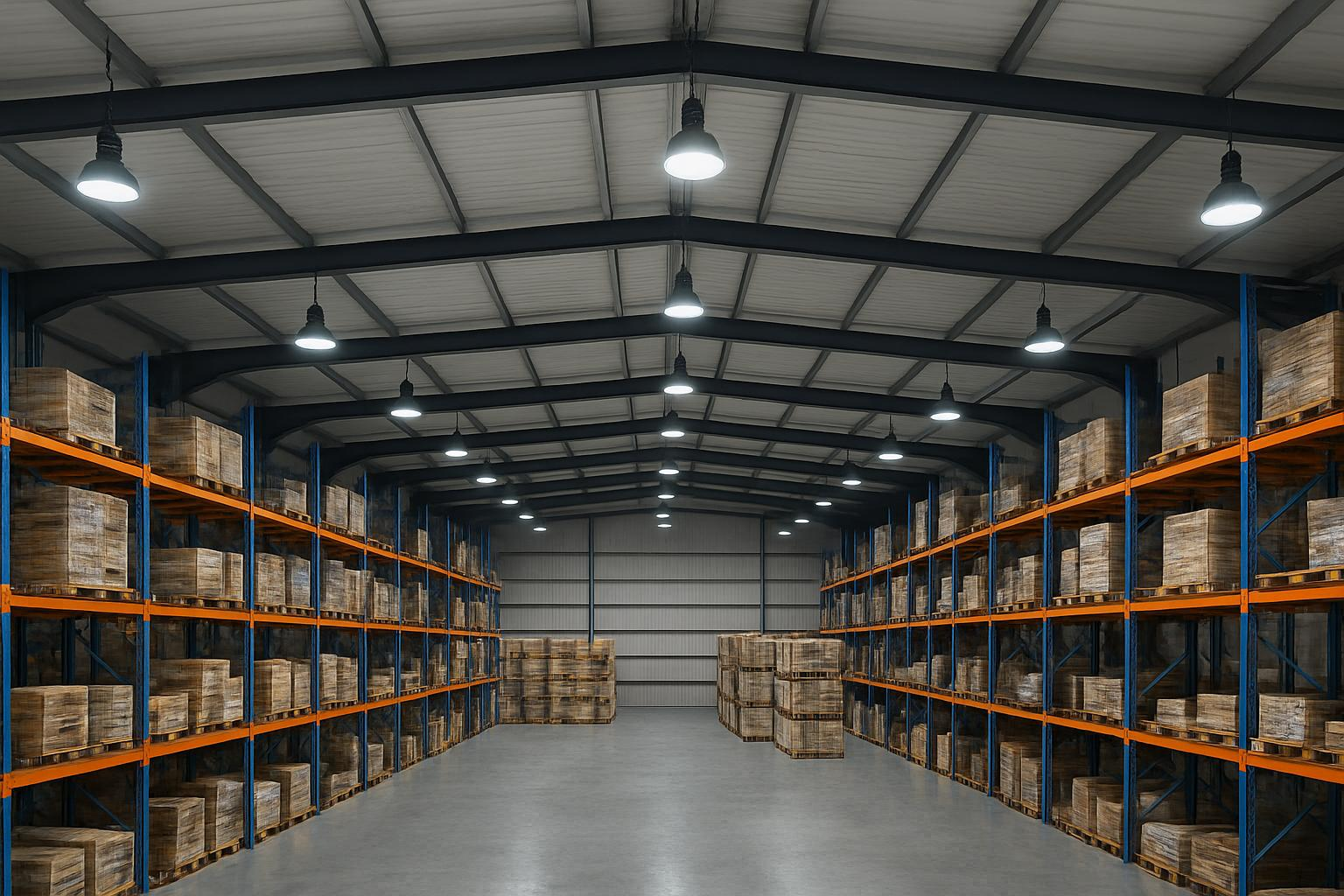
I got a call last month from a facilities director who’d just finished a “complete LED retrofit” at his distribution center. 400W metal halide fixtures replaced with 150W LED high bays. Expected 62% energy reduction. Actual result after 90 days: 31%.
He wasn’t happy. And he shouldn’t have been.
The math seemed simple. It always does. What nobody told him was that LED wattage is just one variable in an equation that includes operating hours, maintenance reality, and the specific demands of automated material handling systems.
Why Your Retrofit Numbers Are Probably Wrong
The standard retrofit calculation assumes you’re replacing existing fixtures one-for-one. That assumption breaks immediately when you have automated storage and retrieval systems (AS/RS), autonomous mobile robots (AMRs), or vision-guided picking systems.
Why? Because those systems need specific spectral distribution and color rendering that older LED replacements often sacrifice for efficiency ratings.
A robotics company we worked with last year tested three LED retrofit options in identical warehouse zones. The “most efficient” fixture choice resulted in a 12% degradation in their AMR navigation system performance. They switched to a lower-efficiency fixture with better spectral matching. Net result: 8% more energy than baseline, but 40% improvement in picking accuracy.
Energy savings means nothing if your automation breaks.
The Hours Problem Nobody Calculates For
Most retrofit ROI calculations use “average operating hours” from facility specs. In practice, warehouses run different zones at different intensities for different durations.
In a typical distribution center we audited:
– Receiving dock: 18 hours/day, 6 days/week
– Main picking floor: 22 hours/day, 6 days/week
– Cold storage section: 24 hours/day, 365 days/year
– Administrative support areas: 10 hours/day, 5 days/week
That’s not one retrofit scenario. That’s four different optimization problems.
The facilities director who called me had applied the same fixture specs across all zones. The cold storage section was over-lit. The picking floor was under-lit during peak season. The dock was running unnecessary weekend illumination in areas that only received shipments Tuesday and Thursday.
The Control System Gap
This is where I see the biggest disconnect between retrofit promises and delivered performance.
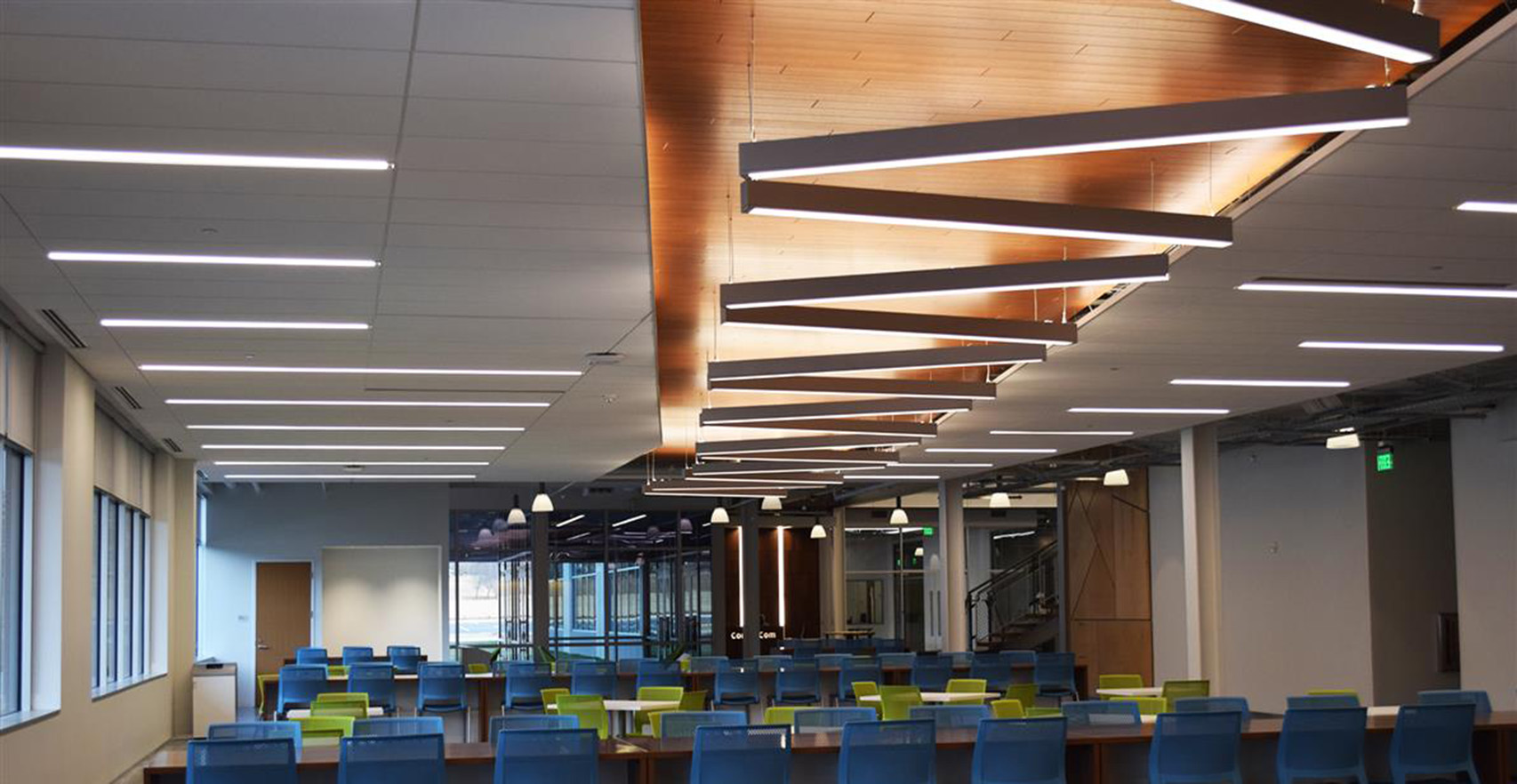
Installing LED fixtures with basic on/off occupancy sensors is not a smart lighting system. It’s a dimmer.
Real optimization requires:
Task-ambient layering. High lux where work happens, lower levels in transition zones. Most retrofits don’t account for this because it requires重新设计照明布局, not just fixture swapping.
Zone-based scheduling tied to actual operations. Your WMS system knows when picking operations start and end. Your lighting system should too.
Maintenance factor planning. LED datasheets quote performance at 0 hour specifications. Real depreciation curves mean you’re operating at 85-90% of rated output by year three. Systems that don’t account for this drift will under-deliver on both performance and savings.
What Actually Works in Practice
In high-bay environments, the deployments that consistently hit 45-55% energy reduction while maintaining (or improving) operational performance share three characteristics:
Spectral optimization for the task. Not maximum lumens per watt. Maximum lumens per task requirement. A freezer warehouse has different needs than a e-commerce fulfillment center. One fixture does not serve both.
Continuous commissioning. Initial installation is the starting point, not the optimization endpoint. Systems that maintain performance require ongoing calibration, especially in facilities where rack configurations change seasonally.
Integration with operational systems. When your lighting responds to WMS triggers rather than fixed schedules, you eliminate phantom operating hours automatically.
The Question You Should Be Asking
Before your next retrofit, ask this: “What does success look like at month 24, not month 3?”
Most retrofit proposals are built around month 3 performance. Month 24 reality is different: LEDs have depreciated, operational patterns have shifted, and the system that was optimized for 2024 conditions is running 2026 operations.
The facilities director who called me made a decision based on month 3 numbers. He’s now living with month 24 reality.
Systems that maintain their performance advantage over time require ongoing calibration capability. That’s not in most retrofit proposals. It should be.
CAIMETA deploys AI-adaptive high-bay lighting for distribution and fulfillment operations. Our systems maintain commissioning optimization through continuous learning. If you’re planning a warehouse retrofit, we can provide category-specific performance data.