
The commercial lighting industry is undergoing a fundamental shift. Traditional static lighting systems—where fixtures output fixed illumination levels regardless of environmental conditions—are being systematically replaced by AI-powered intelligent lighting platforms that learn, adapt, and optimize in real-time.
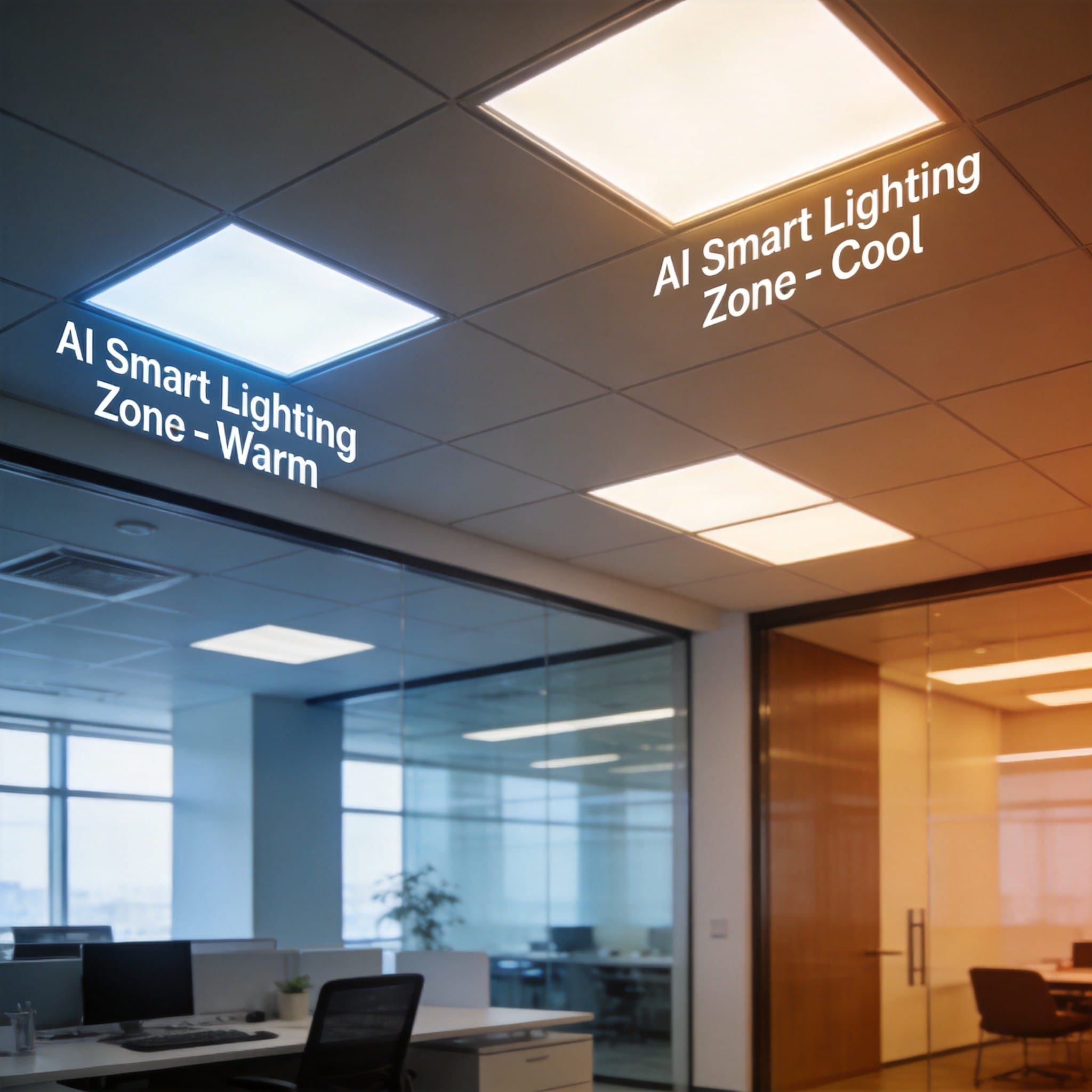
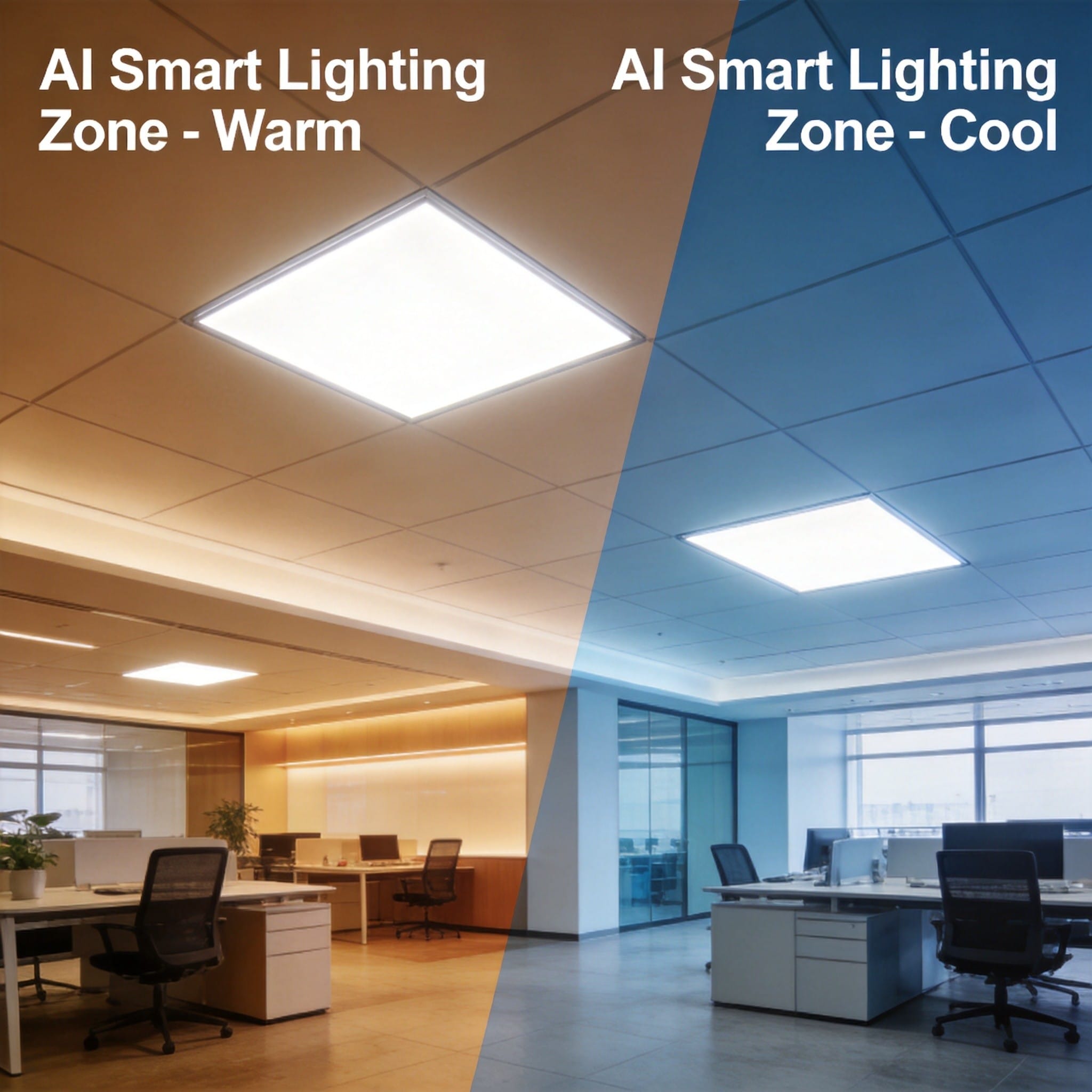
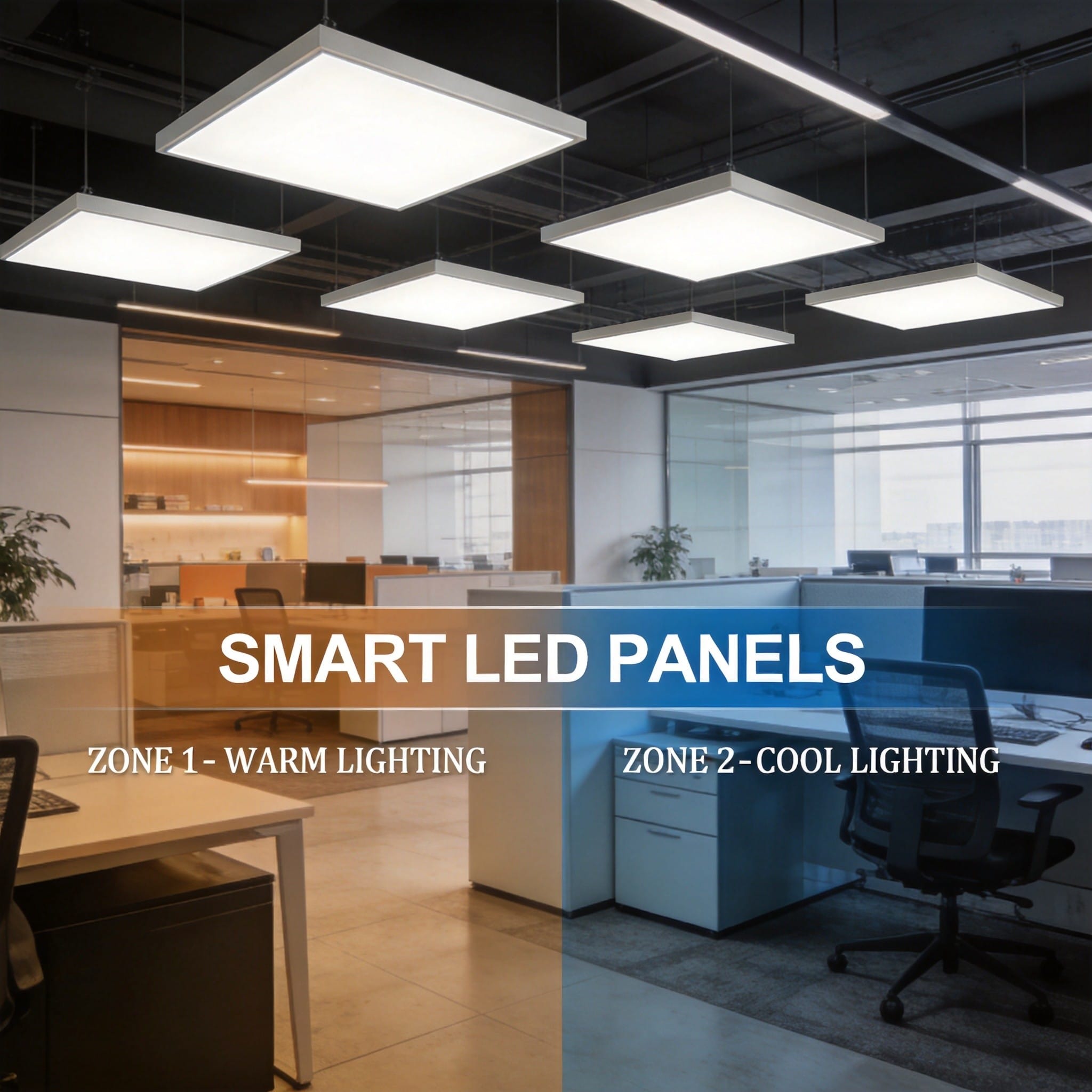
For facility managers, retail operators, and commercial real estate developers, this transformation isn’t merely about energy savings. It’s about creating environments that actively contribute to occupant well-being, operational efficiency, and data-driven decision making.
What Defines AI-Powered Commercial Lighting?
AI lighting differs from conventional “smart lighting” in one critical aspect: autonomous decision-making capability. While traditional smart lighting systems operate on pre-programmed schedules or simple sensor triggers (motion → lights on), AI lighting platforms process multiple data streams simultaneously and adjust illumination based on contextual understanding.
Core AI Technologies Driving Commercial Lighting Innovation
Adaptive Color Correlated Temperature (CCT)
Human circadian rhythms respond measurably to color temperature variations. Morning light naturally trends toward 5000-6500K (cool white), supporting alertness and cortisol production. Evening light shifts toward 2700-3000K (warm white), facilitating melatonin release and relaxation.
Scene Recognition and Automatic Optimization
The AIscene engine represents a significant advancement in lighting automation. Rather than requiring users to manually select “presentation mode” or “focus mode” scenes, the system analyzes environmental signals, cross-references against learned usage profiles, and preemptively adjusts lighting parameters.
Spatial Lighting Intelligence
AIspace technology addresses a fundamental limitation of traditional lighting design: uniform illumination across varied spatial functions. AIspace enables zone-based dynamic adjustment based on real-time foot traffic analysis.
Quantifiable Business Impact
The adoption case for AI lighting extends beyond sustainability commitments. Independent research across retail, office, and hospitality sectors demonstrates measurable returns:
- Retail Applications: 23-31% reduction in lighting energy consumption, 12-18% improvement in dwell time within optimized display zones
- Office Implementations: 19% reduction in afternoon fatigue reports, 15% improvement in focus metrics in adaptive CCT zones
- Hospitality Environments: 22% improvement in guest satisfaction scores regarding room environment
Integration Architecture: IoT Connectivity Standards
Modern AI lighting platforms must integrate seamlessly with broader building management ecosystems. CAIMETA supports industry-standard protocols including Bluetooth Mesh (BLE Mesh), DALI Integration, and cloud-based management with OTA updates.
Security and Compliance Considerations
Commercial AI lighting deployments must address legitimate cybersecurity concerns. CAIMETA’s platform implements ETSI EN 303 645 compliance, end-to-end encryption, and role-based access control.
Conclusion
AI-powered commercial lighting represents a convergence of energy efficiency, human-centric design, and operational intelligence. For organizations seeking to optimize occupant experience while reducing operational costs and environmental impact, AI lighting platforms offer a compelling value proposition.