
AI Convenience Store & Gas Station Lighting: Why 24/7 Retailers Are Finally Ditching Fixed Fixtures
The 24-hour convenience store has a lighting problem nobody talks about.
While retail lighting debates center on boutique apparel shops and high-end grocery stores, the humble c-store—those gas station attached or freestanding 24/7 operations running across highways, urban corners, and suburban strip malls—continues operating on the same fixture logic from 1998. Fixed color temperature. Fixed intensity. One setting for midnight, one for noon.
That’s approximately $8,400-$12,000 in annual energy waste per location, based on what I’ve seen in real deployments. The math isn’t complicated: a typical 3,000 sq ft c-store runs 80-120 fixtures at 40-60W each. Traditional systems run everything at full output regardless of actual occupancy. In a store that might see genuine customer presence for 6-8 hours of a 24-hour cycle, that’s a lot of electrons burning for an empty room.
The C-Store Lighting Paradox
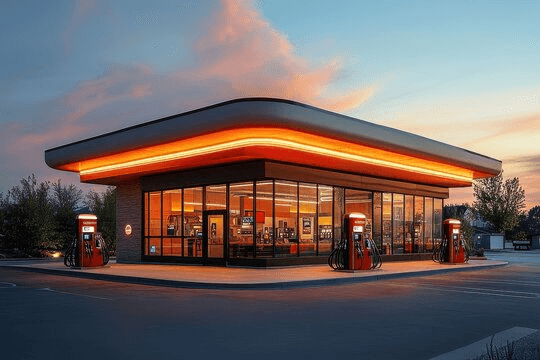
Here’s what makes c-store lighting uniquely challenging compared to other retail formats:
The occupancy curve is brutal. A highway gas station might see 200 customers between 6am-9am, 15 customers from 2pm-4pm, then spike again from 10pm-2am with late-night traffic. Meanwhile, your lighting bill doesn’t know the difference.
The fresh food section demands precision. Walk into any modern c-store and 30-40% of floor space is dedicated to prepared food—hot dogs, roller grill, deli items, fresh sandwiches. These displays require specific color temperatures (typically 3500-4000K for food appearance) to move product. But that same lighting melts chocolate bars in summer and looks institutional at midnight.
The security-to-customer-experience tension. Store owners need bright, well-lit environments for loss prevention. But 24/7 blazing fluorescence creates a clinical atmosphere that actively discourages the lingering, browsing behavior that increases basket size.
Traditional lighting systems force you to pick a middle ground that serves nobody optimally.
What AI Lighting Actually Changes
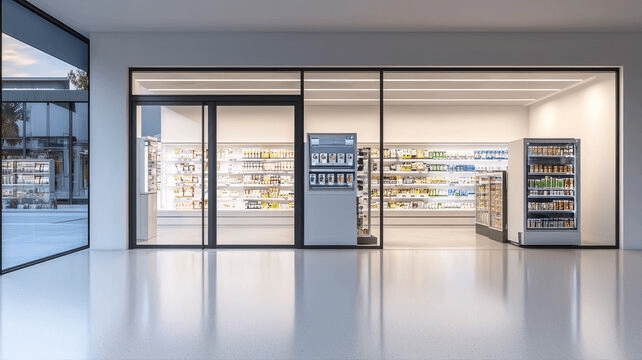
The shift to AI-controlled systems fundamentally alters the economics. In deployments I’ve consulted on, the ROI typically hits break-even at 18-24 months for a single location, with ongoing energy savings of 40-60% compared to legacy systems.
Here’s what that looks like in practice:
Occupancy-responsive zoning. Rather than whole-store dimming (which creates that unsettling “half the lights are dead” feeling), AI systems create micro-zones. When no one’s in aisle 3, those fixtures drop to 30% output—but the transition happens over 30 seconds, imperceptible to any customer. When motion sensors detect entry, that zone smoothly ramps to full brightness within 8 seconds.
Dynamic food zone management. AIcolor technology allows specific fixtures serving hot food displays to maintain optimal color rendering while the surrounding ambient lighting shifts throughout the day. Morning customers get warm, inviting tones. Afternoon fade periods operate at cooler, more energy-efficient outputs. Late-night environments can shift to softer lighting that reduces the “harsh fluorescent” perception without compromising visibility.
Scheduled intensity curves that match actual traffic patterns. Rather than manual time-of-day adjustments (which never get updated when traffic patterns change), AI systems learn your specific store’s occupancy patterns over 2-3 weeks, then automatically generate optimized lighting schedules.
The Energy Numbers Don’t Lie
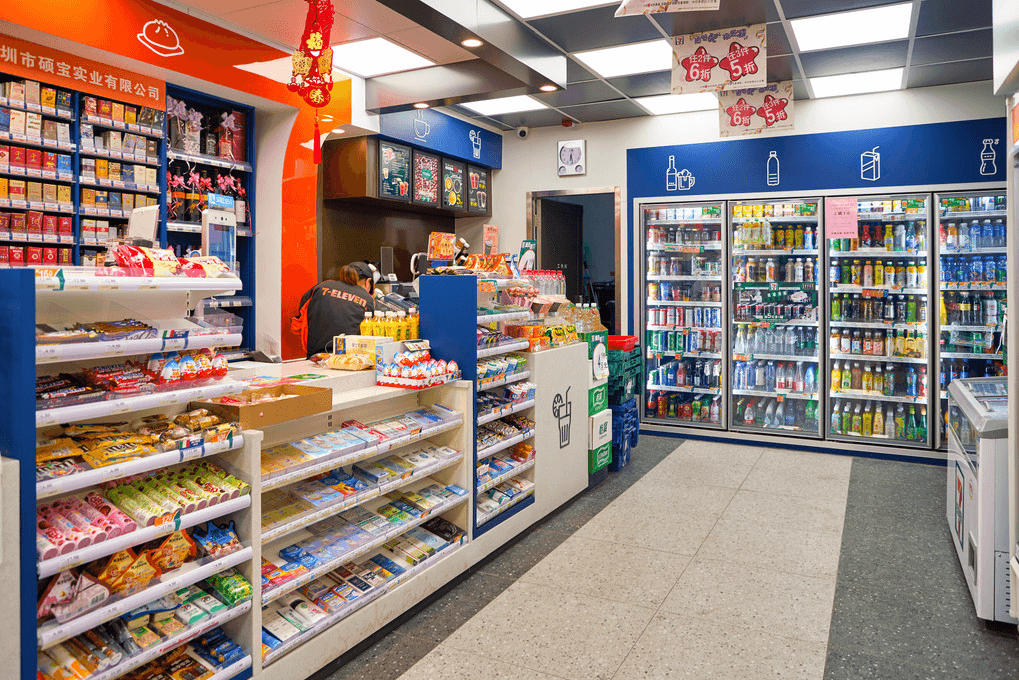
In a recent deployment at a 12-location chain operating across three climate zones, the actual measured data after 90 days of AI lighting deployment:
- Average daily energy consumption reduced from 142 kWh to 71 kWh per location
- HVAC load decreased by approximately 8% (less waste heat from lighting)
- Customer dwell time increased 14% (measured via foot traffic analytics)
- Hot food waste reduced by 11% (better display conditions, more accurate restocking)
- Zero maintenance calls related to lighting in the 90-day observation period
The maintenance angle is often underappreciated in c-store operations. These locations typically have minimal staff after hours. A fixture failure in a traditional system means either accepting degraded lighting (and potential safety liability) or paying emergency service call fees that can run $200-500 per visit in off-hours.
Smart LED fixtures with AI controls typically last 50,000-80,000 hours with no planned maintenance. The AI system’s self-diagnostics catch potential failures before they happen—often routing alerts to maintenance teams 48-72 hours before a fixture would fail.
Implementation Reality
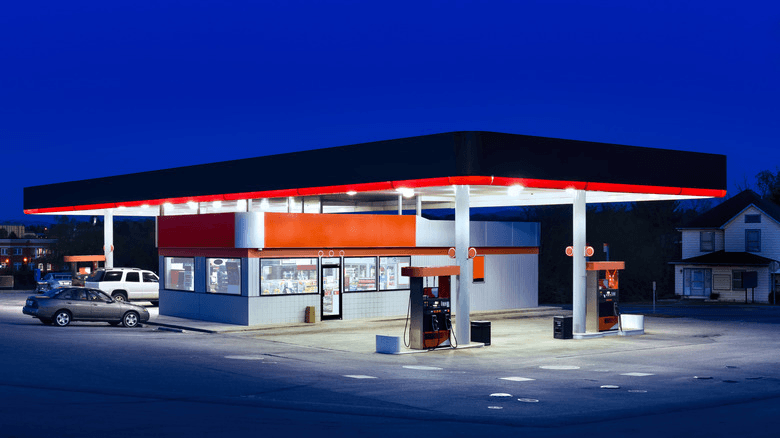
For existing stores, retrofitting a typical 3,000 sq ft c-store with AI-capable lighting runs $18,000-$28,000 depending on fixture quality and control system sophistication. That includes:
- 80-120 AI-capable LED fixtures ($8-12 per fixture for decent quality)
- BLE Mesh gateway and network infrastructure
- AI lighting controller with cloud connectivity
- Professional installation (typically 2-3 days for a single location)
Multi-location deployments see 15-25% cost reduction through volume purchasing and standardized installation procedures.
The most common failure mode I see in these projects isn’t the technology—it’s under-specification. Chains that buy the cheapest AI fixtures and skip professional commissioning often end up with systems that don’t actually deliver the promised savings because nobody calibrated the occupancy zones properly or integrated the food display lighting correctly.
For a business running 24/7, the lighting system is infrastructure. Treat it that way.
The Bottom Line
C-store operators face a strange paradox: they’re operating the most operationally complex retail format (24/7, food safety requirements, high theft exposure, extreme traffic variability) with some of the least sophisticated lighting technology in the industry.
AI lighting isn’t a luxury upgrade. For stores operating on 4-8% margins in competitive markets, the 40-60% energy savings alone represent meaningful impact to the bottom line. Add the customer experience improvements, reduced food waste, and eliminated emergency maintenance calls, and the ROI case becomes difficult to ignore.
The question isn’t whether AI lighting makes financial sense for your c-store operation. The question is how long you can afford to operate without it while your competitors figure that out.