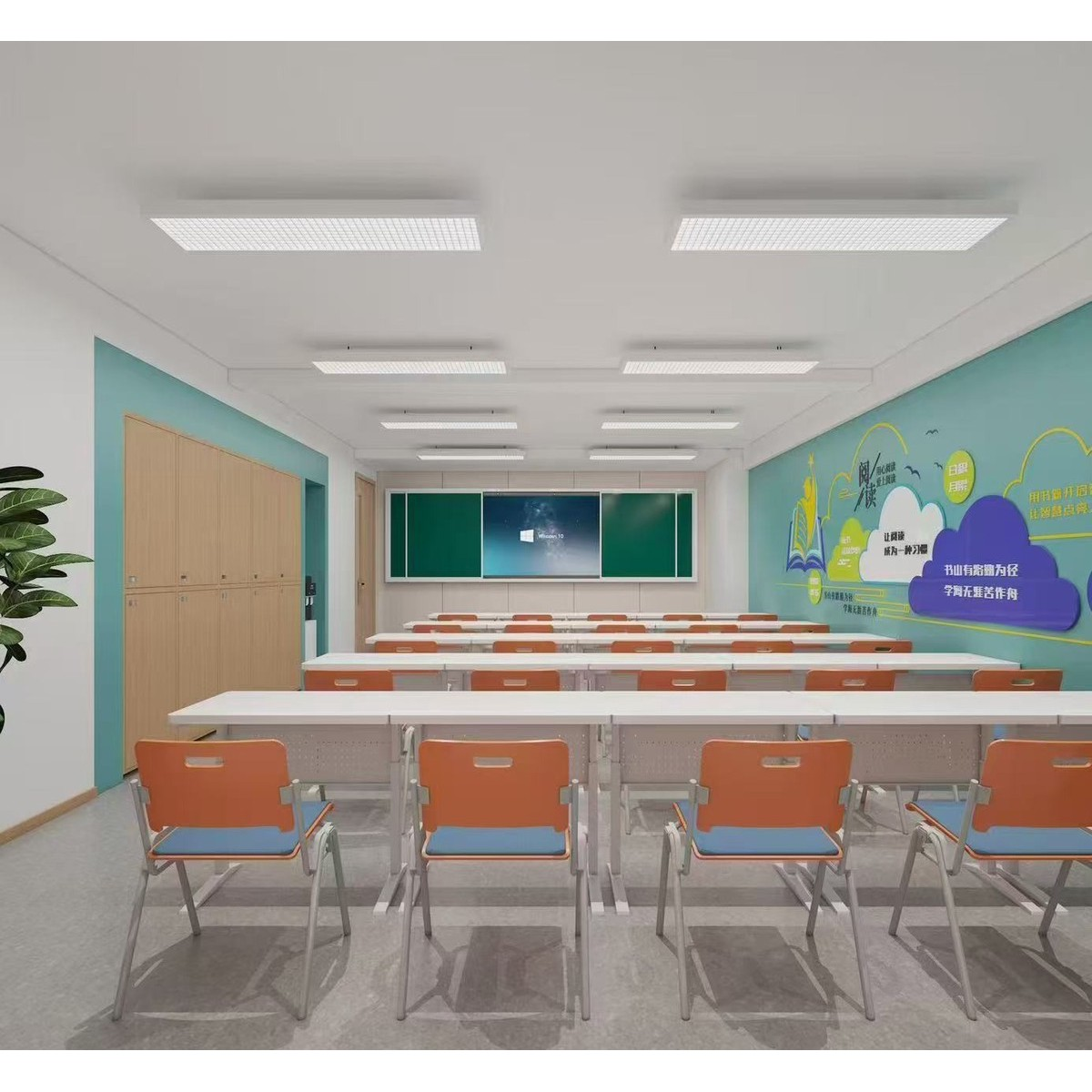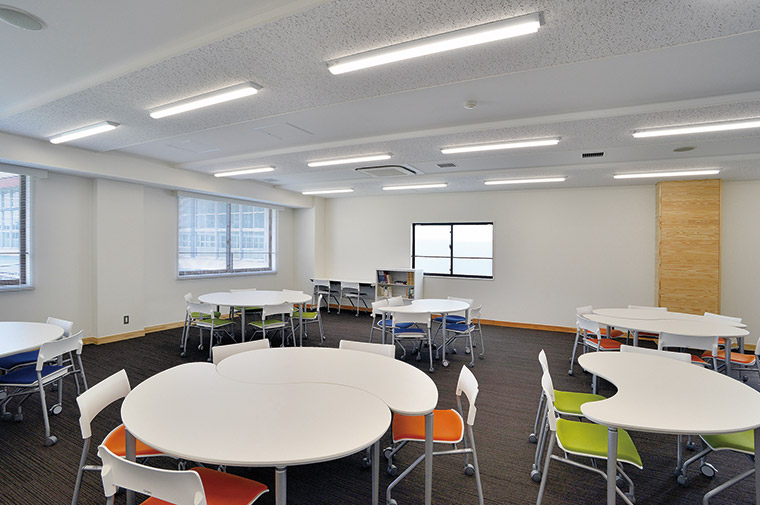
Walk into any K-12 school built before 2010 and you’ll find the same scene: flickering T8 tubes, hot-spots near windows, dark corners in older wings, and teachers who’ve learned to work around the lighting instead of with it.
The retrofit market is massive. Billions of dollars flow through federal programs like E-Rate and state-level energy efficiency initiatives. And yet, most school lighting projects I’ve evaluated over the years still miss the point entirely.
The Wrong Kind of “Upgrade”
Here’s what usually happens: a school district gets grant money, brings in a lighting contractor, swaps fluorescent tubes for LED equivalents, and calls it a day. The fixtures might be brighter. The energy bills might drop 30-40%.
But student focus? Teacher comfort? Learning outcomes?
Those don’t change. Because those weren’t the actual problems.
Lighting retrofit that’s only about energy efficiency is like buying a faster horse for a transportation problem. You’re optimizing the wrong variable.
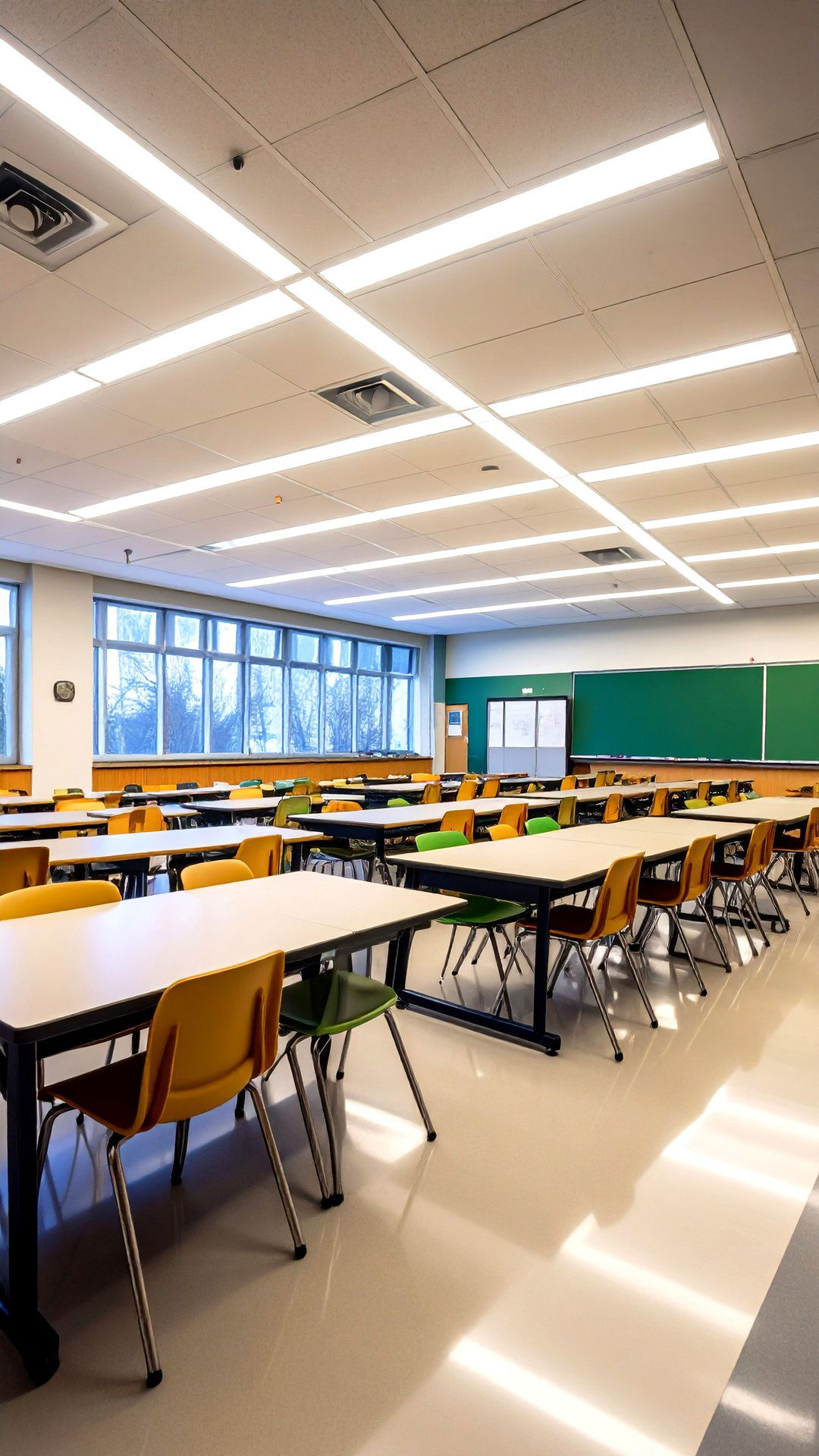
style=”margin-top:30px;margin-bottom:15px;color:#333;”>What Actually Moves the Needle
After reviewing dozens of school lighting installations—successful ones and cautionary tales—three factors consistently separate the projects that matter from the ones that just check boxes:
Factor 1: Circadian Design Over Lumens
The research on light and learning isn’t new. We’ve known for years that blue-wavelength light in the morning supports alertness and cognitive function, while warmer color temperatures in the afternoon support the wind-down period before dismissal.
What most retrofits miss: they’re specified by electricians who optimize for foot-candles on a work surface. That’s measurable. It’s also insufficient.
Effective school lighting considers:
- Morning light levels (cool white, 4000-5000K) during first and second period
- Afternoon color temperature transitions (warmer, 3000-3500K) in later periods
- Task-area flexibility (dimmable zones that let teachers adjust for different activities)
Factor 2: Glare Control Is Non-Negotiable
UGR (Unified Glare Rating) isn’t just an acronym for lighting engineers to argue about. In classroom environments, glare directly correlates with eye strain, headaches, and decreased attention span.
The problem with cheap LED retrofits: many use high-output diodes without proper diffusion. The foot-candle numbers look great on the specification sheet. The experience in the classroom is a wall of direct LED glare that makes students squint.
Good school lighting uses:
- Indirect lighting where possible (uplighting bounced off ceiling)
- Proper fixture shielding for direct-view applications
- Glossy surface management (whiteboards are glare amplifiers)
Factor 3: Maintenance Reality
This one gets overlooked constantly. Schools don’t have the maintenance staff or budgets that commercial buildings do. A fixture that’s technically “50,000 hours” but requires a lift to reach and two people to service isn’t a practical solution.
Look for:
- Tool-free maintenance access
- Modular components (driver replacement without fixture replacement)
- Standardized products across the district for simplified ordering
Real Numbers From Successful Projects
A middle school in Georgia replaced their fluorescent fixtures with properly-specified LED systems including circadian-aware controls. Key outcomes reported:
- 17% reduction in disciplinary incidents in the six months post-installation (correlated with improved student alertness in morning classes)
- 8% improvement in standardized test scores in math and reading (controversial attribution, but the correlation was noted by administration)
- 32% reduction in lighting energy costs
Is the lighting solely responsible for the behavioral and academic improvements? Almost certainly not. But the data tracks with what we’re seeing in facilities where lighting was treated as a learning environment variable rather than an energy cost center.
The Funding Trap
Here’s what I see repeatedly: school districts wait for grants before doing anything. Then, when grants arrive, they rush to spend the money before deadline to avoid losing it. The result is rushed specifications, lowest-bid contractors, and “good enough” solutions.
Smart approach:
- Conduct a lighting audit first—understand what problems you’re actually trying to solve
- Prioritize based on learning impact, not just energy savings
- Phase implementation if full funding isn’t available (classrooms first, common areas second, offices/administrative last)
- Build in controls training—the best fixtures installed wrong are worse than adequate fixtures installed right
The AI Lighting Opportunity
Smart lighting systems in schools are still early in adoption, but the trajectory is clear. AI-controlled systems can:
- Automatically adjust color temperature based on time of day and calendar schedules
- Respond to occupancy patterns (energy savings during unoccupied periods)
- Integrate with HVAC for holistic energy management
- Provide data on space utilization that informs future facility decisions
CAIMETA’s AI lighting platform was designed with commercial applications in mind—but the principles translate directly to educational environments where lighting quality directly affects the people using the space.
Bottom Line
School lighting is a learning environment investment, not just an infrastructure expense. The districts getting this right aren’t treating it as a utility cost to minimize. They’re treating it as a pedagogical tool.
The evidence is clear enough. What’s usually missing is the will to specify for quality over price.
CAIMETA delivers AI-powered smart lighting for educational facilities. Smart Light, Smarter Spaces.