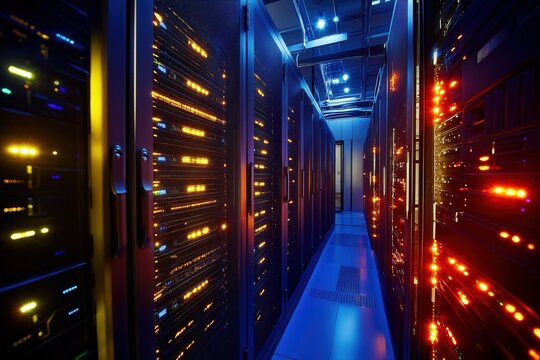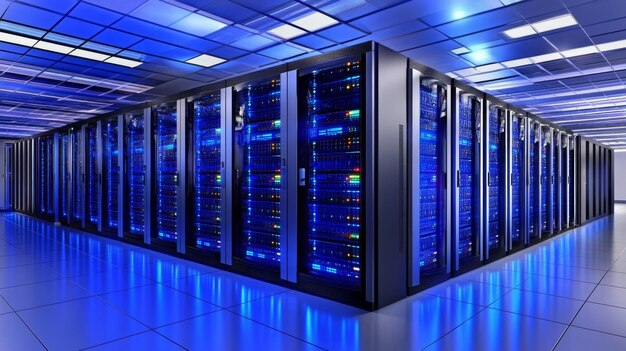
Data centers burn money. Not just electricity—though that’s the obvious one—but thermal management costs that eat 30-40% of operating budgets. The dirty secret nobody talks about: traditional lighting systems in server rooms are thermal liabilities disguised as infrastructure.
Here’s what I’ve learned from working with facility managers who’ve made the switch.
The Heat Problem Nobody Calculates
Standard T8 or T5 fluorescent tubes output roughly 20-25% of their energy as visible light. The rest? Infrared radiation and direct thermal load on the ambient temperature. In a 10,000 square foot data center running 24/7, you’re looking at hundreds of kilowatts of thermal load from lighting alone.
Add that to the heat output from servers (each 2U server rack can output 500-1500W of heat), and your cooling system is already fighting an uphill battle before you factor in external ambient temperature.
The math is brutal: Every watt of lighting efficiency gained translates to roughly 2-3 watts of cooling load reduction when you factor in chiller efficiency.
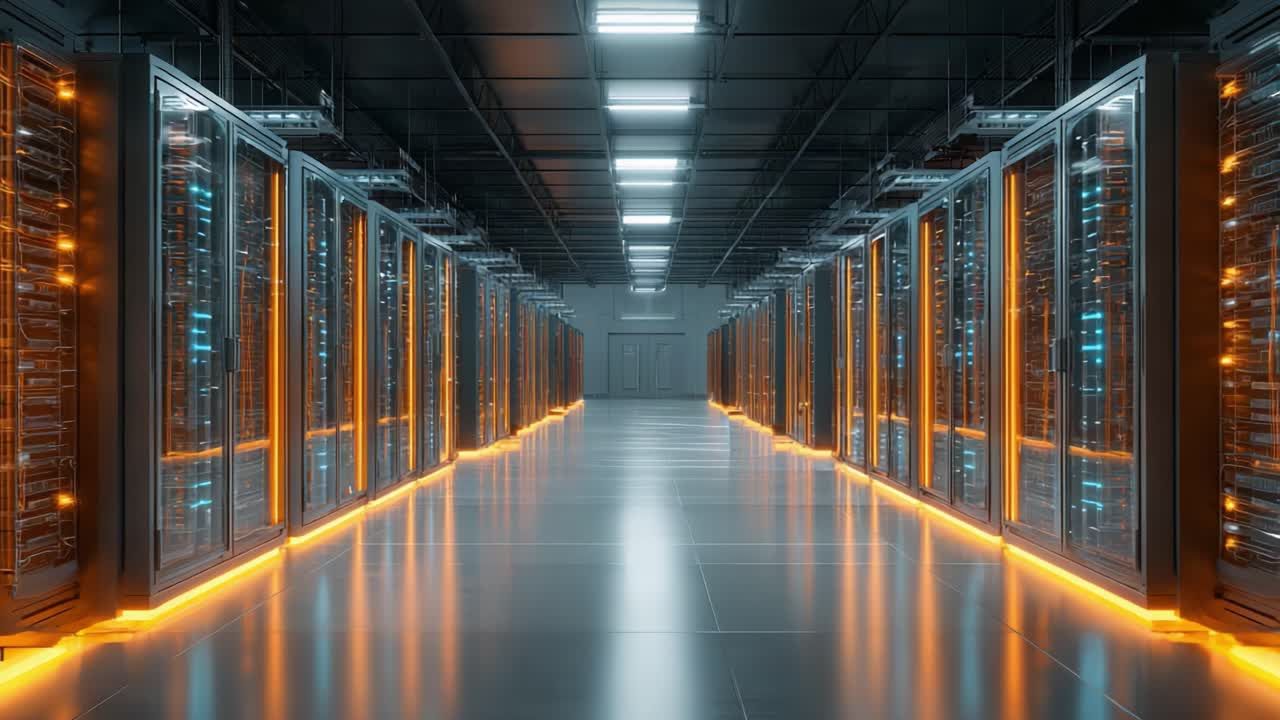
style=”margin-top:30px;margin-bottom:15px;color:#333;”>What AI-Enabled Lighting Actually Changes
This isn’t about dimming. It’s about spatial intelligence.
Modern AI lighting systems in data center environments work differently than you might expect:
1. Rack-level presence detection. Traditional motion sensors are binary—room occupied or not. AI systems can map thermal zones across server racks and modulate lighting based on actual human presence near specific cabinet rows. In most facilities, 60-70% of maintenance visits involve less than 5% of the floor space.
2. Thermal correlation. Some systems now integrate ambient temperature sensors and correlate lighting heat output with HVAC load in real-time. When server room temps spike during peak IT loads, the system automatically throttles non-essential lighting circuits to reduce thermal contribution.
3. Predictive maintenance patterns. AI learns when technicians typically access specific racks and pre-conditions lighting in those zones, reducing the number of full-power lighting activations during off-hours.
The ROI Nobody Advertises
Facility managers I’ve spoken with report the following:
- Energy reduction: 40-60% lower lighting electricity costs compared to traditional fluorescent setups
- Cooling savings: 8-15% reduction in HVAC runtime during shoulder seasons (spring/fall) when outdoor temps are favorable
- Maintenance reduction: LED fixtures rated for 50,000+ hours vs. 20,000 hours for fluorescents, with no mercury disposal concerns
The cooling synergy is where things get interesting. A facility in Phoenix retrofitted their lighting and saw their cooling setpoint shift from 68°F to 72°F without any increase in server intake temperatures—because the reduced thermal load from lighting made the difference.
Implementation Reality Check
Here’s what nobody tells you in the marketing materials:
Cable management matters more than you think. In existing facilities, running new low-voltage wiring for AI sensors can be more expensive than the fixtures themselves. Look for systems that work over existing POE infrastructure or leverage wireless mesh (BLE mesh is common in these deployments).
Commissioning takes time. Unlike flipping a switch on LED conversion, AI lighting systems require tuning. Thermal zones need mapping, presence detection thresholds need adjustment, and integration with BMS (Building Management Systems) requires coordination with multiple vendors.
The ROI timeline is real but not instant. Most facilities see payback within 18-36 months when you factor in energy savings, reduced maintenance, and cooling efficiency gains. The thermal correlation benefits often show up in year two or three as the AI system “learns” your facility’s patterns.
What This Means for Your Next Data Center Project
If you’re planning a new data center or significant retrofit, treat lighting as thermal infrastructure, not just illumination. The decisions you make in the lighting design phase will affect cooling costs for the building’s lifetime.
CAIMETA’s approach to commercial AI lighting integrates thermal load management into the control strategy—something that separates professional-grade systems from consumer products being inappropriately deployed in mission-critical environments.
The data center industry is moving toward liquid cooling and direct-to-chip thermal management. Smart lighting isn’t going to solve the heat problem entirely. But in the meantime, it’s one of the highest-ROI investments you can make for facilities still running air-cooled infrastructure.
CAIMETA delivers AI-powered commercial lighting solutions with integrated thermal management for data centers, warehouses, and industrial facilities. Smart Light, Smarter Spaces.