
The Croissant That Looked Like a Dinner Roll
Walk into any bakery in Paris at 7 AM and you’ll notice something: every single pastry looks like it was photographed for a magazine. The croissants are golden. The fruit tarts glisten. The baguettes have that crusty, just-baked warmth that makes you reach for your wallet before your brain catches up.
Now walk into a bakery in most other cities. Same products, same recipes, same oven. But the croissants look pale. The display case makes everything blend into one beige mass. Customers walk in, glance around, and leave without buying. They’ll tell you “nothing looked fresh.” Nothing changed about the bread. The lighting did all the work.
Here’s what most bakery owners don’t realize: lighting is the single biggest factor in whether a customer perceives your products as fresh or stale — and it’s almost never the variable they invest in.
Why 90% of Bakeries Get Their Lighting Wrong
The default approach is brutal in its simplicity: install bright white LED panels everywhere, max out the lumens, call it a day. The result? A space that looks like a convenience store. Every product is uniformly lit, which means nothing stands out. The warm, inviting quality that makes a bakery feel artisanal gets replaced by clinical harshness.
The core mistake is color temperature. Most bakeries run 5000K–6000K cool white LEDs because they “show everything clearly.” But baked goods — bread, pastries, cakes — were never meant to be viewed under daylight-balanced light. They were designed by ovens operating at warm tones. When you hit a croissant with 5000K light, you flatten its golden crust into something that reads as “dried out” to the human eye.
The sweet spot for bakery lighting is 2700K–3000K. This warm range matches how bread actually looks coming out of the oven. It enhances the Maillard reaction colors — the browns, golds, and caramels — that our brains associate with freshness.
But temperature is only the first layer.
The Three-Zone Framework That Actually Moves Product
After studying dozens of bakery layouts, a pattern emerges. The stores that consistently outperform their neighbors break their lighting into three distinct zones, each with a different job:
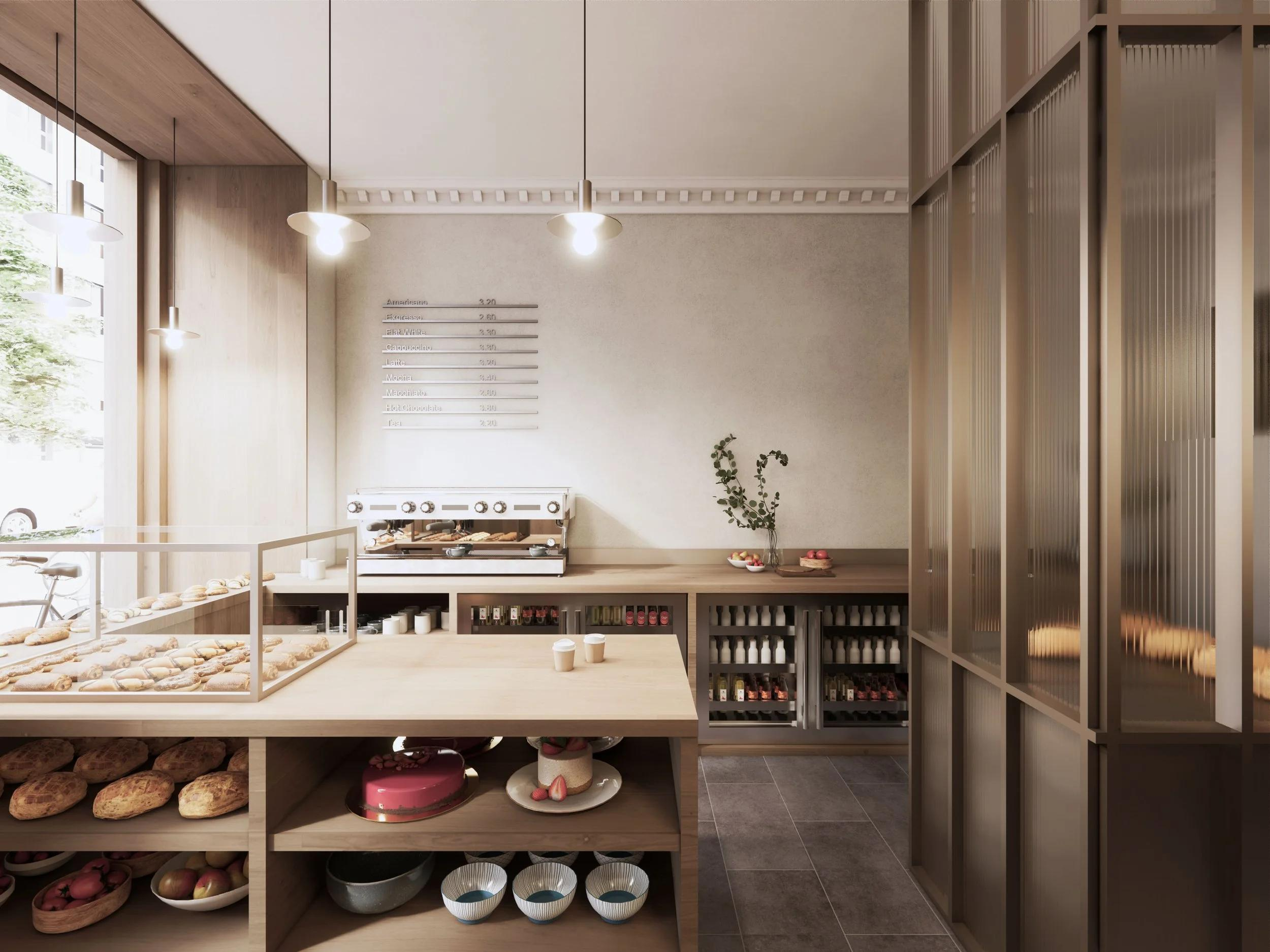
Zone 1: The Display Case (3000K, CRI 95+, directional)
This is where the money is made. Glass display cases need targeted lighting — not ambient wash from ceiling panels. The goal is to make each product look individually lit, like a jewel in a case. High CRI (Color Rendering Index) is non-negotiable here. At CRI 95+, customers see the actual color of a raspberry tart, not a washed-out approximation.
The angle matters too. Light coming straight down from above creates shadows in the customer’s line of sight. Tilting fixtures 15–30 degrees toward the glass puts the light exactly where the product faces the buyer.
One patisserie in Lyon reported a 23% increase in display case sales after switching from 4000K LED strips to 3000K directional spots with CRI 97. Same products. Different light. Different register totals.
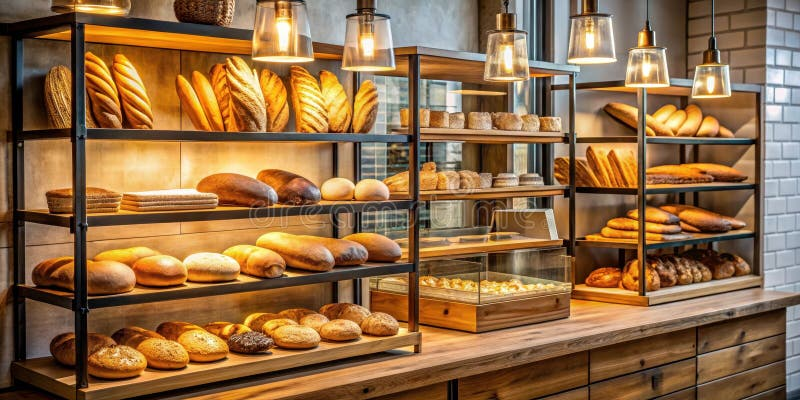
Zone 2: The Shelf Wall (2700K, CRI 90+, even wash)
Open shelving with bread loaves, packaged goods, and baskets needs softer, more even illumination. This is ambient warmth — the glow that makes the entire wall feel inviting. Track fixtures with warm LED modules or integrated shelf lighting work well here.
The key is consistency. Every shelf level should receive similar illumination. Dark spots on the bottom shelf suggest “old stock” even when the bread was baked an hour ago.
Zone 3: The Counter & Transaction Area (3000K, dimmable)
The checkout counter is where the final decision happens. A customer carrying a single croissant should feel the space is warm and welcoming — not like they’re under interrogation. Dimmable warm fixtures at 2700K–3000K keep the mood relaxed.
This is also where impulse purchases live. A well-lit pastry case next to the register, with focused 3000K spots, routinely generates 15–20% of total counter-sale revenue.
The Problem With Static Lighting in a Dynamic Business
Here’s where it gets interesting. A bakery’s lighting needs change throughout the day:
- Morning (6 AM – 10 AM): Full brightness, 3000K. Fresh bread is the star. Every surface should glow.
- Midday (10 AM – 2 PM): Shift to 2800K, slightly reduced intensity. Coffee and lunch crowd takes over. The mood transitions from “bakery” to “café.”
- Afternoon (2 PM – 6 PM): 2700K, further dimmed. Remaining stock needs to look fresh, but the space should feel like a relaxed afternoon stop, not a morning rush.
- Evening (if open past 6 PM): 2700K, low intensity. Warm, intimate. Wine-and-cheese territory.
Most bakeries have one setting: “on.” They run the same bright, cool light from open to close. The morning energy is there, but by 3 PM the space feels flat and sterile. Customers notice, even if they can’t articulate why.
This is where adaptive lighting systems start making a serious business case. With AI-driven scene control, a bakery can preset those four time-of-day modes and let the system handle transitions automatically. The CAIMETA AIscene system, for instance, lets operators define lighting scenarios per time block — adjusting both color temperature and intensity across zones without manual dimmer switches.
One multi-location bakery chain in the Netherlands reported that after implementing time-based lighting scenes, their afternoon sales (2–6 PM window) increased by 18%. The same staff, same products, same prices. The environment simply felt different enough to keep people browsing longer and buying more.
The ROI Nobody Talks About: Energy Costs
Warm LED lighting at proper intensity levels uses significantly less energy than the “maximum brightness” approach. Dropping from 600 lux to 350 lux in non-critical zones while improving perceived brightness through better color rendering? That’s a 30–40% reduction in lighting energy consumption.
A typical 120 sqm bakery running 50W LED panels for 14 hours/day spends roughly €2,800/year on lighting electricity. A properly zoned system with targeted fixtures and dimming runs the same or better visual experience at around €1,700/year. The lighting upgrade pays for itself in under two years through energy savings alone — before counting the sales lift.
What This Means for Bakery Operators
If you’re running a bakery and your lighting was an afterthought, you’re leaving money on the table. The fix isn’t expensive — it’s strategic:
- Audit your current color temperature. If your lights are 4000K or above, your bread looks worse than it is. Switching to 2700K–3000K is the single highest-ROI change you can make.
- Invest in CRI. Display case fixtures at CRI 95+ cost more upfront but directly impact perceived freshness.
- Zone your space. Three zones, different intensities, different purposes. Don’t treat the whole shop as one lighting area.
- Automate the transitions. Morning, midday, afternoon, evening — each should feel different. Smart scene controls make this effortless.
The bakery that looks better under the right light sells more. It’s not magic. It’s photons hitting product surfaces at the right wavelength and bouncing into the customer’s retina in a way that says “fresh.”
Stop lighting your bakery like a supermarket. Start lighting it like the artisan craft it is.