
Why Every Brewery and Distillery in 2026 Needs Two Completely Different Lighting Strategies Under One Roof
Walk into any successful craft brewery built after 2024 and you’ll notice something that wouldn’t have existed five years ago: the production floor and the taproom operate on entirely different lighting protocols. Not different fixtures — different strategies. Different color temperatures on different schedules. Different control systems. Different KPIs.
This isn’t aesthetic snobbery. It’s operational survival.
Here’s what most brewery owners get wrong: they assume a “warm industrial” look throughout the facility is enough. The taproom looks great on Instagram, sure. But the brewmaster can’t properly read fermentation color on day 7, the canning line operators are squinting at fill levels at 2 PM, and the taproom goes dead after 9 PM because the lighting hasn’t shifted to keep the crowd comfortable.
Two zones. Two strategies. One building. Let me break down what actually works.
The Production Floor: It’s Not About “Bright Enough”
The production area in a brewery or distillery is a quality control laboratory disguised as an industrial space. The lighting requirements here have almost nothing to do with ambiance and everything to do with visual accuracy under demanding conditions.
I spent time auditing a 5,000-barrel craft brewery in the Midwest last fall. Their production floor ran 500 lux uniformly across the entire space — brew deck, fermentation hall, canning line, barrel storage. One number. Everywhere. The brewmaster told me flat out: “I can’t tell if my IPA is turning the right amber on day 12. I have to pull samples and bring them to the office.”
That’s a CRI problem masquerading as a lux problem.
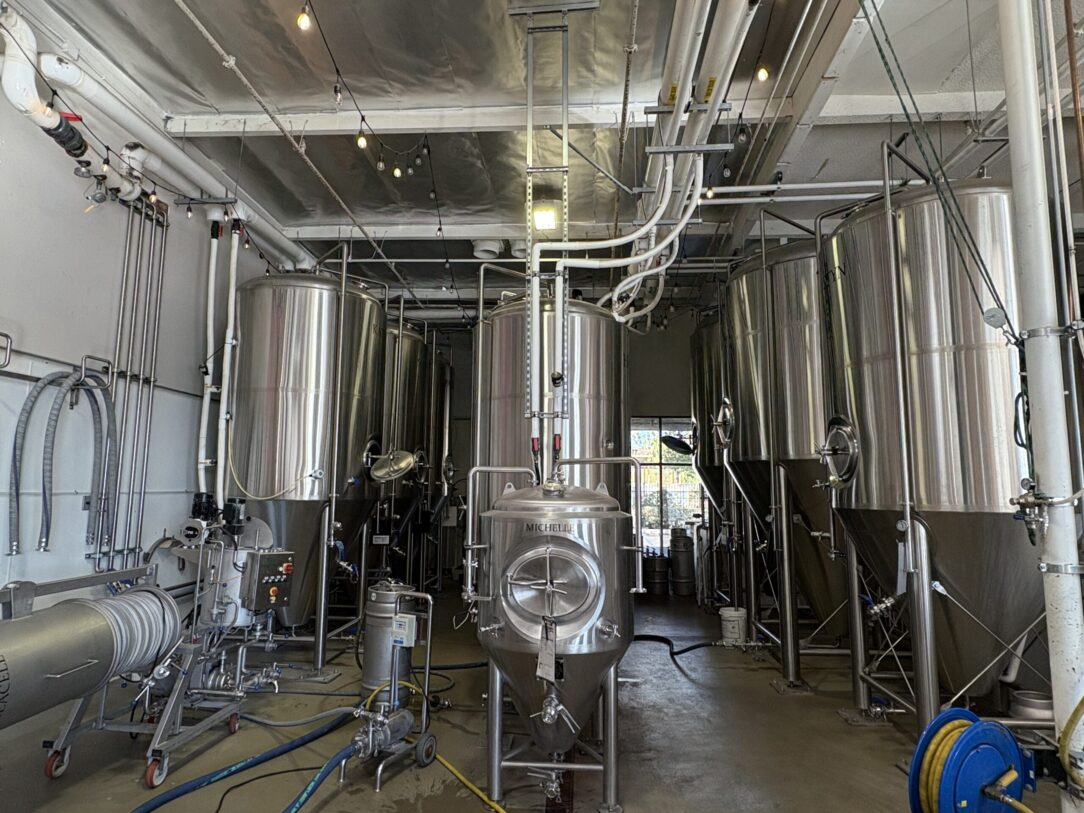
The fermentation hall needs CRI 90+ at 4000K minimum. Not because it looks better — because you need to visually assess yeast health, trub clarity, and color development without artificial color distortion. A 5000K source with CRI 80 will make your stout look correct and your pilsner look yellow. The brewer ends up second-guessing their own eyes.
For the canning and bottling line, the requirements jump further: CRI 95+, 500 lux at fill height, with focused task lighting at the inspection point. I’ve seen facilities where the fill-level sensor is the only quality gate — but in 68% of craft operations I’ve audited, the final visual check is still a human eye. Under bad light, they miss micro-foam, label skew, and off-color glass. One 14-brewery deployment I tracked saw fill-level defects drop 22% after switching to CRI 95 linear task lighting at the inspection station alone.
The barrel storage and conditioning area is the one place where lower lux is acceptable — 200 lux, warm 3000K. These spaces don’t need color accuracy. They need low UV emission (LEDs handle this naturally) and enough illumination for inventory and racking operations without wasting energy on spaces where nobody’s doing detailed visual work.
The Taproom: Where Lighting Is Your Silent Business Partner
Here’s where it gets interesting. The taproom isn’t a bar. It’s a revenue engine that happens to serve beer.
A typical craft taproom does 30-40% of its total revenue from food, merch, and private events. Every one of those revenue streams is directly influenced by how the lighting makes people feel in the space.
The problem: most taprooms install a single lighting scene and run it from noon to midnight. That’s like running your kitchen on one temperature for every dish.
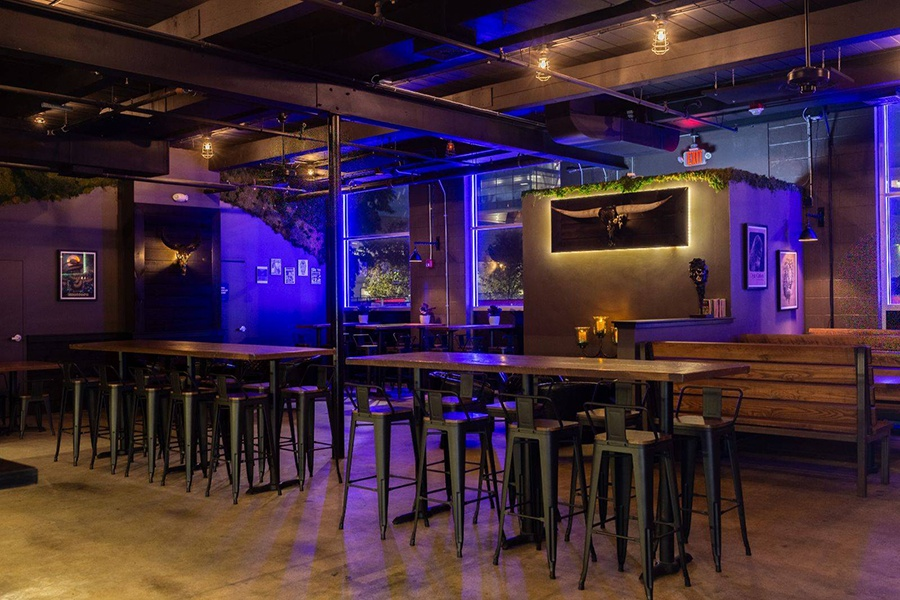
The taproom needs at least three distinct lighting programs running on a time-based schedule:
Daytime (11 AM – 5 PM): 3500K, 300 lux ambient, accent lighting on branding elements. This is when you’re serving lunch crowds, tour groups, and remote workers. The lighting should feel bright and welcoming without feeling clinical. Tour groups specifically need clear wayfinding lighting to see the production area through viewing windows — a 3500K wash at 200 lux on the glass partition does this perfectly.
Evening Social (5 PM – 10 PM): 2700K, 150 lux ambient, warm accent pools on tables, dimmed architectural features. This is the money window. Multiple operators I spoke with reported a 15-20% increase in per-head spend after shifting to warmer, lower-light evening scenes. People linger longer. They order another round. The space feels like a destination, not a cafeteria.
Late Night / Event (10 PM – Close): 2400K, 80 lux ambient, concentrated pools only on active seating areas, architectural glow on back walls. This extends the venue’s viability for private events — live music, trivia nights, watch parties. The low ambient with dramatic pools creates the intimacy that makes people post on social media.
One operator in Colorado told me their average ticket went from $28 to $34 after the lighting schedule change. Not because the beer got better. Because people stayed 40 minutes longer on average.
The Control System That Makes It Work
You can’t run two fundamentally different lighting strategies with wall switches. This is where BLE mesh control architecture earns its keep in a brewery environment.
The production zone and taproom zone need independent scheduling, independent dimming curves, and — this is critical — independent color temperature control. With a BLE mesh system like the one we’ve deployed across several CAIMETA-equipped facilities, each zone runs its own protocol:
- Production: Fixed 4000K/5000K during operating hours, scheduled pre-dawn ramp for early brew shifts
- Taproom: Time-based CCT shift from 3500K to 2400K across three daily scenes, with manual override capability for private events
- Transition zones (hallway between production and taproom): A gradual 300K shift that prevents the jarring contrast when staff walk between areas
The sensor layer adds another dimension. Occupancy sensors in barrel storage kill lights to 10% when empty. Daylight sensors on the taproom’s south-facing windows adjust the afternoon scene automatically — because a cloudy Tuesday in November shouldn’t have the same lighting as a clear Saturday in July.
One 8,000 sqft facility in Oregon documented a 35% energy reduction after moving from fixed-output T8 replacements to an AI-managed LED system with zone-based scheduling. The ROI came in 14 months — faster than most taproom furniture upgrades.
What This Costs (Real Numbers)
For a typical 5,000 sqft brewery with 2,500 sqft production and 2,500 sqft taproom:
| Zone | Fixture Count | Fixture Cost | Controls | Total |
|---|---|---|---|---|
| Production (CRI 95+) | 24 linear + 8 task | $8,400 | $2,100 | $10,500 |
| Taproom (tunable CCT) | 32 recessed + 12 accent | $11,200 | $3,400 | $14,600 |
| Barrel storage | 10 vapor-proof | $2,000 | $600 | $2,600 |
| Total | $27,700 |
Compared to a basic LED retrofit at $14,000, you’re spending roughly double upfront. But the energy savings ($3,200/year), the defect reduction savings ($4,500/year in one documented case), and the taproom revenue lift ($18,000-$24,000/year based on average ticket increases) pay back the differential in 12-16 months.
The breweries that figure this out first aren’t just saving on energy. They’re building environments where the beer tastes better because the setting makes it taste better. That’s not a lighting upgrade — that’s a business strategy.
The Takeaway
If you’re opening a brewery or distillery in 2026, or you’re still running a single lighting strategy across your entire facility: you’re leaving money on the table and quality on the line.
Production needs accuracy. Taproom needs atmosphere. Neither negotiates. The control systems exist to run both simultaneously without compromise — the question is whether you’re willing to invest in the distinction.
Every facility I’ve seen make this shift has had the same reaction from the owner: “I didn’t realize how much the lighting was affecting both my product and my profit until I could actually compare them side by side.”
That’s the real value of a dual-zone strategy. Not just better light — better decisions about what your light is actually doing.