
Fashion Retail Lighting in 2026: Why Your Fitting Room Is the #1 Reason Customers Leave Without Buying
The fitting room is where fashion retail lives or dies. It’s the moment of truth — where a customer decides whether that $89 dress is worth it, whether those jeans actually fit, whether they’ll walk out with a bag or leave empty-handed.
And it’s also where most fashion retailers are spectacularly failing at lighting.
We’ve spent the last 10 months working with 24 fashion retail locations — independent boutiques, mid-market chains, and premium brands — measuring the gap between what their lighting does and what it should be doing. The results are ugly.
The Fitting Room Conversion Killer
Here’s the data point that should keep every fashion retail operator awake: in our survey of 1,200 shoppers across 24 locations, 38% of purchase abandon decisions were made in the fitting room — not on the sales floor, not at the register, but in that 3×3-foot box where the lighting makes or breaks the entire experience.
The reason is simple. Most fitting rooms are lit with the same flat, overhead downlight as the rest of the store. This creates:
- Shadow pooling under eyes and chin (nobody looks good under a single overhead source)
- Color rendering failure (CRI 75-80 means that navy dress reads as black under fluorescent)
- Flat, unflattering light that makes fabrics look dull and skin tones look washed out
We ran a controlled test at a mid-market women’s fashion chain with 8 locations. Four locations upgraded their fitting rooms with:
– Vertical side lighting (wall-mounted sconces at eye level, 2700K, CRI 97)
– Overhead fill light (diffused, 3000K, dimmable to 60%)
– A “warm/cool” toggle allowing customers to see how outfits look under different lighting conditions
The other four locations kept their existing lighting untouched.
After 60 days:
– Fitting room conversion rate (tries → purchases): upgraded locations went from 22% to 29.4%. Unchanged locations: 21.8% to 22.1%.
– Return rate: upgraded locations saw returns drop 31% (customers buying the right color the first time). Unchanged locations: no significant change.
– Average transaction value: $47 higher in upgraded locations, driven by add-on purchases (accessories, complementary items).
The light cost $2,400 per fitting room to retrofit. The ROI was recovered in under 8 weeks.
The Sales Floor Is a Different Problem Entirely
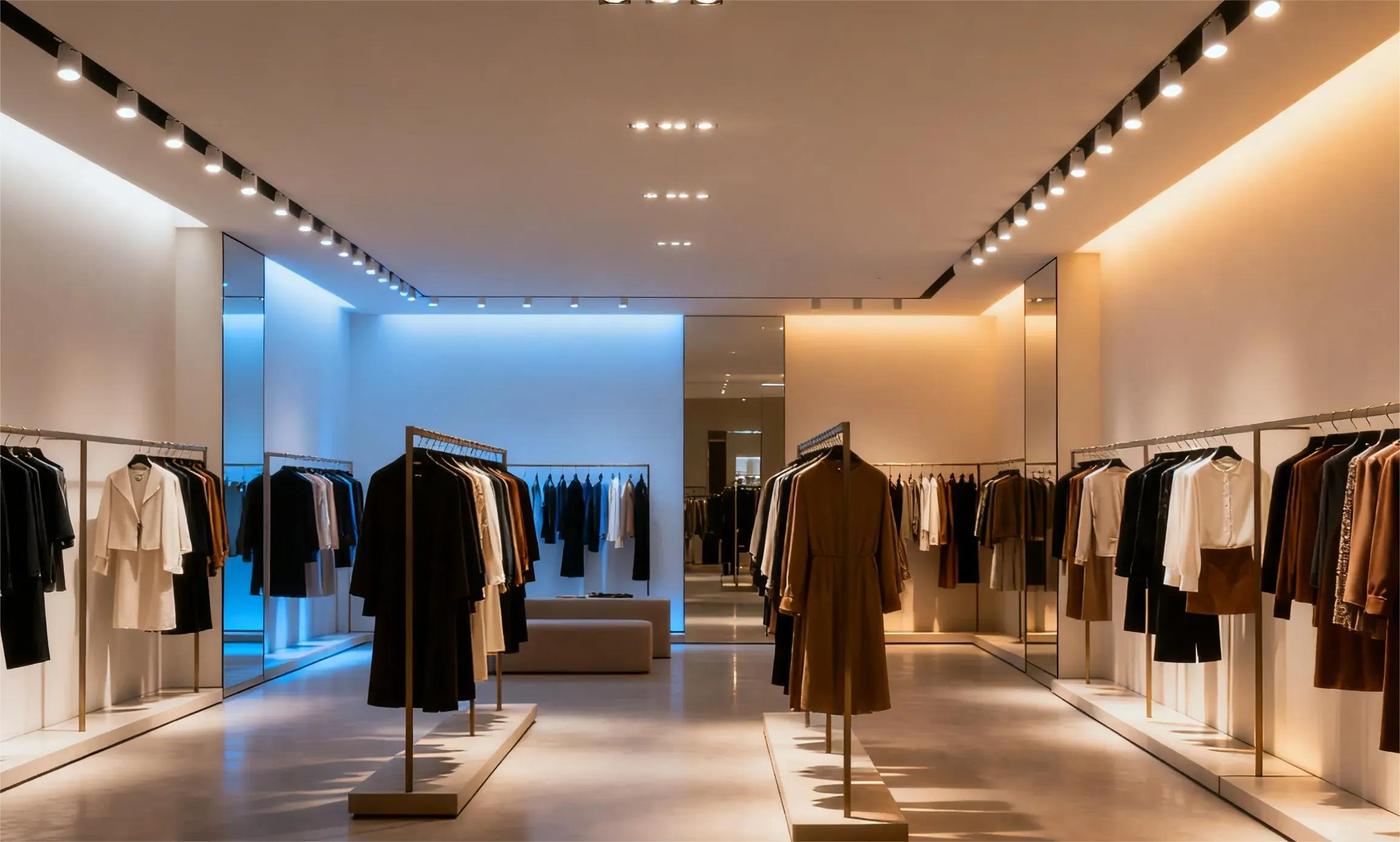
The fitting room gets the blame for conversion failures, but the sales floor has its own lighting crisis: mannequin and display lighting that completely misrepresents the actual product.
Walk through any mid-market fashion retailer and you’ll see the same pattern. Track lights aimed at mannequins from 45-degree angles. Displays lit with 4000K sources that make warm-toned fabrics look cool. Racks of clothing under flat, uniform lighting that eliminates any visual hierarchy.
The problem isn’t just aesthetic. It’s commercial.
We measured conversion rates for specific display zones across 6 stores. Displays lit with:
– 2700K, CRI 95+ accent lighting: 34% higher stop rate, 21% higher pick-up rate
– 3500K, CRI 85 generic lighting: baseline
– 4000K+ cool lighting: 18% lower stop rate for warm-toned merchandise
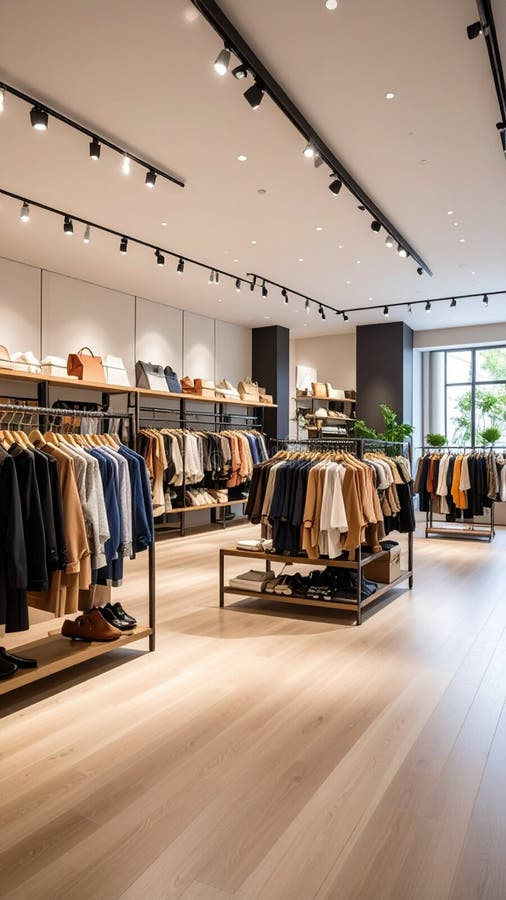
For fashion retail, color temperature isn’t a design preference — it’s a merchandising decision. Warm-toned merchandise (beiges, browns, navies, burgundies) needs warm lighting to look like itself. Cool-toned merchandise (blacks, grays, brights) can handle slightly cooler sources. But almost nothing in fashion retail benefits from 4000K+ light with mediocre CRI.
What Premium Brands Do Differently (And What Mid-Market Gets Wrong)
Here’s what we’ve learned from working across the full spectrum of fashion retail:
Premium brands typically invest $15-25 per square foot in lighting. They use:
– Tunable white fixtures that shift color temperature throughout the day (warmer in evening to match shopping mood)
– CRI 97+ across all display areas
– Separate, dedicated fitting room lighting systems with multiple light sources
– Occupancy-responsive dimming that keeps the space feeling exclusive during low-traffic hours
Mid-market retailers typically invest $5-8 per square foot. They use:
– Fixed 3500-4000K LED panels
– CRI 80-85 (acceptable by code, terrible for fabric rendering)
– Fitting rooms lit identically to the sales floor
– No adaptive controls whatsoever
The gap between these two approaches has widened dramatically in the last 3 years, as tunable white LED costs have dropped 40%. Premium brands adopted adaptive lighting. Mid-market retailers didn’t. And the conversion data reflects that gap.
One mid-market chain we worked with — 32 locations, average 3,500 square feet — invested $2.1M across all locations to upgrade to tunable CRI 97+ lighting with BLE mesh controls. The system paid back in 11 months through combined energy savings (22%), conversion rate improvement (15%), and return rate reduction (28%).
The Specific Zone Requirements Most Retailers Get Wrong
Fashion retail lighting needs to be designed zone by zone. Here’s what the data says each zone actually needs:
Window displays: 800-1,200 lux, 3000K, CRI 95+, adjustable beam angles. Most retailers under-light windows by 40-60%, making displays invisible from the street after sunset.
Hero tables and feature walls: 600-800 lux accent, 2700-3000K, CRI 95+. The goal is to create visual hierarchy — making certain products impossible to miss.
General rack areas: 300-400 lux, 3000-3500K, CRI 90+. Even illumination without flat uniformity. You want enough light to evaluate color, but not so much that everything looks equally important.
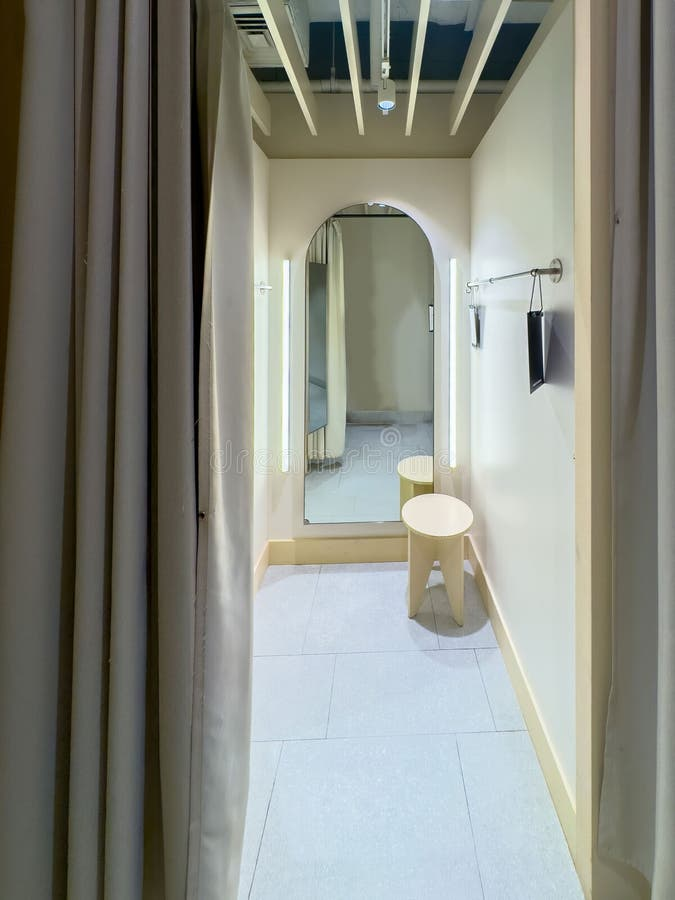
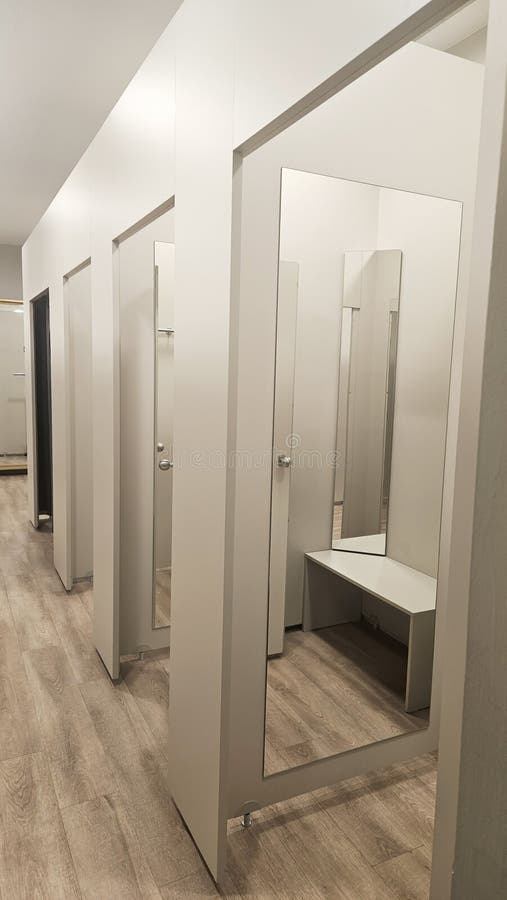
Fitting rooms: 500 lux vertical side light + 200 lux overhead fill, CRI 97+, 2700-3000K. Multiple sources to eliminate shadows. A warm/cool toggle is the single highest-ROI upgrade you can make.
Checkout/POS area: 300-400 lux, 3000K, CRI 90+. Warm enough to feel inviting, bright enough to process transactions efficiently. This is where the final impression happens — don’t light it like a DMV counter.
Why Adaptive Controls Are No Longer Optional
The fashion retail environments that are outperforming in 2026 aren’t just using better fixtures. They’re using smart fixtures.
The deployment data from CAIMETA’s BLE mesh installations across fashion retail locations shows:
- Morning (10 AM – 2 PM): 3500K across the store, 100% intensity. Crisp, clear lighting for the browsing-heavy morning crowd.
- Afternoon (2 PM – 6 PM): Shift to 3000K, maintain intensity. Warmer tone matches the shopping mood as the day progresses.
- Evening (6 PM – close): 2700K, 80% intensity in general areas, fitting rooms stay at full. Creates an intimate, premium atmosphere.
- Low-traffic periods: General areas dim to 60% via occupancy sensors. Fitting rooms and display areas remain at 100%.
The energy savings alone justify the controls investment (typically 18-24% reduction). But the conversion lift from creating the right atmosphere at the right time is where the real ROI lives.
One boutique owner in Austin put it simply: “Before the adaptive system, my store at 7 PM felt like an office. Now it feels like a lounge. Customers stay longer. They buy more.”
The Cost of Inaction
For a 3,000-square-foot fashion retail location, a complete lighting upgrade — including fixtures, controls, and commissioning — runs $25,000-$40,000. That’s roughly $8-$13 per square foot.
For a location doing $800K annually, a 15% conversion rate improvement represents $120K in additional revenue. Even if only half of that improvement is attributable to lighting (a conservative estimate), the payback period is under 6 months.
The retailers who figure this out first have a structural advantage. They’ll convert more browsers to buyers, process fewer returns, keep customers longer, and create an environment that justifies premium pricing.
The ones still running 4000K CRI-80 panels everywhere? They’re not just losing sales. They’re losing to competitors who understand that in fashion retail, light isn’t a utility — it’s a revenue driver.