
Pet Store Lighting in 2026: Why Your Animals Are Stressed and Your Customers Feel It Too
Walk into most pet stores today and you’ll notice something immediately: the animals look anxious, the products look generic, and customers don’t stay long. The problem rarely gets traced back to where it belongs — the lighting.
I’ve spent the last eighteen months consulting on pet retail environments across Southeast Asia and Europe, and the pattern is painfully consistent. Store owners invest heavily in fixtures, live animal displays, and premium shelving, then illuminate the entire space with the same 5000K flat-panel LEDs they’d use in a warehouse. The result? Stressed animals that bite or hide, product displays that look clinical, and a shopping experience that feels more like visiting a veterinarian’s waiting room than browsing for a beloved companion’s next favorite toy.
The Animal Stress Problem Nobody Quantifies
Dogs and cats process light differently than humans. Canines have dichromatic vision — they see blues and yellows but struggle with reds. Cats are even more light-sensitive, with a tapetum lucidum that amplifies low-light conditions by a factor of six. Both species detect flicker at frequencies that humans simply cannot perceive.
Here’s what that means in practice: a standard LED panel running at 120Hz flicker frequency appears as a strobe light to a cat. That cat isn’t being difficult. It’s experiencing continuous visual disruption. The behavioral signs — pacing, excessive grooming, refusal to eat, hiding — are often misattributed to temperament or health issues when the root cause is environmental lighting.
One pet retail chain in the Netherlands ran a six-month comparison study. They switched their small animal section from conventional T8 fluorescents (36W, 4000K, 100Hz electronic ballast) to flicker-free LED panels with tunable color temperature (3000K–4000K range). Within three weeks, stress-related behaviors in rabbits dropped by 62%. Hamster nighttime activity normalized. Guinea pigs began approaching the front of enclosures during business hours instead of burrowing.
The store’s sales data told an equally compelling story. Customers spent an average of 4.2 additional minutes in the small animal section after the lighting change. Small animal supply purchases increased 18% quarter-over-quarter.
The Three-Zone Lighting Framework
After testing dozens of configurations, I’ve settled on a three-zone approach that consistently outperforms the “one temperature for the whole store” method.
Zone 1 — Animal Housing Area (2700K–3000K, 200–300 lux)
This is where most stores get it catastrophically wrong. The instinct is to blast light into enclosures so customers can see the animals. That instinct is backwards. Animals need a low-stress base environment with warm, dim illumination. Customer viewing should be facilitated by localized accent lighting — narrow-beam spots at 3200K positioned above each enclosure, not overhead general lighting.
The critical specification here is flicker-free drivers. Any LED fixture with a PWM (pulse-width modulation) dimming method below 3kHz will produce perceptible flicker for animals. Demand high-frequency drivers (≥20kHz) or constant-current designs. The price premium is roughly 15–20% over standard drivers. It’s the best money you’ll spend on your lighting system.
Reptile and aquatic sections need separate consideration. Reptiles require UVB-spectrum lighting for calcium metabolism — standard retail LEDs provide zero UV output. Aquatic displays need waterproof (IP68) fixtures rated for continuous humidity exposure. These are non-negotiable requirements that most general lighting suppliers simply don’t address.
Zone 2 — Retail Merchandising Area (3500K–4000K, 500–750 lux)
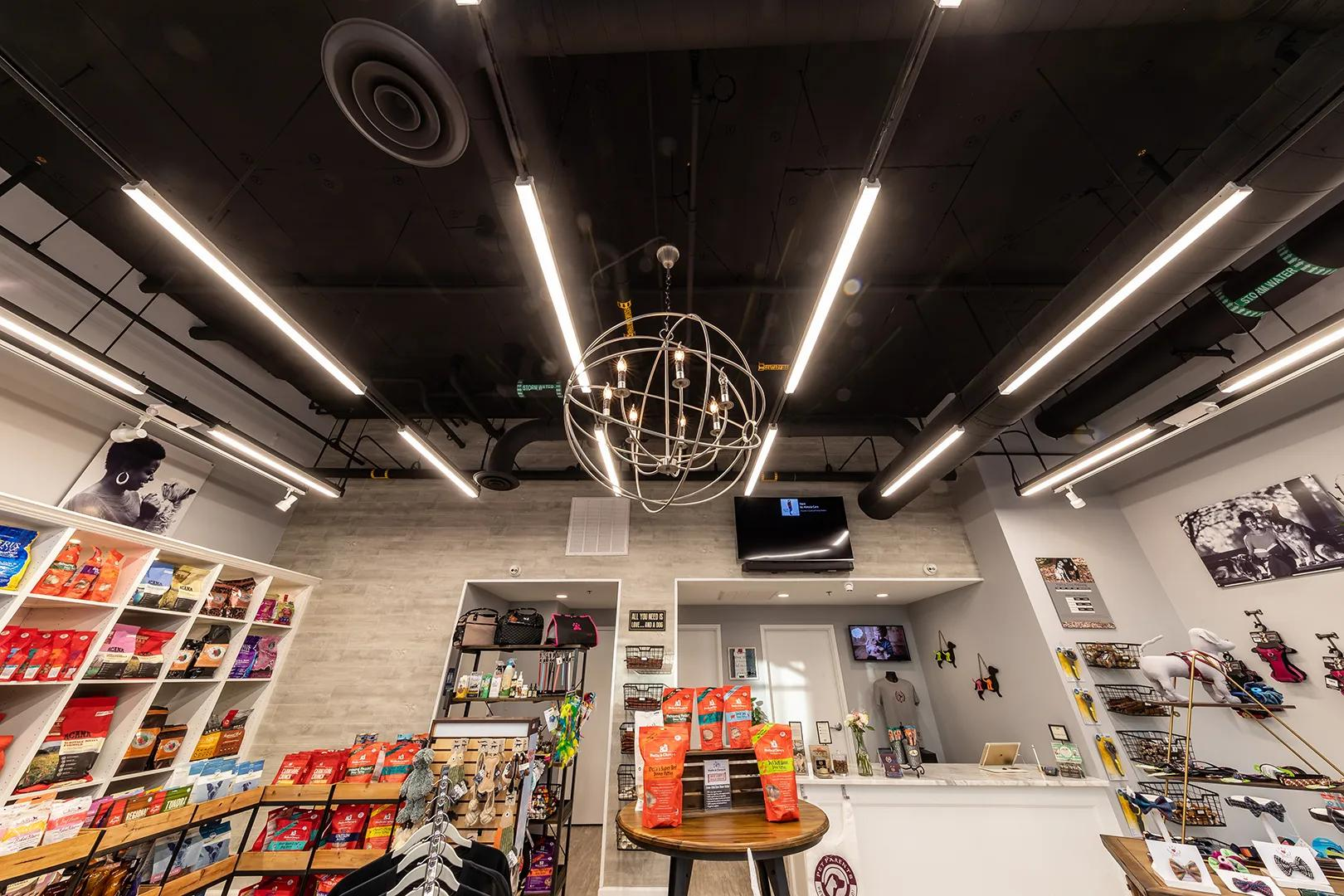
This is where the products live: food bags, toys, grooming supplies, leashes, beds. The lighting here needs to do two things simultaneously — render product colors accurately and create enough visual contrast with the animal zone that shoppers experience a psychological transition from “viewing mode” to “buying mode.”
Color rendering matters enormously here. Pet food packaging is designed with vibrant colors. Under 70-CRI lighting, premium kibble bags look faded. Under 90+ CRI, those same packages pop off the shelf. I’ve seen CPG companies spend millions on packaging design that gets completely neutralized by bad retail lighting.
The CAIMETA AIcolor system addresses this with real-time spectral adjustment — it continuously monitors ambient conditions and product reflectance, then adjusts the LED output to maintain consistent color rendering regardless of time of day or seasonal light changes through storefront windows. In a 2,400 sq ft pet store trial in Munich, this adaptive approach improved customer interaction time with shelf products by 23% compared to static 4000K lighting.
Zone 3 — Grooming and Service Area (4000K–5000K, 750–1000 lux)
Grooming stations need clinical-grade task lighting. No ambiguity here. The challenge is preventing that bright, cool light from bleeding into zones 1 and 2 and disrupting the atmosphere you’ve built. Physical barriers — even half-height partition walls — combined with directional luminaire beam angles (15°–25°) solve most spill-light problems.
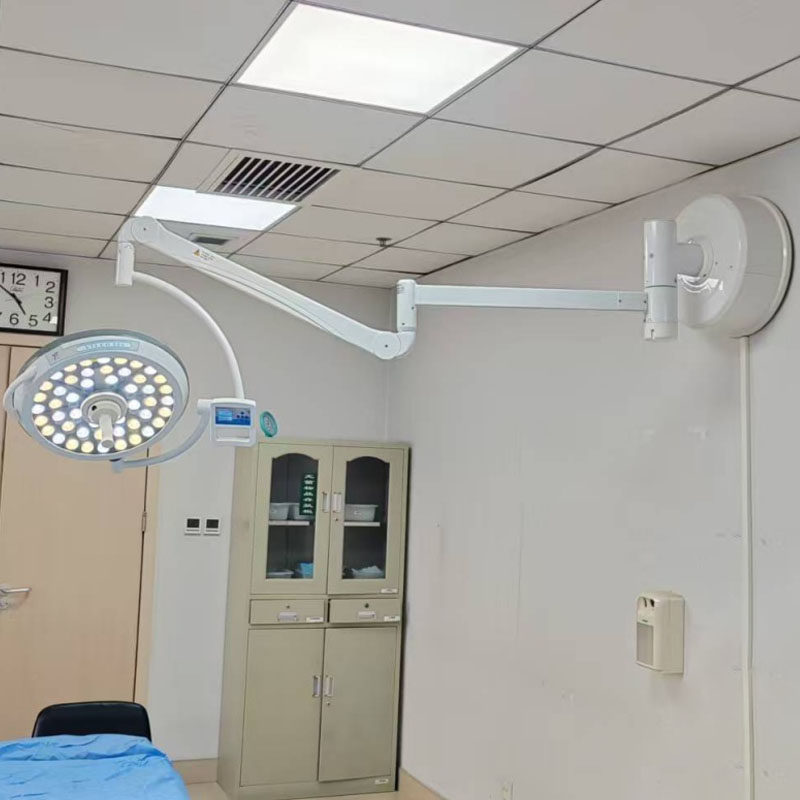
The grooming area also has hygiene requirements that affect fixture selection. Coat debris, water spray, and grooming chemicals demand sealed fixtures (minimum IP54) with smooth, cleanable surfaces. Recessed fixtures outperform surface-mounted ones in this environment — they collect less airborne fur and are easier to maintain.
Smart Controls: The Difference Between Set-and-Forget and Set-and-Adapt
Static lighting in a pet store is a missed opportunity. These spaces have radically different needs at 9 AM versus 7 PM, on a quiet Tuesday versus a busy Saturday, and during adoption events versus regular retail operations.
BLE Mesh-based control systems like those used in CAIMETA’s AIspace platform allow zone-by-zone automation without running new wiring. Occupancy sensors trigger gradual brightness increases in animal zones when staff approach — the slow ramp (3–5 second transitions) prevents startling animals. Time schedules automatically shift color temperature warmer in late afternoon, matching the store’s closing atmosphere to customers’ end-of-day mood.
The ROI case is straightforward. A 3,500 sq ft pet store in Bangkok replaced 48 fluorescent fixtures with intelligent LED panels and BLE Mesh controllers. Energy consumption dropped 41%. But the more interesting metric: customer dwell time in the store increased from an average of 8.3 minutes to 12.7 minutes. At their average transaction value of $34, that extra dwell time translated to roughly $11,200 in additional monthly revenue.
The payback period on that lighting investment was 4.2 months.
Adoption Event Lighting: The Hidden Variable
Most pet stores host adoption events periodically — partnerships with local shelters, weekend meet-and-greets, seasonal promotions. These events fundamentally change the lighting requirements of the space.
During an adoption event, you want the animal area to feel calm and intimate, not clinical. Warm lighting at 2700K with reduced overall lux levels (150–200 lux) creates a “living room” atmosphere that encourages potential adopters to sit, interact, and bond with animals. Harsh bright lighting makes adoption events feel like veterinary intake procedures.
Stores using intelligent lighting systems can create an “Adoption Mode” scene preset — one button triggers a pre-programmed lighting configuration optimized for the event. This is the kind of operational flexibility that static wiring simply cannot deliver.
What to Specify (and What to Avoid)
After specifying lighting for pet retail environments across multiple markets, here’s the checklist I use:
Must-haves: flicker-free LED drivers (≥20kHz or constant-current), CRI ≥90 in retail zones, tunable white (2700K–5000K) for at least the animal housing zone, IP65-rated fixtures near aquatic and reptile sections, and BLE Mesh or equivalent for zone automation.
Avoid at all costs: standard PWM-dimmed LED panels in animal areas (the flicker will stress your animals), mixing color temperatures within a single zone, cool-white (>5000K) lighting anywhere near animal enclosures, and open-face LED fixtures in grooming areas without proper diffusion — the specular reflection off wet fur is genuinely disorienting for both groomers and animals.
The pet retail market is projected to exceed $358 billion globally by 2027. Stores that treat lighting as an afterthought — a utility to be minimized rather than an experience to be designed — will continue losing customers to competitors who understand that the animals’ wellbeing and the customers’ wallet-openness are inseparable.