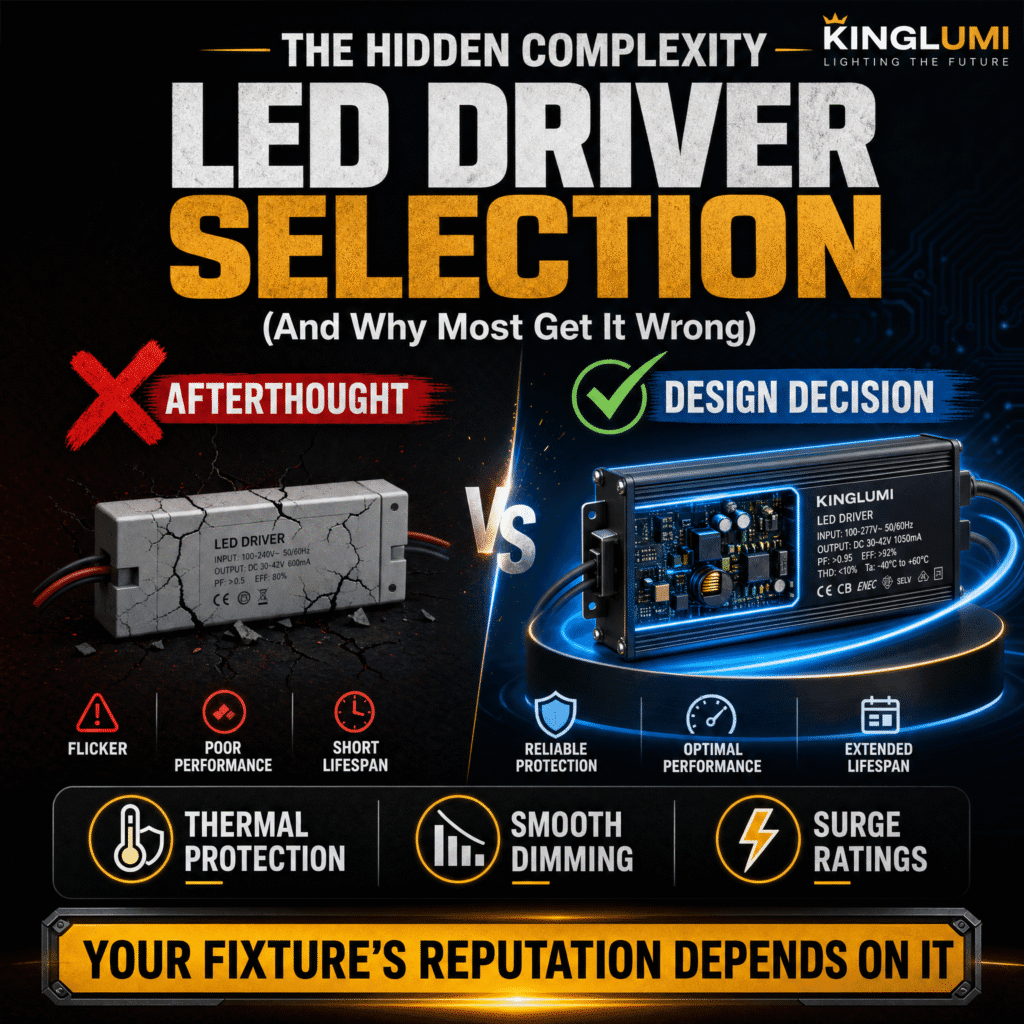
Here’s a pattern I see constantly in project reviews: specifiers spending weeks perfecting optical designs, then selecting LED drivers as an afterthought.
This is backwards.
The driver isn’t a commodity. It’s the component that determines whether your fixture delivers on its promises — or fails silently in year two.
Let me break down three factors that separate good driver selection from bad:
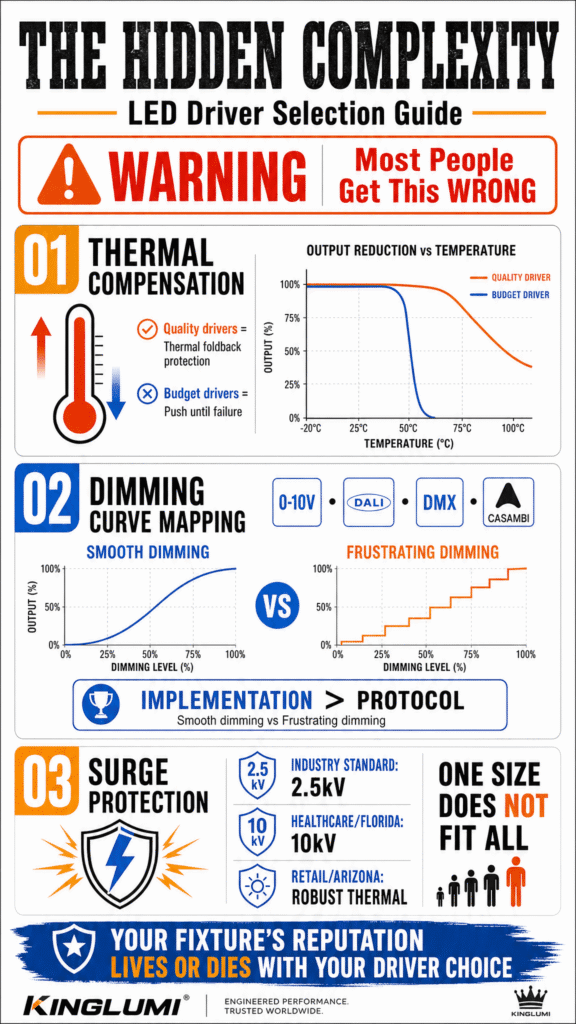
1. Thermal Compensation Capability
LED performance degrades with heat. A quality driver with thermal foldback protection will reduce output as temperatures rise, extending fixture life. A budget driver will push full power until something fails.
2. Dimming Curve Mapping
0-10V, DALI, DMX, Casambi — the protocol matters less than how it’s implemented. Poor dimming curves create awkward transition zones, flickering at low output, or step-change artifacts that users notice and hate.
At Kinglumi, we’ve spent considerable engineering time matching driver behavior to specific dimming control systems. This invisible work is what separates smooth dimming from frustrating dimming.
3. Surge Protection Ratings
Industry standard is 2.5kV. But specification environments vary dramatically. A healthcare facility in Florida needs 10kV capability. A retail store in Arizona needs robust thermal protection. One-size-fits-all driver selection ignores these realities.
Summary:
Your fixture’s reputation lives or dies with your driver choice. Treat it like a design decision, not a purchasing decision.
What’s your approach to driver specification? Any lessons learned the hard way? Share below 👇
#LEDDriver #LightingDesign #Electronics #ThermalManagement #QualityMatters #CommercialLighting
Your Attractive Heading