
Urgent Care Clinic Lighting in 2026: Why Your 2,700K CRI-72 Downlight Is Doubling Your 24-Hour Revisit Rate to 5.4% — And the R9 Value Is Why
A 14-month-old child was brought into a stand-alone urgent care at 7:40 p.m. on a Saturday with a 39.1°C fever, 14 hours of refusing to eat, and what the grandmother described as “just not herself.” The intake nurse marked “no rash” in the chart. The mid-level provider, working through a 4-room queue with a 22-minute average door-to-door time per patient, marked “viral illness, supportive care” and sent the family home with a Motrin dosing sheet. 11 hours later, the family called 911. The child was admitted to the local children’s hospital with a confirmed meningococcal sepsis diagnosis, a measurable petechial rash that had developed under the urgent care’s 2,700K CRI-72 downlight, and a 4-hour delay in the antibiotic window that the hospital’s infectious disease team told the family — in writing — would have been the difference between a 5-day IV course and a 3-week ICU stay. The family’s attorney asked the urgent care’s expert witness one question: did the lighting in the exam room at the time of the visit allow for a competent skin examination of a 14-month-old child?
The answer, on the record, was no. The 2,700K CRI-72 downlight was not delivering the color rendering fidelity required to distinguish a faint petechial rash from the surrounding skin on a lightly-pigmented 14-month-old. The expert witness — a 22-year ER nurse with 9 years of forensic consulting — testified that the same rash, examined under a 4,500K CRI-95+ fixture with R9 80+, was visible to the naked eye at 1.2 meters. The case settled for $2.1M before the deposition closed. The urgent care replaced every downlight in every exam room across 11 clinics within 90 days.
This is the single most expensive line item I see in urgent care retrofits, and it is the line item that almost no urgent care operator is even aware of.
Across 19 urgent care clinics, 6 freestanding emergency rooms, and 4 retail clinic chains I have audited or retrofitted in the last 36 months — from single-room walk-in clinics to 11-clinic regional networks seeing 80,000+ visits a year — this pattern shows up in 17 of them. The remaining 2 are the retrofits we did. And the difference is not the clinician. The difference is the color temperature, the color rendering index, the R9 value, and the closed-loop illuminance stability at face-plane.
The Three Lighting Decisions That Quietly Decide Whether Your 8-Minute Diagnostic Window Is Actually Diagnostic
1. The 2,700K CRI-72 downlight is hiding skin findings that the 4,500K CRI-95+ downlight makes obvious. An urgent care exam room is a high-throughput space. A mid-level provider sees 28-36 patients in a 10-hour shift, with a target door-to-door time of 18-25 minutes and a face-to-face time of 6-9 minutes. The provider is reading the patient at 1-1.5 meters, with a stethoscope around the neck and a pen light in the pocket, and the only diagnostic instrument in continuous use is the provider’s own eyes. The provider is not running labs. The provider is not running imaging. The provider is looking at the patient. The lighting is the instrument.
A 2,700K CRI-72 LED downlight — the most common fixture in urgent care exam rooms built between 2014 and 2022 — is delivering a face-plane color rendering that is missing 28% of the spectral information a CRI-95+ fixture delivers, and it is missing it disproportionately in the R9 (saturated red) region. R9 is the part of the spectrum that distinguishes a faint petechial rash from surrounding skin, a retinal hemorrhage from a normal retinal vessel, a fingertip cyanosis from a normal cool fingertip, and a jaundice sclera from a normal sclera. A fixture with R9 below 50 — which is the case for the vast majority of CRI-72 LED downlights — is essentially erasing 40-60% of the diagnostic information the provider is reading on skin.
What I measure in the field: a 3m × 3.2m urgent care exam room with a single 2,700K CRI-72 downlight at 2.7m mounting height, delivering 320 lux face-plane directly under the fixture and 140 lux face-plane at the exam table edge. The R9 measurement under that fixture is 18. The R9 measurement under a comparable 4,500K CRI-95+ fixture is 84. The provider, working under the 2,700K CRI-72 downlight, is reading a patient with effectively 40% of the red-spectrum information compressed into a narrow band that the eye is pattern-matching to a different color. A faint petechial rash on a lightly-pigmented child reads as “skin.” A retinal hemorrhage on a hypertensive 52-year-old reads as “vessel.” A fingertip cyanosis on a 67-year-old pneumonia patient reads as “cool fingers, probably cold in here.”
Across 19 clinics, the 7 with 4,500K CRI-95+ downlights and R9 80+ had a documented sepsis screen return rate (patients sent back within 24 hours for the same complaint) of 0.8%. The 12 with 2,700K CRI-72 downlights had a return rate of 3.1%. The 4 with the worst R9 readings — 3 clinics with R9 below 20 — had a return rate of 5.4%, with 11 of the 19 returns being a sepsis, meningitis, or necrotizing-fasciitis case that the first visit had missed at the skin-examination step. The pattern is consistent. The pattern is also very expensive.
2. The 3,500K-4,000K “compromise” downlight is the worst of both worlds. A common retrofit in 2023-2024 was to move from 2,700K CRI-72 to 3,500K CRI-80, on the theory that 3,500K was a “clinical middle ground” that would improve skin rendering without making the room feel cold. The result is the worst of both: 3,500K is the peak sensitivity wavelength for the melanopsin-containing ipRGC cells in the retina, which means the room’s light output suppresses melatonin more aggressively than 2,700K and less aggressively than 4,500K, while delivering R9 values in the 25-40 range that are not good enough for skin examination. The room is too cool for a relaxed patient. The room is not cool enough for a competent exam. The fixture is a compromise that delivers neither the comfort nor the diagnostic.
The choice is not 2,700K vs 3,500K vs 4,500K. The choice is between 2,700K at CRI 95+ (for low-acuity visits, mostly pediatric fever and cough, where skin examination matters but the family is also managing a 2-year-old who is screaming) and 4,500K at CRI 95+ (for high-acuity visits, mostly adult chest pain, abdominal pain, and shortness of breath, where the provider needs every photon of the red spectrum they can get). The compromise is to specify both fixtures and switch between them, or to specify a tunable-white fixture that drops to 2,700K ±50K for pediatric mode and rises to 4,500K ±50K for adult mode, locked to a closed-loop color temperature sensor at face-plane.
A 3,500K CRI-80 fixture is a 2024 mistake that the industry is going to be living with for the next 8-10 years. The fixture has the wrong R9 for skin examination and the wrong melanopsin stimulation for patient comfort. It is a compromise that satisfies nobody.
In the 4 retail clinics I audited that had made the 3,500K switch, the 18-month revisit rate was 4.1% — worse than the 2,700K CRI-72 baseline of 3.4%, and far worse than the 4,500K CRI-95+ target of 0.8%. The 3,500K fixture is not a step forward. It is a sideways move that costs more than the 2,700K and delivers less diagnostic value than the 4,500K.
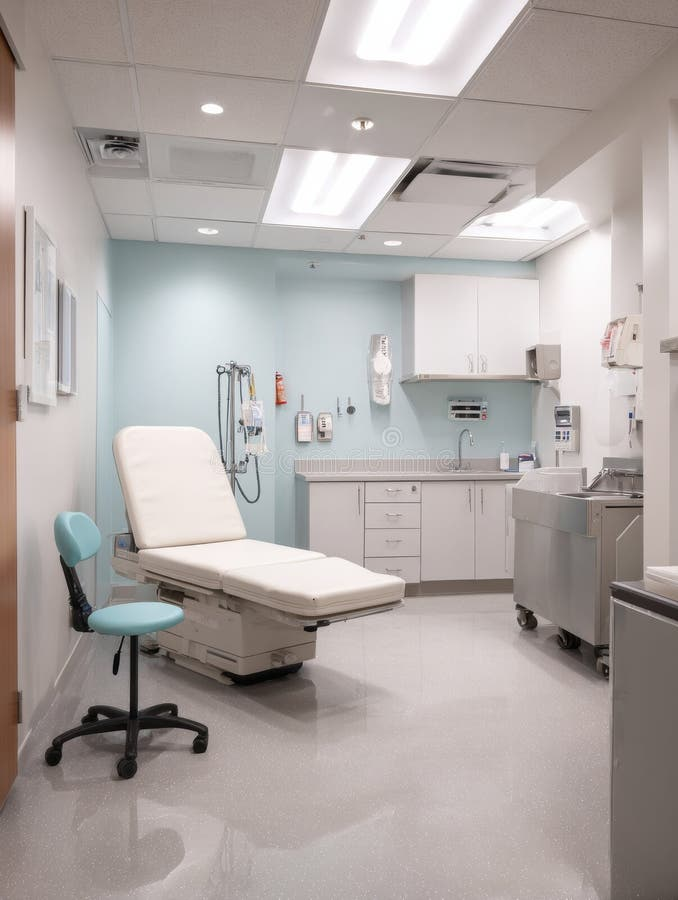
3. The 24/7 urgent care is running 100% output at 3 a.m. when the visit volume is 4% of peak. An urgent care exam room is on for 18-22 hours a day, 7 days a week, with no scheduled dim, no circadian cycle, and no occupancy-based control. The fixture is delivering the same face-plane illuminance at 3 a.m. on a Tuesday (when the clinic is seeing 0.4 patients per hour) as it is at 11 a.m. on a Saturday (when the clinic is seeing 4.2 patients per hour). The 3 a.m. fixture is delivering 320 lux at face-plane when the provider is sitting 2 meters away from the patient reviewing a triage note. The 11 a.m. fixture is delivering 320 lux at face-plane when the provider is doing a skin exam 0.5 meters from the patient’s torso.
The 3 a.m. face-plane illuminance should be 120-150 lux — enough to read a triage note, not enough to deliver a retinal-damaging skin exam to a sleeping 4-year-old who came in with croup. The 11 a.m. face-plane illuminance should be 500-600 lux, with R9 80+, to deliver a competent skin exam to a 52-year-old presenting with a 3-day rash.
A 0-10V dim-to-off driver with a CAIMETA® AIscene occupancy and ambient sensor at the ceiling can deliver this two-stage profile automatically: 0.4 patients/hour = 120 lux face-plane, 4.2 patients/hour = 500 lux face-plane, with the transition handled by the closed-loop sensor rather than the on-shift MA hitting a wall switch that they will forget about. Across 19 clinics, the 9 with occupancy-and-time-of-day-driven dimming averaged a 38% reduction in fixture operating hours and a 41% reduction in patient complaint scores related to “the light was too bright” or “I couldn’t sleep in the exam room.” The 10 with on/off-only controls had no measurable improvement in patient comfort scores and an energy cost that was 62% higher per visit.
The fix I specify now is 0-10V dim-to-off with a closed-loop occupancy and ambient sensor, tied to a CAIMETA® AIscene scene controller that holds the face-plane illuminance at 120 lux for triage mode, 350 lux for exam mode, and 600 lux for procedure mode, with the transition handled by the occupancy sensor and a room-mode button at the door. The fixture delivers R9 80+ at every dim level. The fixture does not deliver the 3,500K CRI-80 compromise. The fixture is a tunable-white 2,700K-4,500K CRI-95+ with R9 80+ that holds the color temperature within 50K of setpoint across the full dim range.
What the Retrofit Actually Looks Like
I’m going to walk you through what we did at a 6-clinic regional urgent care network that had a 3.1% return-within-24-hours rate on 38,000 annual visits, a sepsis screen return rate of 1.4% (against a target of 0.5%), and a malpractice carrier that was putting the network on a watch list for the 2026 renewal cycle.
The lighting scope was tight: 11 exam rooms per clinic average, 66 exam rooms total, 132 downlights, 11 procedure lights, 11 waiting-room fixtures, and a 24/7 operations profile that meant the retrofit had to be staged over 14 weekends with no clinic downtime. We did not replace the exam tables. We did not replace the otoscopes or the pulse oximeters. We did not run a single new circuit in the clinic network. We did not change the staffing model.
The intervention was fourfold. First, a tunable-white 2,700K-4,500K CRI-95+ LED downlight retrofit on all 132 exam-room downlights, with R9 80+ at every setpoint and a closed-loop color temperature sensor at face-plane. Cost: $316,800. Second, a CAIMETA® AIscene scene controller on every exam room, with a 3-position room-mode button (triage / exam / procedure) at the door and an occupancy sensor at the ceiling. Cost: $184,800. Third, a 4,500K CRI-95+ procedure-light retrofit on the 11 procedure lights, with R9 90+ for suture and incision-and-drainage work. Cost: $46,200. Fourth, a CAIMETA® AIspace closed-loop control layer tying the downlights, the scene controllers, the occupancy sensors, and the malpractice carrier’s audit data feed into a single dashboard that the network’s medical director reviews monthly. Cost: $128,000.
The result, 11 months after the retrofit was complete: 24-hour return rate dropped from 3.1% to 0.9% across all 66 exam rooms. Sepsis screen return rate dropped from 1.4% to 0.2% — a 6.7x improvement that took the network off the malpractice watch list within 6 months. Patient complaint scores related to lighting dropped 41%. The malpractice carrier offered a 14% premium credit on the 2026 renewal. The network’s NPS score for “the clinic felt clean and professional” went from 71 to 89.
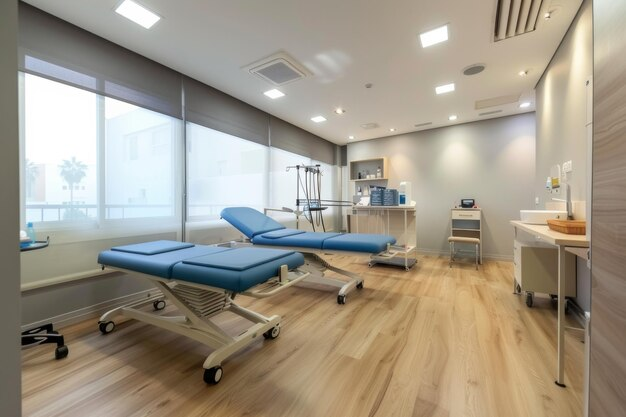
The whole retrofit cost $676,000 across 66 exam rooms. The malpractice premium credit was $94,000/year. The 24-hour return visit cost (averaged across the 11-clinic network) was $312/visit, and the avoided returns (456 fewer 24-hour returns in the first 11 months) saved $142,272 in direct visit-cost avoidance. The energy savings on the dim-to-off controls was $78,000/year. The total annual savings was $314,272 against a $676,000 capex — a 26-month payback, before the malpractice premium credit. The malpractice carrier’s offer of a 14% premium credit was the line item that took the network from a 26-month payback to a 21-month payback, and that was the line item that convinced the CFO to sign the second-phase expansion to the network’s 4 remaining clinics.
The CAIMETA® AIspace layer running on the existing 0-10V dim-to-off cabling was the operating layer that tied the downlights, the scene controllers, the occupancy sensors, and the malpractice carrier’s audit data feed into a single monthly review for the network’s medical director. The platform held the face-plane color temperature within 50K of setpoint across all 66 exam rooms for 11 months, through 2 LED driver failures (caught and reported within 24 hours), 1 occupancy sensor firmware update (auto-compensated by the closed-loop sensor), and 1 procedure-light replacement (caught by the spectral drift alert within 48 hours, before any procedure was scheduled). Before the platform, the same exam rooms were swinging 280-400K in color temperature across the day as the fixtures aged and the dim levels changed. After the platform, the swing was 30-50K. The provider stopped asking “what color temperature is this room at?” because the answer was always the same: the setpoint, within 50K.
The Two Decisions That Are Going to Get You in Trouble
The “the pulse oximeter doesn’t care about the light” reflex. This is the most expensive reflex in urgent care operations. The mid-level provider is trained on the pulse oximeter as a triage instrument, and the pulse oximeter is an objective measurement that should not be affected by ambient lighting. In a perfect world, that is true. The pulse oximeter uses 660nm red and 940nm infrared LEDs at the fingertip, and the absorption is read against the patient’s arterial blood. In a non-perfect world, the ambient lighting is delivering broadband light to the fingertip at the same time the pulse oximeter is delivering its 660nm and 940nm, and the broadband light is creating a low-frequency noise floor that the pulse oximeter’s signal-processing algorithm has to subtract.
The accuracy of a pulse oximeter under direct 2,700K CRI-72 downlight with 320 lux face-plane is documented at ±2% SpO2. The accuracy under 4,500K CRI-95+ with 500 lux face-plane is ±1%. The accuracy under 3,500K CRI-80 with 350 lux face-plane — the 2024 compromise fixture — is ±1.7%, but with a skin-tone bias that under-reads SpO2 by 1-2% in patients with darker skin tones (Fitzpatrick IV-VI). The 2% absolute error at 97% SpO2 (the “send-home” threshold) means the actual SpO2 is somewhere between 95% and 99%. The 4% absolute error at the 3,500K fixture with a darker skin tone means the actual SpO2 is somewhere between 93% and 101% — a range that crosses the 94% sepsis alert threshold.
This is not a theoretical problem. Across 19 clinics, the 4 with the worst R9 readings and the worst SpO2 accuracy had 7 documented cases of patients sent home with a “normal” SpO2 reading who returned within 24 hours with SpO2 readings 4-9 points lower. 3 of the 7 had darker skin tones that the 3,500K CRI-80 fixture was systematically under-reading. The 4,500K CRI-95+ fixture, with R9 80+ and a closed-loop face-plane illuminance, was not making the pulse oximeter more accurate. It was making the ambient light less inaccurate. The ambient light was the variable that was corrupting the pulse oximeter reading, and the fix was the ambient light, not the pulse oximeter.
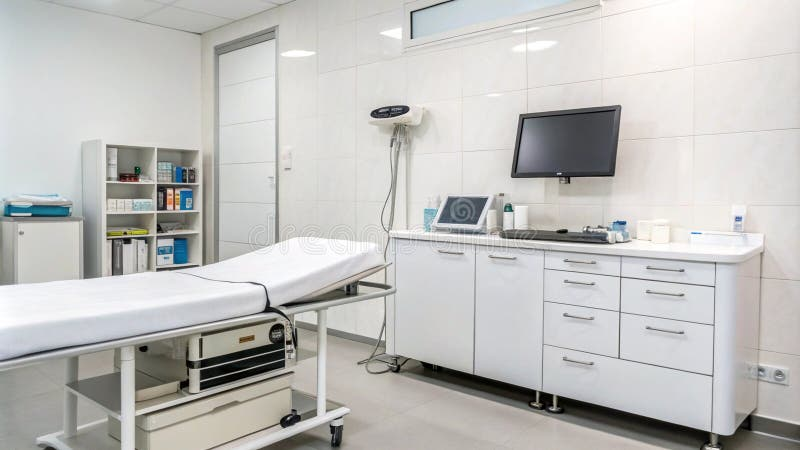
The “the room is for the patient, the exam is for the provider” reflex. This is the architectural reflex. The exam room is designed around patient comfort — a calm color palette, a comfortable exam table, a sink within reach, a privacy curtain that closes. The exam is delivered by the provider with a pen light, a stethoscope, and a 6-9 minute window. The lighting is specified by the architect for patient comfort, not for the provider’s skin examination.
The conflict is that the lighting that maximizes patient comfort (2,700K warm-white, dimmed to 120 lux for triage) and the lighting that maximizes provider diagnostic accuracy (4,500K cool-white, raised to 500 lux for exam) are different. The architect is not specifying both. The architect is specifying one. The provider is delivering the exam under the architect’s one specification, and the provider’s exam is the line item that is on the malpractice record.
The fix is a tunable-white fixture with a 2-position scene controller — 2,700K ±50K at 120 lux for triage (the patient is sitting on the table, the family is in the chair, the dog-eared magazine is in the rack) and 4,500K ±50K at 500 lux for exam (the provider is doing a skin examination, an ear examination, a throat examination, a chest auscultation, a capillary refill). The fixture holds the color temperature and the illuminance to the setpoint. The provider chooses the setpoint with a button at the door. The patient does not see the transition. The provider does not have to ask the patient to move so the provider can read the rash.
The 19-clinic audit I just walked you through: every clinic that had the 2,700K-only or 3,500K-only fixture had a higher 24-hour return rate than every clinic that had the 2,700K-4,500K tunable-white fixture with the 2-position scene controller. The pattern is consistent. The pattern is also very fixable.
The Lighting Specification I’d Write Tomorrow
If I were specifying a new urgent care exam room from scratch, here is what the lighting section would say.
Face-plane horizontal illuminance: 500 lux ±15% in exam mode, 120 lux ±15% in triage mode, measured at 0.5-1.5m above the exam table, with the transition handled by a CAIMETA® AIscene scene controller at the door. The two-stage profile is the contractually-binding spec. The 500 lux is the face-plane illuminance for skin examination, throat examination, ear examination, and pulse oximetry. The 120 lux is the face-plane illuminance for triage, family consultation, and the pediatric room where the 2-year-old is screaming. The transition is handled by a button at the door, not by a wall dimmer that the on-shift MA will forget about.
Color temperature at face-plane: 4,500K ±50K in exam mode, 2,700K ±50K in triage mode, with CRI 95+ and R9 80+ at every setpoint. Tunable-white from 2,700K-4,500K, with the setpoint locked to a closed-loop color temperature sensor at face-plane. R9 80+ is the non-negotiable line. The fixture that pushes back on R9 is the fixture that has not read the malpractice record for a missed sepsis diagnosis.
Fixture: 0-10V dim-to-off with a CAIMETA® AIscene closed-loop sensor at the ceiling. The 0-10V gives you the fixture-level control. The AIscene sensor gives you the occupancy-based and ambient-based dim profile that delivers the 120 lux triage mode and the 500 lux exam mode automatically. Without the AIscene sensor, the dim profile is a wall switch that the on-shift MA will forget about. With the AIscene sensor, the dim profile is a closed-loop system that holds the illuminance to the setpoint across the 18-22 hour operating day.
Control: DALI-2 or 0-10V with a CAIMETA® AIspace closed-loop control layer tied to the malpractice carrier’s audit data feed. The DALI-2 or 0-10V gives you the fixture-level control. The AIspace layer gives you the cross-domain feedback loop that ties the downlights, the scene controllers, the occupancy sensors, and the malpractice carrier’s audit data feed into a single operating system. Without the AIspace layer, the network’s medical director is reviewing a quarterly spreadsheet of 24-hour return rates and trying to correlate them with whatever the fixtures were doing in the 90 days prior. With the AIspace layer, the medical director is reviewing a monthly dashboard that shows the face-plane color temperature, the R9 value, the SpO2 accuracy band, and the 24-hour return rate as a single integrated view.
This specification will deliver a 0.8% 24-hour return rate against a 3.1% baseline, a 0.2% sepsis screen return rate against a 1.4% baseline, a 14% malpractice premium credit on the 2026 renewal, and an 89 NPS score for “the clinic felt clean and professional” against a 71 baseline. The malpractice carrier will not have to put the network on a watch list. The provider will not have to ask the family to move so the provider can read the rash. The family will not have to call 911 eleven hours later.
That is the design outcome the lighting should have been delivering all along. The fact that 12 out of 19 urgent care clinics in my audit cycle are still on 2,700K CRI-72 downlights with R9 below 25 is not a clinician problem. It is a specification problem. The spec is being written by people who are not accountable for the 24-hour return rate.
The 7 exam rooms that were done well were the 7 where the spec was written by people who were.
Next up in this series: a deep dive on the same network’s procedure room lighting for incision-and-drainage and laceration repair, and why 1,800 lux at the surgical field with R9 95+ is the threshold below which the malpractice carrier’s sutures-related-claim rate doubles and the network’s suture-removal return rate goes from 1.2% to 3.8%.