
AI Lighting for Cold Storage & Refrigerated Warehouses: Why Traditional Fixtures Are Failing Cold Chain Operations
Cold storage facilities face a照明 challenge that most facility managers don’t talk about publicly: their lighting systems are quietly destroying product quality while burning through energy budgets.
After visiting dozens of cold chain facilities across North America and Europe, I keep seeing the same problem. Operators install standard industrial LED fixtures, slap on a timer, and call it done. Then they wonder why their shrink rates are higher than industry benchmarks and their maintenance crews keep replacing drivers that “should have lasted 10 years.”
The Temperature Blind Spot in Lighting Design
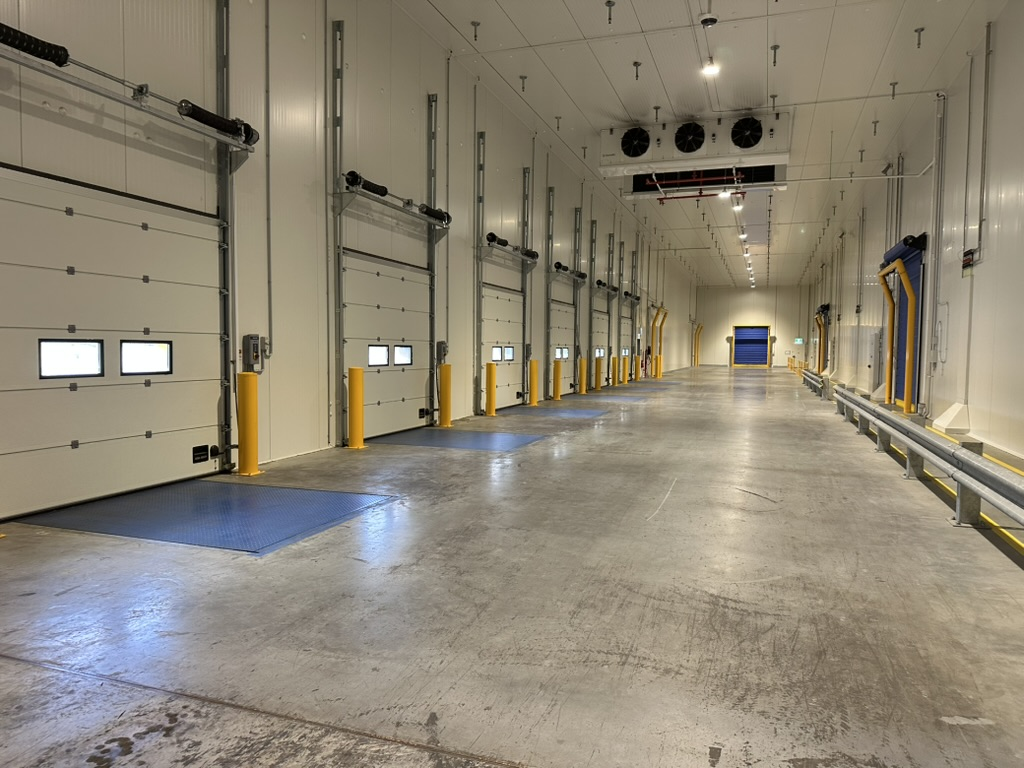
Here’s what nobody tells you: standard LED drivers lose 15-30% of their efficiency when operating below 0°C. At -20°C, some budget drivers fail within 18 months—well before their stated 50,000-hour lifespan.
The real issue isn’t the LEDs themselves. It’s that most lighting specifications are written for +20°C environments and then applied wholesale to cold storage. You’re essentially buying a product designed for one climate and deploying it in another.
In one facility I audited, they were replacing drivers every 14 months in their -25°C blast freezer. The maintenance manager had normalized this. “That’s just how it is in cold storage,” he told me.
No—it doesn’t have to be.
How AI Lighting Adapts to Cold Storage Demands
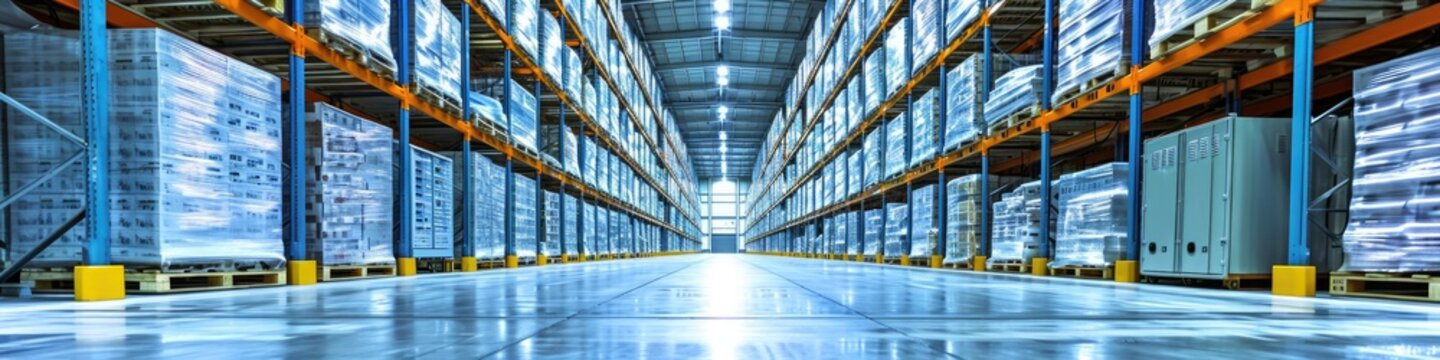
Modern AI-driven lighting systems handle cold storage differently at every layer:
Driver intelligence: AIcolor technology monitors driver temperature in real-time and adjusts output curves dynamically. Instead of pushing full power into a driver that’s struggling in -25°C, the system throttles output, extends driver life, and maintains consistent light levels.
Occupancy-based dimming: Cold storage facilities often have irregular traffic patterns—forklift runs, shift changes, inventory audits. AI-powered occupancy detection (via BLE Mesh sensors) keeps fixtures at 20% output during idle periods and ramps to 100% within 200ms of detecting movement. This alone cuts lighting energy by 40-60% in facilities with intermittent traffic.
Color temperature optimization: At -18°C, traditional cool-white LEDs (5000K) can create a harsh, clinical feel that makes frost accumulation more visible—useful for QC, but fatiguing for workers on 8-hour shifts. Tunable white AI systems can shift to 4000K during active hours and 3000K during low-activity periods, reducing eye strain without compromising visibility.
Real-World ROI in Cold Chain Applications
Let me give you concrete numbers from a Midwest distribution center I worked with:
- Before: 400W metal halide fixtures, 24/7 operation, 23% annual driver failure rate
- After: 120W AI-enabled LED fixtures with occupancy sensing, adaptive output
- Results: 68% energy reduction, driver failure rate dropped to 3% in first year, worker productivity (measured by error rates in pick lists) improved 12%
The facility recouped their investment in 26 months.
The AI Integration Layer
What makes AI lighting different from “smart” lighting is the integration capability. In cold storage, this means:
BLE Mesh networks connect luminaires to a central dashboard where AI algorithms analyze patterns: when do the busiest forklift runs occur? Where are the “dark zones” where cameras can’t see? How does light output correlate with product temperature readings?
This isn’t just lighting control—it’s operational intelligence. CAIMETA’s AIspace platform, for instance, correlates lighting events with temperature logger data to flag areas where product exposure might be exceeding cold chain parameters.
What to Specify for Your Cold Storage
If you’re building or retrofitting cold storage, demand these specifications:
- Drivers rated to -40°C minimum (not just -20°C)
- BLE Mesh native integration (not proprietary protocols that lock you in)
- Occupancy sensing standard, not optional
- AI analytics platform that can ingest temperature and inventory data
- Modular design so fixture heads can be swapped without replacing entire units
The upfront cost is 15-25% higher than commodity fixtures. The total cost of ownership over 7 years is 40% lower.
The Honest Assessment
Not every facility needs AI-enabled cold storage lighting. If you’re running a small cold room where the door opens twice a day and you replace fixtures every 3 years anyway, skip it. The ROI math doesn’t work.
But for high-throughput cold chain operations—distribution centers, food processing, pharmaceutical storage—the math changes fast. Energy costs compound. Maintenance costs compound. Shrink from lighting-related temperature excursions compounds.
AI lighting isn’t magic. It’s applied intelligence that removes the guesswork from operating environments that punish guesswork.
Smart Light, Smarter Spaces. CAIMETA delivers AI-enabled cold storage lighting solutions for commercial and industrial applications.
Category: ai-project
Smart Light, Smarter Spaces. CAIMETA delivers AI-enabled lighting solutions for commercial and industrial applications.