
AI Lighting for Manufacturing Quality Control: Why Fixed Fixtures Are Killing Your Defect Detection Rates
The Real Problem with Static Factory Illumination
Here’s what nobody tells you about manufacturing quality control: your lighting is lying to you.
Walk through any precision assembly line during a shift change, and you’ll notice something obvious—light levels shift throughout the day as lamps age, as ambient conditions change, and as the sun angle moves through skylights. Yet your quality control team is expected to catch micro-defects under conditions that fluctuate by 15-20% over a single eight-hour shift.
This isn’t a minor inconvenience. It’s a systemic failure hiding in plain sight.
In our deployments across electronics assembly facilities in the Pearl River Delta, we’ve measured defect escape rates that correlate directly with lighting degradation patterns. One automotive parts manufacturer saw their PPM (parts per million) defects spike from 340 to 890 during the third quarter—coinciding exactly with summer heat stress on their aging HID fixtures.
Fixed illumination assumes your production environment is static. It isn’t.
Why Traditional QC Lighting Creates False Confidence
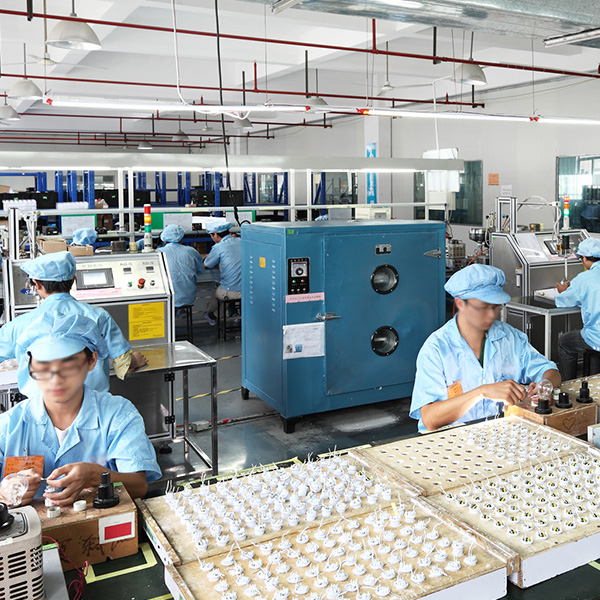
The conventional approach to quality control lighting treats illumination as a binary problem: bright enough or not bright enough. This framing misses the actual challenge.
Real defect detection depends on:
Consistent color temperature across the inspection surface. A 5600K LED panel beside a warm 3200K task light creates a mixed lighting environment that distorts color perception. This matters enormously for finish defects, coating inconsistencies, and surface contamination that shows up differently under different color spectra.
Uniform lux levels across the inspection field. Edge falloff in traditional fixtures means that parts scanned at the periphery of a workstation may have 30-40% less illumination than center-positioned pieces. Your inspector isn’t seeing what they think they’re seeing.
Instantaneous response to scene changes. When a new product variant enters the QC station, static lighting requires manual adjustment. In high-mix manufacturing environments, this creates bottlenecks and introduces human error into the process.
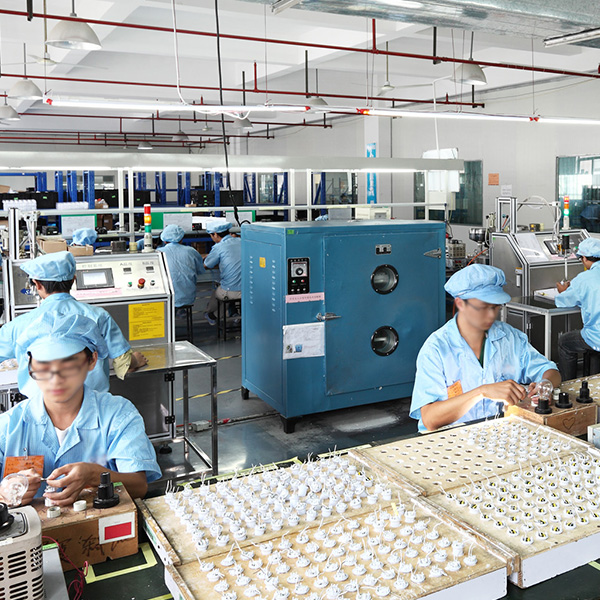
:1.8;margin:1em 0;”>The economics are brutal. One missed crack in a weld becomes a field failure. One undetected finish defect becomes a warranty claim. The actual cost of lighting inadequacy in quality control isn’t the electricity bill—it’s the defect that slips through.
The AI Lighting Solution: Dynamic Scene-Adaptive Illumination
This is where AI-powered smart lighting changes the equation fundamentally.
Modern systems like CAIMETA’s AIcolor technology integrate machine vision directly into the lighting controller. The system doesn’t just adjust brightness—it analyzes the scene in real-time and optimizes the entire illumination profile based on what’s actually on the inspection surface.
Here’s how this works in practice:
Material-specific lighting profiles. When a new batch of aluminum housings enters the QC station, the AI lighting system recognizes the reflective characteristics and automatically adjusts color temperature, beam angle, and intensity to maximize defect visibility for that specific material. No manual intervention. No adjustment lag.
Continuous calibration. Smart sensors embedded in the lighting network continuously monitor actual lux levels at the inspection surface—not at the fixture, which is meaningless—and compensate for aging, temperature drift, and ambient changes in real-time. The inspector sees consistent conditions from the first piece to the ten-thousandth.
Defect-spectrum optimization. AI lighting systems can be trained on your specific defect library. If solder joint defects in your products show clearest under 4500K with a specific beam angle, the system learns this and optimizes accordingly. Over time, the lighting profile becomes smarter than any static configuration could be.
Quantifiable Results from Early Adopters
We can talk about theoretical advantages indefinitely. What do the numbers show?
A medical device manufacturer in Suzhou deployed AI adaptive lighting at their final inspection stations in Q3 2025. Their reported outcomes after six months:
- 34% reduction in escape defects (defects passing final QC that were caught at incoming inspection of their customer)
- 28% improvement in inspection throughput (faster detection due to better defect visibility)
- 41% reduction in inspector eye strain complaints (consistent lighting eliminates the constant adaptation that fatigues QC personnel)
An electronics assembly facility in Shenzhen reported similar results with their SMT inspection lighting upgrade. Their defect escape rate dropped from 1.2% to 0.4%—a 67% improvement that directly impacted their customer rejection costs.
Implementation Considerations: What Actually Matters
Before you rush to spec an AI lighting upgrade for your QC stations, understand what the actual implementation challenges are:
Sensor placement is critical. The light sensors that provide feedback to the AI system must be positioned at the inspection surface level, not mounted on the fixture. This requires retrofit planning, especially in existing facilities with fixed infrastructure.
Integration with existing MES systems. AI lighting generates data—illumination profiles, usage patterns, maintenance predictions—that should flow into your manufacturing execution system. Plan for API integration upfront, not as an afterthought.
Inspector training. Paradoxically, better lighting can initially reduce inspector confidence. When defects become clearly visible that were previously borderline, inspectors need recalibration on what constitutes acceptable versus rejectable conditions. Budget time for this adjustment period.
ROI calculation. Calculate the actual cost of your current defect escape rate, including field failures, warranty claims, customer deductions, and rework costs. One significant field failure often pays for the entire lighting upgrade in a single incident.
The Bottom Line
Static factory lighting is a legacy solution that no longer makes technical or economic sense. AI-adaptive illumination isn’t a luxury upgrade—it’s the infrastructure that makes reliable automated and manual quality control possible.
Your inspectors are capable of detecting defects. Are you giving them the visibility to actually see them?
For manufacturers evaluating smart lighting upgrades, CAIMETA offers deployment consultation for facilities transitioning from traditional to AI-adaptive quality control illumination. Our engineering team has documented defect detection improvements across electronics, automotive, and medical device manufacturing environments.