
Smart Subway Station Lighting: How Transit Authorities Are Achieving 45% Energy Reductions Without Compromising Passenger Safety
The Hidden Energy Crisis in Underground Transit
Subway systems are energy monsters. Lighting alone accounts for 15-25% of total operational energy consumption in underground stations—a figure that seems reasonable until you consider that most systems run full illumination around the clock, regardless of actual passenger density.
The economics are straightforward and brutal: a typical underground metro station might consume 80,000-150,000 kWh annually just for lighting. At current European energy prices, that’s €20,000-€45,000 per station per year. A system with 50 stations is spending €1-2 million annually on illumination alone.
But here’s what makes this situation genuinely frustrating: that energy is largely wasted. During off-peak hours—typically 20-25% of total operating hours—passenger density drops by 70-80%, yet lighting levels remain essentially unchanged. The platforms that would benefit most from reduced illumination (empty during off-peak) continue drawing full power.
This isn’t sustainable. And it’s not necessary.
Why Traditional Lighting Control Systems Failed Transit
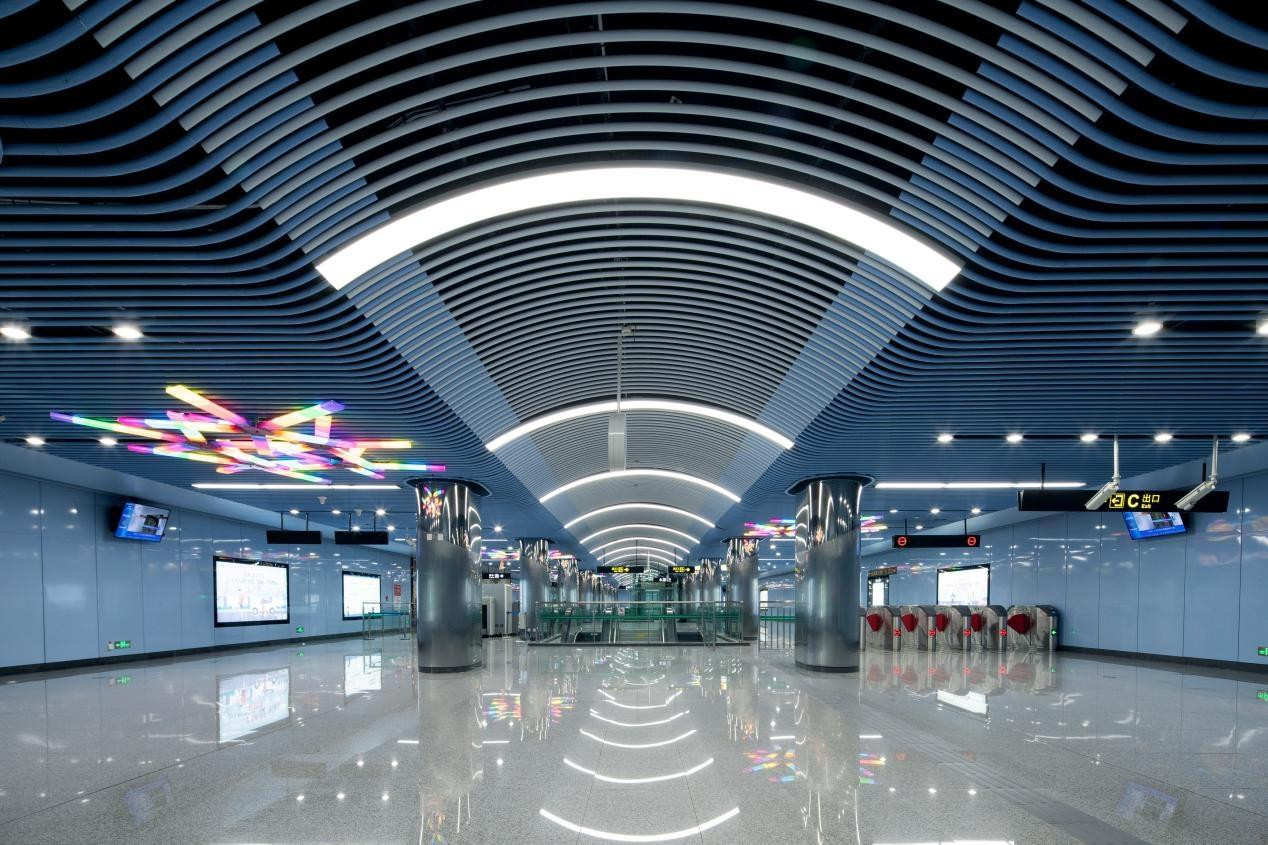
Transit authorities aren’t idiots. They’ve tried to solve this problem before.
The typical approach has been zoned lighting with time-based controls: dim platform edges during off-peak, reduce concourse lighting during closure hours, implement scheduled reductions during low-traffic periods. These systems exist in most modern transit installations.
They don’t work well because they’re fundamentally reactive rather than predictive, and they can’t account for the actual variable that matters: real-time passenger density.
Consider what happens with time-based control when a concert lets out near a station. The scheduled “low traffic” period might be 11 PM, but suddenly thousands of passengers flood the station 20 minutes after a show ends. Time-based systems can’t respond. Passengers find themselves in inadequately lit environments, creating safety concerns and complaints.
Or consider the opposite: a scheduled “full illumination” period during a weekday afternoon that coincides with an unex
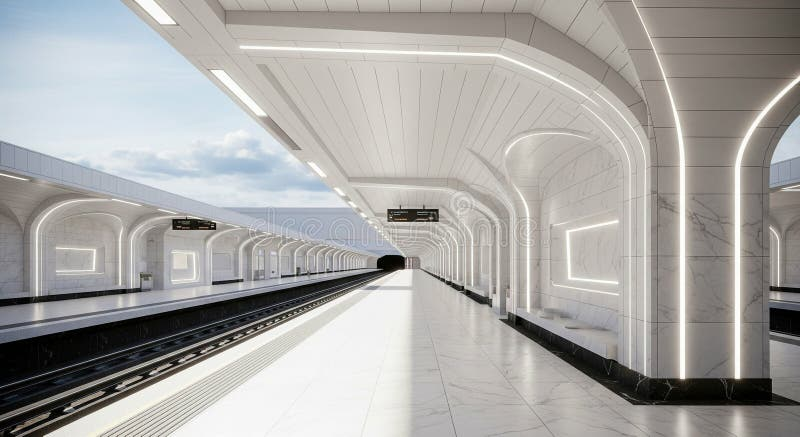
pected system outage that rerouted passengers away from this station. Full power for an empty station.
The root problem is that time-based controls optimize for theoretical demand patterns, not actual usage.
The Smart Lighting Revolution Arriving in Transit
AI-powered lighting control changes this equation entirely.
Modern systems like CAIMETA’s AIspace integrate occupancy sensing with predictive algorithms to deliver exactly the illumination needed for actual passenger density at any moment. The system doesn’t just react—it anticipates.
Here’s the technical architecture that makes this possible:
High-resolution occupancy sensing. AI lighting networks deploy distributed sensors throughout the station—on platforms, in corridors, at fare gates, in stairwells—that provide real-time density mapping, not just binary presence detection. The system knows not just that people are present, but approximately how many and where they’re distributed.
Predictive load modeling. By analyzing historical traffic patterns combined with real-time data (integration with transit management systems provides train arrival predictions, special event feeds, and weather correlation), the AI can predict passenger arrivals 10-20 minutes in advance. This prediction horizon is critical—it allows gradual, imperceptible illumination transitions rather than reactive step changes.
Zone-specific optimization. Smart transit lighting doesn’t treat the station as a single load. Platform edge zones, concourse areas, mezzanine levels, and maintenance corridors are independently controlled based on actual usage. A sparsely populated platform at 1 AM might run at 25% illumination on the active edge and 10% on the opposite side, while the staff areas maintain full operational lighting.
Safety-first fallback. Critically, these systems are designed with mandatory minimum illumination levels that can’t be overridden. Regulatory requirements for emergency egress lighting remain inviolate regardless of occupancy-based dimming.
Real-World Results: What Transit Operators Are Actually Achieving
Theory is pleasant. What do the numbers show?
Shenzhen Metro deployed adaptive lighting across 12 stations in 2025, with AI-powered occupancy-based dimming integrated into their existing SCADA infrastructure. Reported results after 12 months:
- 43% average energy reduction across the deployed stations
- Zero passenger safety complaints related to lighting adequacy
- 67% reduction in lighting-related maintenance calls (LED systems with continuous monitoring fail less catastrophically than traditional fixtures)
Paris RATP pilots on Line 9 stations achieved similar results with a focus on platform edge illumination optimization. Their system uses predictive arrival modeling to pre-illuminate platform edges when trains are 3 minutes out, ensuring passenger safety while minimizing unnecessary illumination during dwell times.
Singapore MRT integrated AI lighting with their platform screen door systems, creating a closed-loop optimization where platform illumination is coordinated with train operations. The result: 45% energy savings with improved passenger experience scores.
Implementation Realities: What Transit Authorities Need to Understand
Smart lighting deployment in transit environments isn’t a simple fixture swap. Here’s what operators should understand before committing:
Retrofit complexity. Underground stations are difficult environments. Existing conduit runs, junction box locations, and fixture mounting points may not accommodate smart fixture form factors. Survey existing infrastructure thoroughly before specifying equipment.
Network infrastructure requirements. AI lighting systems require robust network connectivity for sensor data aggregation and central coordination. Many older stations lack adequate wired or wireless infrastructure. Budget for network upgrades as part of the lighting project, not as an afterthought.
Integration with existing BMS. Transit building management systems (BMS) typically already control lighting, HVAC, and fire systems. Smart lighting deployment requires careful integration planning to ensure that multiple control systems don’t conflict. Define clear hierarchy and override protocols before commissioning.
Maintenance staff training. Operations and maintenance personnel need training on the new systems—not just for routine operation, but for troubleshooting and emergency procedures. The maintenance paradigm changes when fixtures are networked and monitored continuously rather than failed catastrophically.
Regulatory compliance. Emergency lighting requirements vary by jurisdiction and must be explicitly verified for any dimming implementation. In most markets, egress pathway illumination has mandatory minimum levels that occupancy-based systems must respect absolutely.
The Strategic Case Beyond Energy
Energy savings are compelling, but they’re not the only driver for smart transit lighting adoption.
Passenger experience. Properly illuminated stations with adaptive lighting that responds to actual density feel more modern and better managed. While subjective, this perception affects rider satisfaction scores and, ultimately, transit authority reputation.
Maintenance optimization. Networked smart fixtures report their own status—remaining useful life, lumen depreciation curves, driver temperature. This predictive maintenance capability allows facilities teams to schedule replacements based on actual condition rather than calendar intervals, reducing both emergency failures and unnecessary replacements.
Data monetization potential. Occupancy data generated by the lighting sensor network has value beyond lighting control. Transit planners can use aggregated, anonymized passenger density patterns for service planning, marketing analytics, and infrastructure investment justification. The lighting system becomes a data collection infrastructure that generates ongoing value.
Looking Forward: Integrated Transit Intelligence
Smart lighting is the entry point, not the destination.
Forward-thinking transit authorities are viewing AI lighting infrastructure as the foundation for broader station intelligence systems. When lighting sensors detect occupancy patterns, that same data can feed security monitoring, optimize janitorial scheduling, coordinate elevator dispatch, and inform fare gate positioning during special events.
The investment case for AI transit lighting is straightforward: energy savings typically pay for implementation within 2-4 years, while the data infrastructure and occupant intelligence capabilities create ongoing operational value.
The question isn’t whether to implement smart lighting in transit stations. It’s how quickly you can move from the pilot to full deployment.
CAIMETA works with transit operators on smart lighting deployment planning, including occupancy sensing integration, predictive algorithm configuration, and BMS coordination. Our transit-specific implementations have documented 40-50% energy reductions while maintaining full regulatory compliance for emergency egress illumination.