
As commercial lighting systems become increasingly connected, the security implications extend far beyond simple on-off control. Modern intelligent lighting platforms collect vast amounts of data—from occupancy patterns and energy consumption to environmental conditions and behavioral analytics.
The European Telecommunications Standards Institute (ETSI) published EN 303 645 in 2020, establishing baseline cybersecurity requirements for consumer IoT devices sold in Europe. Understanding ETSI EN 303 645 requirements—and how leading manufacturers address them—has become essential for procurement professionals, facilities managers, and building owners.
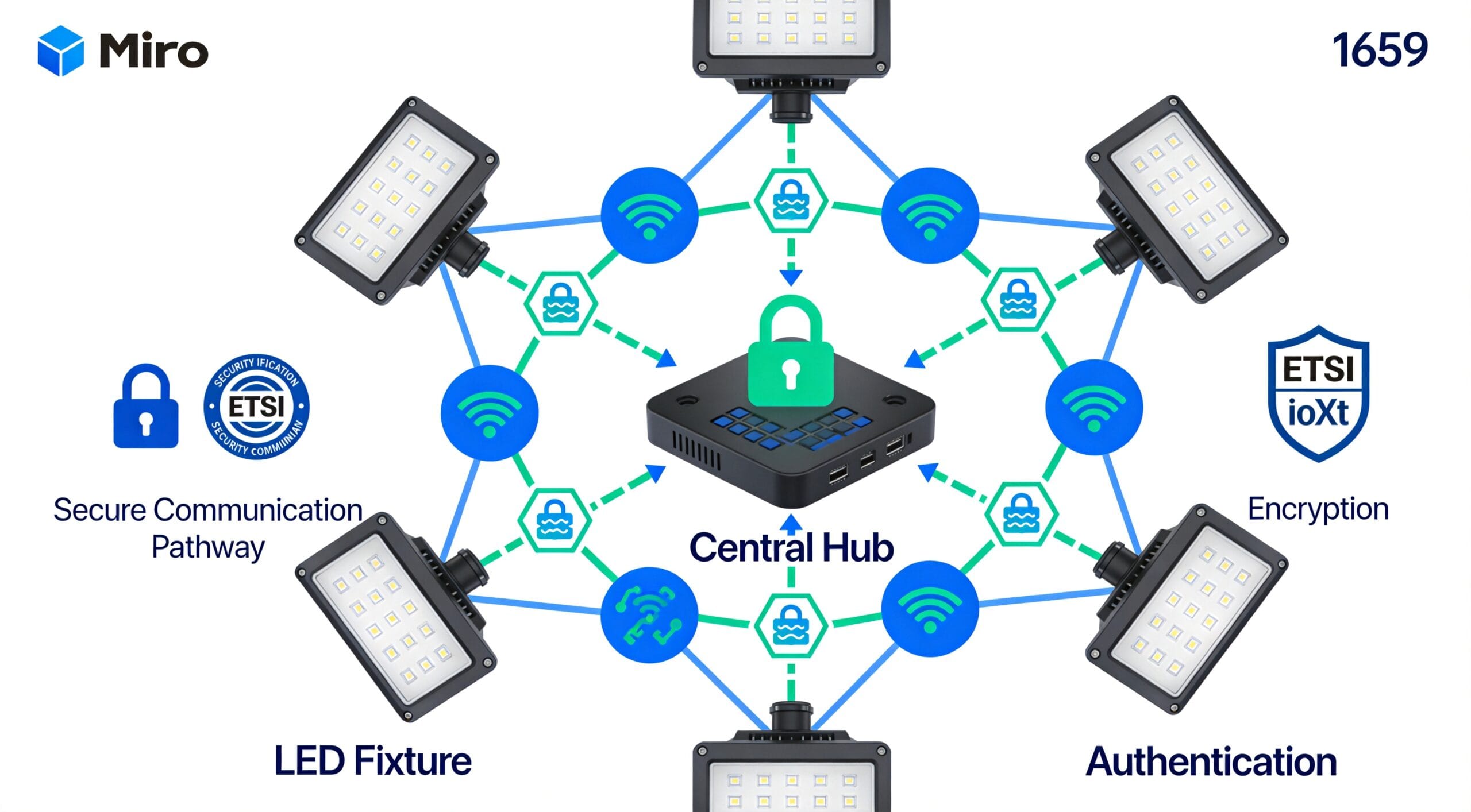
Understanding ETSI EN 303 645: Key Provisions
ETSI EN 303 645 establishes thirteen top-level provisions organized around core principles: minimizing attack surfaces, ensuring software integrity, protecting personal data, and enabling secure product lifecycle management.
Provision 5 addresses the security of personal data communications, requiring that IoT devices protect personal data transmission using appropriate mechanisms. Compliant systems implement encryption for all personal data, whether transmitted over BLE Mesh, Wi-Fi, or wired networks.
Provision 6 mandates that IoT devices operate on no universal default passwords. Commercial lighting systems must implement unique per-device passwords, secure initial configuration processes, and mechanisms for credential recovery.
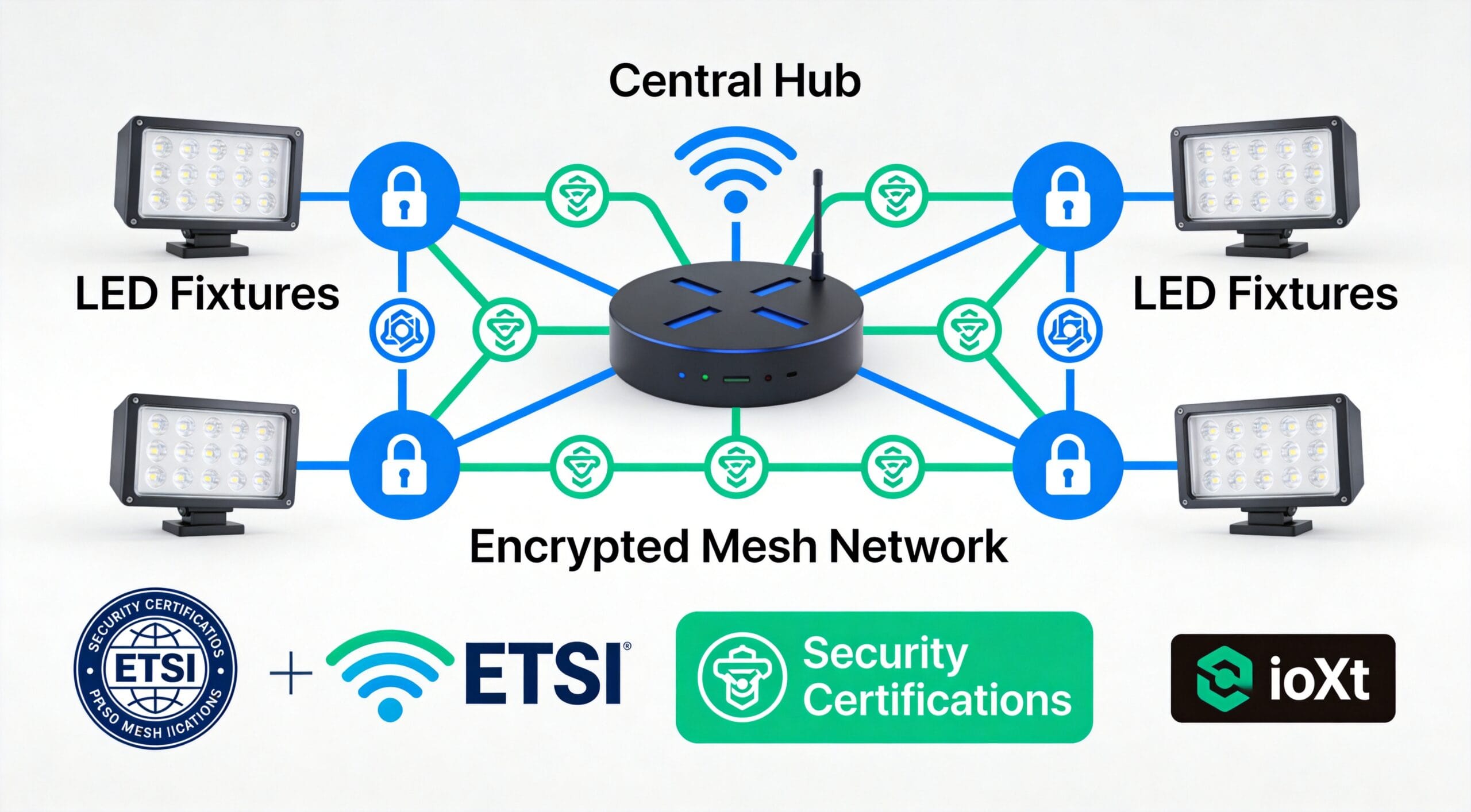
BLE Mesh Security Architecture
Bluetooth Mesh implements security at multiple layers, beginning with network-level authentication that ensures only authorized devices can participate in mesh communications. Every device must be provisioned with network keys before joining a mesh, and all messages are encrypted using AES-CCM cryptography with 128-bit keys.
CAIMETA implements secure OTA update capabilities across its commercial lighting portfolio, utilizing AWS IoT Core for secure message delivery and code signing infrastructure that meets ETSI EN 303 645 requirements.
Selecting Compliant Commercial Lighting Vendors
Procurement professionals evaluating commercial lighting vendors should request documentation addressing several security requirements beyond basic ETSI EN 303 645 compliance:
- Software bill of materials (SBOM) provides visibility into component libraries
- Security disclosure policies demonstrate vendor commitment to addressing discovered vulnerabilities
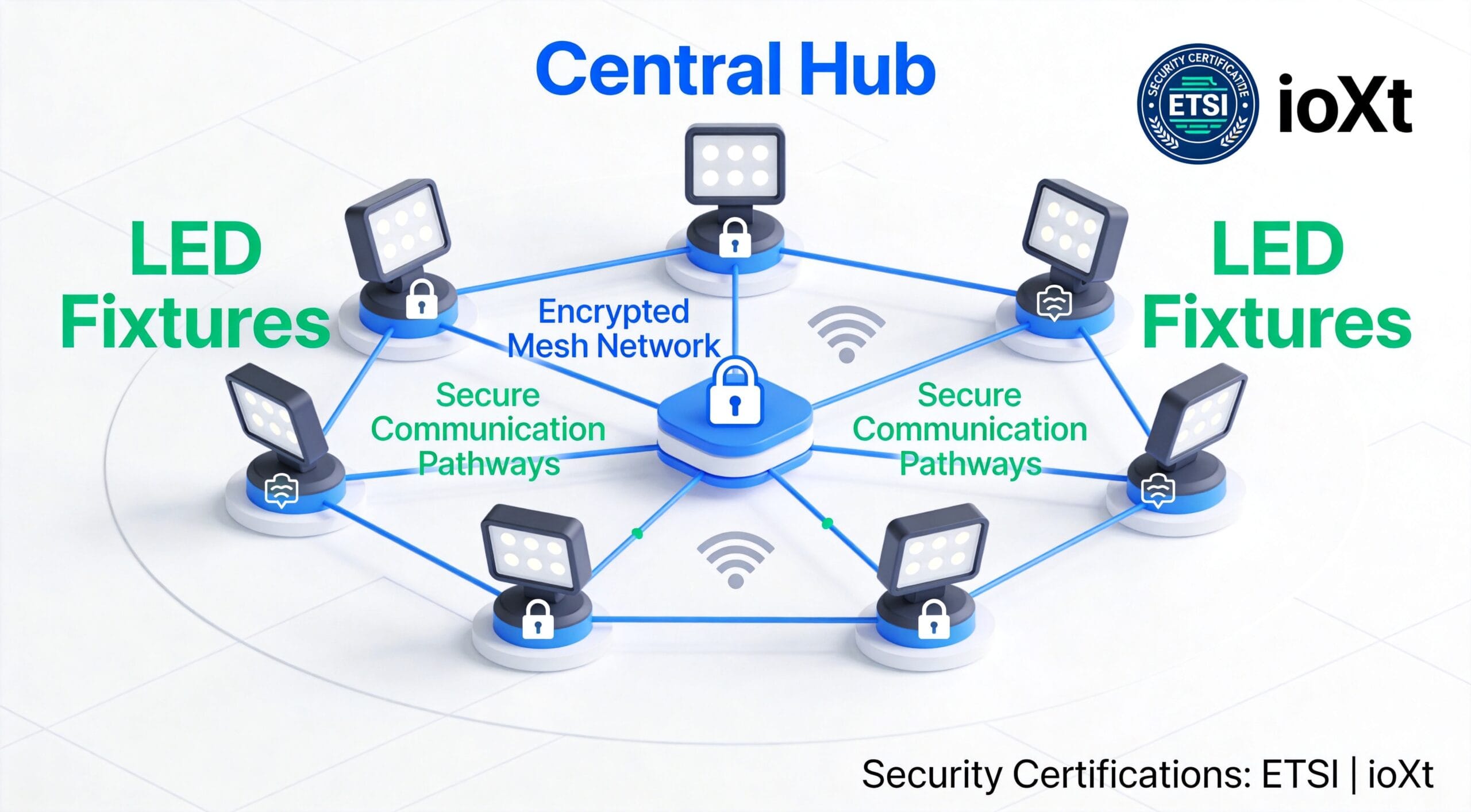
- Third-party security certifications from organizations such as ioXt Alliance
- Long-term support commitments ensure products remain secure throughout operational lifespan
Conclusion
IoT security requirements are rapidly becoming mandatory for commercial lighting installations, driven by regulatory pressure, insurance requirements, and growing awareness of cyber threats. ETSI EN 303 645 provides a useful framework for evaluating vendor security practices, while understanding BLE Mesh security architecture enables informed procurement decisions.
The path to secure commercial lighting requires commitment from all ecosystem participants—manufacturers investing in secure development practices, installers following security-conscious procedures, and building operators maintaining vigilant ongoing operations.